Rebuilding Europe: The Economic Impact of the Marshall Plan After World War II
How the Marshall Plan drove economic recovery and political stability in war-torn Europe after 1945 and reshaped the continent’s postwar future.

The devastation of Europe at the end of World War II was staggering. Entire cities lay in ruins, industries were crippled, and millions of people faced scarcity and displacement. Against this bleak backdrop, the United States launched a bold initiative aimed not only at rebuilding European economies but also at preventing the spread of communism: the Marshall Plan. Officially known as the European Recovery Program, the Marshall Plan became one of the most significant economic interventions of the 20th century, catalyzing recovery and reshaping the political and economic landscape of postwar Europe.
The Origins of the Marshall Plan
In the spring of 1947, U.S. Secretary of State George C. Marshall delivered a historic speech at Harvard University proposing massive financial aid to war-ravaged European countries. The intent was clear: to restore the economic infrastructure and political stability of nations devastated by years of conflict. Beyond humanitarian concerns, the plan reflected the emerging Cold War context; Western policymakers feared that widespread poverty and instability would fuel communist influence across the continent.
Marshall’s proposal came at a time when Europe’s industrial output had plummeted and trade networks were fractured. Countries were rationing food and essential goods, with many on the brink of famine or civil unrest. The Soviet Union and its satellite states refused participation in the plan, cementing the initial East-West divide. Thus, the Marshall Plan sowed the seeds for the economic and ideological realignment that would dominate Europe for decades.
The proposal was deliberately open-ended: Marshall invited Europeans to state their own needs rather than accept an American blueprint, and delegates met in Paris that summer to do so. Soviet foreign minister Vyacheslav Molotov attended the opening talks and then withdrew, objecting that the joint accounting the Americans required would open Soviet planning to outside inspection. Poland and Czechoslovakia showed interest before Moscow obliged them to pull back.
Structuring the Aid: Financial Commitments and Conditions
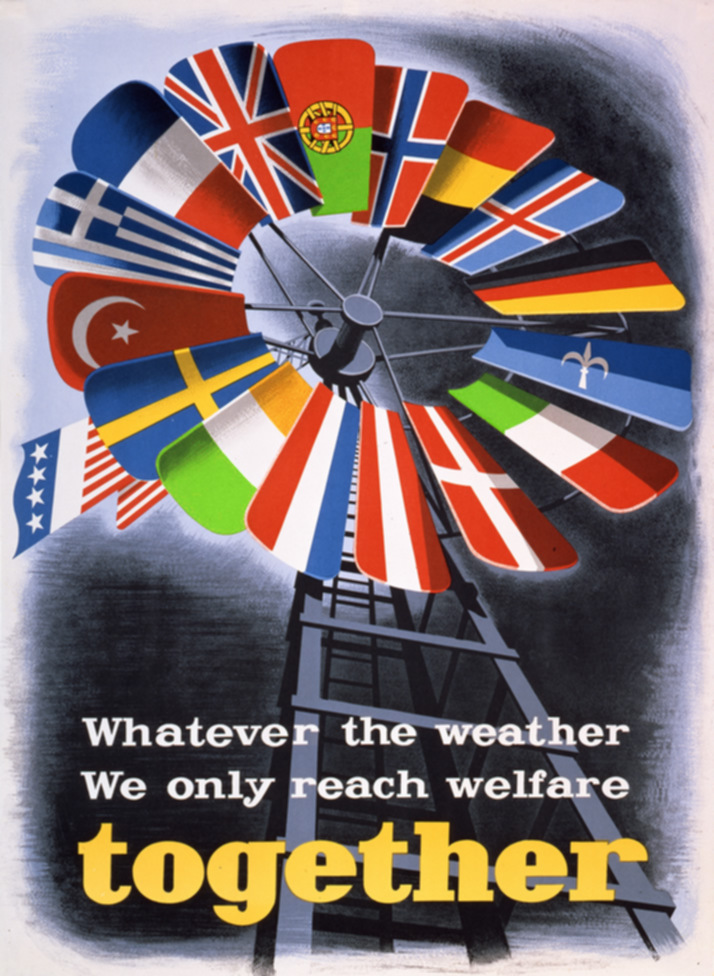
Between 1948 and 1952, the United States provided approximately $13 billion (equivalent to over $130 billion today) in grants and loans to sixteen Western European countries. This aid was channeled through the Organisation for European Economic Co-operation (OEEC), requiring recipient nations to collaborate on rebuilding efforts and promote free trade among themselves. This multilateral mechanism fostered unprecedented cooperation in a continent historically fraught with rivalry.
The infusion of capital was not simply about dollars and cents; it came with strategic conditions. The U.S. encouraged the modernization of industrial bases, reduction of trade barriers, and implementation of sound fiscal policies. This push accelerated the shift towards market-oriented economies and stoked the flames of European integration, eventually leading to the formation of the European Economic Community. Its first institutional fruit came in 1950, when the Schuman Plan turned the habit of joint negotiation acquired inside the OEEC into a permanent institution.
Behind the headline figure lay a problem economists of the day called the dollar gap. Europe needed American coal, grain, cotton and machinery to restart production, yet had little to sell in return and almost no dollars with which to buy. Marshall aid worked chiefly by closing that gap, and it came as grants rather than loans, so recovery was not mortgaged to new debt as reconstruction had been after 1918.
Economic Revival and Growth: The Marshall Plan’s Concrete Effects
By the early 1950s, the results of the Marshall Plan began to materialize. Industrial production soared, surpassing prewar levels in many countries. Agricultural output increased sharply, staving off food shortages and improving living standards. This newfound economic vitality evolved into what became known as the "postwar economic miracle." Nations like West Germany saw GDP growth rates of up to 8% annually, an extraordinary feat after the destruction they had endured.
The Plan also helped rebuild critical infrastructure—railways, ports, and energy systems—facilitating smoother trade and mobility. Crucially, the availability of American machinery and technology exports jump-started modernization efforts. In France and Italy, industries diversified and consumer goods markets flourished, fueling demand and employment.
One further change mattered as much as the aid totals: trade among Europeans themselves. Because currencies were not freely convertible, commerce had contracted into bilateral barter deals, and the European Payments Union of 1950 broke that constraint by clearing members’ claims multilaterally and settling only the net balance.
Political Stability and the Cold War Context
The economic stabilization facilitated by the Marshall Plan had profound political implications. By improving living conditions and reviving economies, the Plan reduced the allure of communist parties, which had gained significant traction in destitute regions across Western Europe. Countries that received aid moved decisively towards democratic governance and market economies, contrasting sharply with the Soviet-controlled East European bloc governed by centralized, planned economies.
Furthermore, the Plan strengthened the geopolitical alliance between the U.S. and Western Europe, setting the cornerstone for NATO and the Western security apparatus. This intervention arguably created a bulwark against Soviet expansion during a critical juncture in Cold War history, marking the start of a vibrant partnership that would shape Atlantic relations for decades.
The political test came early: Italy’s election of April 1948, fought with the recovery programme as an explicit stake, defeated the Communist-led alliance. Within a year the American commitment had widened into defence with the North Atlantic Treaty, whose alliance infrastructure outlasted the aid programme itself.
Limitations and Criticisms
Despite its successes, the Marshall Plan was not without limitations. The Soviet Union’s refusal to participate deepened the East-West split, crystallizing the division of Europe into two antagonistic blocs. Additionally, some critics argue that the aid disproportionately favored heavier industrial sectors over agricultural or social needs in certain countries.
Moreover, the Plan’s emphasis on American economic and political models sparked debates about sovereignty and dependency. Some European leaders feared that the influx of capital would come with cultural and political strings attached, although these concerns rarely hampered cooperation in the long run.
Historians have also argued about how much the money itself achieved. Revisionist accounts note that Marshall aid amounted to only a small fraction of recipients’ national income and that industrial output in several countries was already climbing before the first dollars arrived. The counter-argument holds that a modest sum can be decisive when it relieves the constraint that binds: without dollars for imported coal, cotton and machine tools, factories would have run below capacity whatever their momentum.
Conclusion: The Enduring Legacy of the Marshall Plan
The Marshall Plan stands as a landmark in the history of international economic aid and diplomacy. It transformed Europe from a continent shattered by total war to a thriving hub of industrial growth and political stability in less than a decade. The Plan laid the foundation for European integration and longstanding transatlantic alliances that persist today.
Its success has made the Marshall Plan a template for postconflict reconstruction and economic development worldwide. By tying economic recovery to cooperation and shared prosperity, it demonstrated that strategic aid can be an effective tool for building peace and countering ideological threats. In the shadow of destruction, the Marshall Plan helped light a path toward renewal, prosperity, and unity in modern Europe.
For more insights into related themes, see Cold War espionage and the Cold War's transformation.
Chronology of the Marshall Plan and European recovery
| Date | Event |
|---|---|
| May 1945 | The war in Europe ends, leaving cities and industry in ruins. |
| Winter 1946–47 | A severe winter deepens fuel shortages and halts output. |
| 5 June 1947 | George C. Marshall proposes American aid for European recovery at Harvard. |
| July 1947 | Molotov withdraws from the Paris talks; the Soviet bloc declines to participate. |
| 3 April 1948 | The Economic Cooperation Act launches the European Recovery Program. |
| April 1948 | The OEEC is founded in Paris to allocate the aid. |
| 18 April 1948 | Italy's election returns a decisive defeat for the Communist-led alliance. |
| June 1948 – May 1949 | The Berlin blockade is answered by the Allied airlift. |
| 4 April 1949 | The North Atlantic Treaty extends the partnership into defence. |
| 1950 | The European Payments Union enables multilateral settlement of intra-European trade. |
| 9 May 1950 | The Schuman Declaration proposes pooling French and German coal and steel. |
| 1952 | The Recovery Program concludes after some $13 billion in aid. |
| 1957 | The Treaty of Rome creates the European Economic Community. |
Frequently asked questions
How much aid did the Marshall Plan provide, and who received it? Between 1948 and 1952 the United States supplied approximately $13 billion, well over $130 billion today, to sixteen Western European countries. It was channelled through the OEEC, which required recipients to plan jointly and open their trade to one another. Most of it took the form of grants, so recovery did not saddle Europe with a new burden of debt.
Why did the Soviet Union refuse to take part? Participation meant submitting national economic accounts to joint scrutiny and coordinating recovery with the West, which Moscow regarded as an intrusion into Soviet planning and its sphere of influence. Molotov attended the Paris talks in 1947 and then withdrew, and Poland and Czechoslovakia were obliged to pull back after showing interest. The refusal split the continent into two economic systems as well as two political blocs.
Did the Marshall Plan actually cause Europe's postwar economic miracle? Historians disagree. Aid represented only a small share of recipients' national income, and output in several countries was already recovering before the first shipments arrived, leading some scholars to argue that the plan cannot explain the growth that followed. Others counter that the dollars relieved the bottleneck that mattered—imports of coal, cotton and machinery—and made liberalised trade politically survivable.
What did the Marshall Plan have to do with European integration? The aid was deliberately conditional on cooperation: recipients had to agree collectively on how to divide it, which forced rival governments into permanent joint negotiation through the OEEC. That machinery produced the European Payments Union in 1950, and the same habit fed into the Coal and Steel Community and later the European Economic Community.
Bibliography
- Economic Cooperation Act of 1948. United States Congress, 1948.
- Marshall Plan (1948). U.S. National Archives and Records Administration.
- Marshall, George C. Remarks at Harvard University. 1947.
- Milward, Alan S. The Reconstruction of Western Europe, 1945-51. Methuen, 1984.
Recommended reading
The Marshall Plan: Dawn of the Cold Wara narrative history placing the programme at the origin of the Cold War division.
The Marshall Plan: America, Britain, and the Reconstruction of Western Europe, 1947-1952the standard scholarly account of the plan as a project of European integration.
The Most Noble Adventure: The Marshall Plan and the Time When America Helped Save Europea readable account of the people who designed and ran the programme.
The European Economy since 1945: Coordinated Capitalism and Beyondsets the recovery in the longer economic history that followed.
View on Amazon →: The European Economy since 1945: Coordinated Capitalism and Beyond
Postwar: A History of Europe Since 1945the essential single-volume history of the continent the plan helped rebuild.
As an Amazon Associate I earn from qualifying purchases. Affiliate links in Recommended reading — and in Further reading on older articles — may earn Writesides of History a commission at no extra cost to you.
From the archive

Free for the curious, supported by you
Writesides of History publishes free, in-depth history articles every week. If you enjoy reading, you can support the work: become a member for exclusive deep-dive dossiers and early access, or browse the maps, classroom packs and dossiers in the shop.
Become a Member Donate Visit the Shop