The Berlin Airlift: A Defining Moment at the Dawn of the Cold War
How the Berlin Airlift of 1948–1949 broke the Soviet blockade of West Berlin and became the first great confrontation of the Cold War.

In the immediate aftermath of World War II, Europe was a continent in ruins and division. Berlin, the heart of defeated Nazi Germany, became an epicenter of emerging Cold War tensions. In 1948, the Soviet Union imposed a blockade on West Berlin, cutting off all ground access to the city’s western sectors. This act of defiance not only threatened the survival of two million West Berliners but also ignited a dramatic confrontation that would shape global politics for decades. The resulting Berlin Airlift was a historic operation that demonstrated the resolve and ingenuity of the Western Allies amid rising East-West conflict.
The Origins of the Berlin Blockade
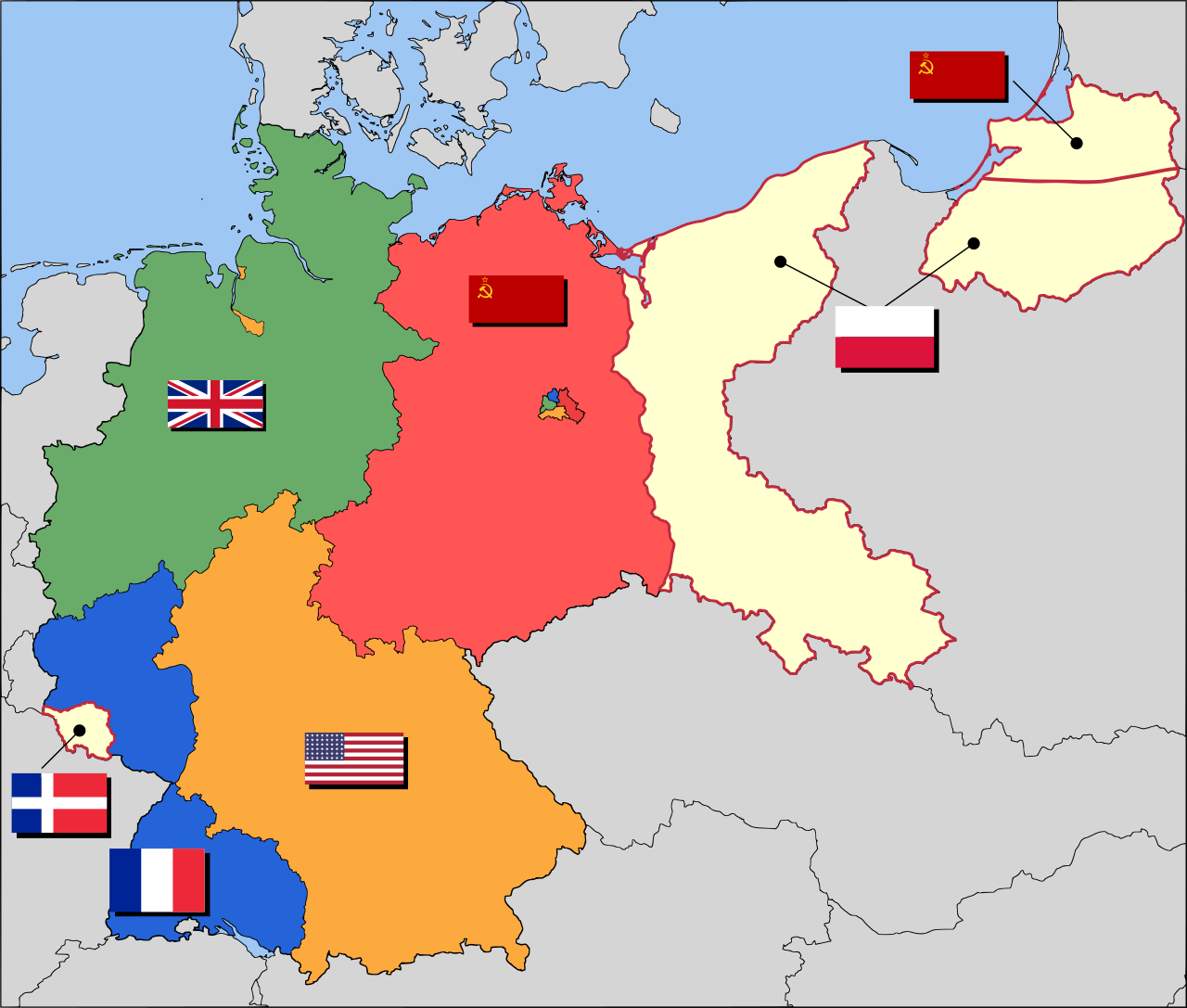
Understanding the Berlin Airlift requires grasping the fragile geopolitical landscape of postwar Europe. After Germany’s defeat in 1945, the country was divided into four occupation zones controlled by the United States, the United Kingdom, France, and the Soviet Union. Berlin, although deep inside the Soviet zone, was similarly split among the four powers, creating an island of Western presence surrounded by Soviet-controlled territory.
Relations between the Allies rapidly soured as ideological rifts deepened. The Soviets sought to consolidate control over Germany and extend their sphere of influence across Eastern Europe. In contrast, the Western Allies moved toward economic recovery and political stabilization through initiatives like the Marshall Plan. When the Western powers announced plans to introduce a new currency to their zones, including West Berlin, the Soviets perceived this as a threat to their authority and retaliated.
The currency question was no technicality. The Reichsmark had collapsed into a barter economy of cigarettes and coal, and a working money was the precondition for any recovery. When the Deutsche Mark appeared in the western zones on 20 June 1948, the Soviets issued a currency of their own and claimed it for the whole of Berlin. Each side read the other’s move as a decision to divide Germany for good.
On June 24, 1948, the Soviet Union closed all rail, road, and canal links connecting West Berlin with West Germany, effectively isolating the city. This blockade aimed to starve West Berliners into submission and force the Western Allies to abandon the city.
Why the Allies Flew Rather Than Fought
Air was not the obvious answer. General Lucius D. Clay, the American military governor in Germany, favoured sending an armed convoy up the autobahn, and Washington weighed the option before setting it aside. The objection was arithmetic: a convoy that met resistance left the Allies only two moves, retreat or war.
Flying offered a legal footing that did not have to be seized. Ground access to Berlin had never been fixed in a binding agreement, resting on wartime understanding between commanders. The air corridors, by contrast, had been agreed in writing through the Allied Control Council in 1945. To stop the aircraft, the Soviets would have to fire first and break a document they had signed.
The Logistics of the Airlift
The Soviet blockade presented an unprecedented logistical challenge. Supplying two million people entirely by air was daunting. Yet, the Western Allies quickly mobilized to meet the crisis head-on. The United States and United Kingdom spearheaded an extensive aerial supply operation, which became known as the Berlin Airlift (or "Operation Vittles" by the Americans).
Starting just hours after the blockade began, aircraft began flying food, fuel, and other essential supplies into Berlin. The operation required meticulous planning and relentless effort. At the height of the airlift, planes landed every few minutes at Berlin’s Tempelhof and Gatow airports. Flying round the clock, Allied aircrews delivered up to 8,893 tons of supplies daily, including enough coal to keep the city’s furnaces burning through the harsh winter.
Improvisation alone could not have sustained that rate. The early weeks were flown largely by twin-engined C-47s, and the turn to the far larger four-engined C-54 transformed what a single crew could carry. In July 1948 Major General William H. Tunner took command and imposed a rhythm on the operation: fixed intervals, one approach for every aircraft, no second attempt at a missed landing. Capacity was built on the ground too: in the autumn of 1948 a third airfield rose at Tegel.
The airlift showcased not only military coordination but also technological and human endurance. Pilots braved difficult weather, narrow air corridors constrained by Soviet airspace, and the constant threat of mechanical failure. Despite these challenges, the airlift persisted for almost a full year.
Political and Diplomatic Dimensions
The Berlin Airlift was more than a logistical marvel; it was a potent symbol of Western commitment to freedom and democracy in the face of Soviet expansionism. The operation lifted the spirits of West Berliners, who rallied behind the Allied efforts, underscoring their desire to remain free from Soviet control.
The airlift also marked a decisive moment in Cold War diplomacy. It demonstrated the limits of Soviet aggression; rather than provoking a military response, the Allies chose a strategy of endurance and moral resolve. The blockade and airlift hardened the division of Germany, prompting the establishment of two separate German states the following year: the Federal Republic of Germany (West Germany) and the German Democratic Republic (East Germany).
Furthermore, the crisis accelerated the military and political integration of Western Europe and the United States, leading directly to the creation of NATO in 1949. The Berlin Airlift thus shaped both the physical and ideological boundaries of Cold War Europe.
End of the Blockade and Legacy
After nearly a year of sustained air supply, on May 12, 1949, the Soviet Union lifted the blockade, acknowledging the failure of the strategy to force Western withdrawal. The airlift continued for several months afterward to build up West Berlin’s reserves and ensure its long-term viability.
The retreat was hastened by a pressure easily overlooked. The Western powers had answered the blockade with a counter-blockade, cutting off the steel and manufactured goods on which the Soviet zone depended, so the longer the siege ran the more it cost the side imposing it. Once the airlift had visibly survived the winter, Moscow had nothing left to gain, and quiet soundings between the American and Soviet delegates at the United Nations opened the way to a settlement. Nor was the cost symbolic: crashes killed dozens of British, American and German airmen and ground staff.
The legacy of the Berlin Airlift lies in its affirmation of resolve during a pivotal Cold War moment. It showcased the effectiveness of nonviolent resistance and the power of global diplomacy combined with military logistics. The operation also symbolized the emerging division of the world into two antagonistic blocs, a division whose consequences would dominate international relations for the next four decades.
Today, the Berlin Airlift remains a powerful example of Allied cooperation and determination in the face of geopolitical adversity. It marked the first major showdown of the Cold War and established the precedent that Western powers would not abandon Berlin or allow Soviet pressure to redraw the postwar order.
Although Berlin would continue to be a Cold War flashpoint, the airlift ensured that West Berlin remained a beacon of democracy and freedom behind the Iron Curtain until the Wall came down in 1989. This chapter in history highlights the complexity of Cold War diplomacy and the resilience of those caught in its midst.
For a deeper understanding of postwar geopolitics, see global geopolitical shifts post-World War II and ideological conflicts before World War II.
Chronology: from blockade to two German states
| Date | Event |
|---|---|
| 1945 | Germany and Berlin divided into four occupation zones; air corridors agreed in writing. |
| June 1947 | The Marshall Plan is announced. |
| 20 June 1948 | The Deutsche Mark is introduced in the western zones. |
| 24 June 1948 | The Soviet Union closes all land and water links to West Berlin. |
| 26 June 1948 | The first American transports land at Tempelhof; Operation Vittles begins. |
| July 1948 | Tunner takes command and standardises the flying. |
| Autumn 1948 | A third airfield is built at Tegel. |
| 4 April 1949 | The North Atlantic Treaty is signed. |
| 12 May 1949 | The Soviet Union lifts the blockade. |
| 23 May 1949 | The Federal Republic of Germany is founded. |
| 30 September 1949 | Airlift flights formally end. |
| 7 October 1949 | The German Democratic Republic is founded. |
Frequently asked questions
Why did the Soviet Union blockade West Berlin in 1948? The trigger was the new Western currency introduced in the western zones and in western Berlin, which Moscow read as a threat to its authority in eastern Germany. Behind it lay the wider rift over Germany’s future. Closing the land routes was an attempt to force the Western powers out of a city surrounded by the Soviet zone.
Why did the Allies supply Berlin by air rather than force a way through by land? An armed convoy on the autobahn was seriously considered, but if it met resistance it offered only withdrawal or war. The air corridors, unlike ground access, had been agreed in writing in 1945, so stopping the aircraft would have required the Soviets to fire first and tear up their own signature.
Could an airlift really feed a city of two million people? Almost no one thought so in June 1948, and the first weeks were flown with aircraft far too small for the task. What made it work was organisation rather than heroics: bigger transports, fixed intervals between landings, and unloading fast enough to keep them moving.
What did the Berlin Airlift actually change? West Berlin stayed in Western hands, but the larger effect was to harden the division the crisis was fought over. Within months two separate German states were founded, and the confrontation accelerated Western military integration into NATO. It also set the precedent that the West would not abandon Berlin under pressure.
Bibliography
- Clay, Lucius D. Cables and papers of the American Military Governor in Germany. 1948.
- Currency Reform in the Western Zones of Germany. 1948.
- Eisenberg, Carolyn. Drawing the Line: The American Decision to Divide Germany, 1944-1949. Cambridge University Press, 1996.
- Harry S. Truman Presidential Library and Museum. National Archives and Records Administration.
Recommended reading
The Candy Bombers: The Untold Story of the Berlin Airlift and America's Finest Houra narrative history of the operation told through the airmen and Berliners who lived it.
Berlin on the Brink: The Blockade, the Airlift, and the Early Cold Warthe fullest archival reassessment of why the blockade began and what the airlift was originally meant to do.
View on Amazon →: Berlin on the Brink: The Blockade, the Airlift, and the Early Cold War
The United States and the Berlin Blockade 1948-1949: A Study in Crisis Decision-Makingreconstructs the choice between convoy, negotiation and airlift as Washington actually faced it.
The Berlin Airlift: The Relief Operation that Defined the Cold Wara readable operational account drawing on British, American and German archives and veterans' testimony.
View on Amazon →: The Berlin Airlift: The Relief Operation that Defined the Cold War
Checkmate in Berlin: The Cold War Showdown That Shaped the Modern Worldsets the blockade within the four-power struggle for Berlin that began in 1945.
View on Amazon →: Checkmate in Berlin: The Cold War Showdown That Shaped the Modern World
As an Amazon Associate I earn from qualifying purchases. Affiliate links in Recommended reading — and in Further reading on older articles — may earn Writesides of History a commission at no extra cost to you.
From the archive

Free for the curious, supported by you
Writesides of History publishes free, in-depth history articles every week. If you enjoy reading, you can support the work: become a member for exclusive deep-dive dossiers and early access, or browse the maps, classroom packs and dossiers in the shop.
Become a Member Donate Visit the Shop