The Apollo-Soyuz Test Project: Détente, Diplomacy, and Technological Synergy in the Space Race
The Apollo-Soyuz Test Project was a 1975 Cold War milestone that used space diplomacy to ease superpower tensions and pioneer international cooperation.

On a hot July day in 1975, as an era of superpower rivalry roiled much of the globe, a remarkable handshake occurred—two hundred kilometers above the Earth. The Apollo-Soyuz Test Project (ASTP) was no ordinary scientific venture, but a carefully orchestrated feat of diplomacy and technological compromise that saw American and Soviet cosmonauts meeting in orbit. This brief moment of physical contact became a defining image of détente: a calculated thaw in the Cold War that challenged—and subtly reimagined—a quarter century of antagonistic space competition. The mission’s legacy extends far beyond the joint docking in orbit. Its true significance lies in the structural changes it catalyzed in how nations conceived of outer space, shifting the axis from confrontation to collaboration.
The Cold War Space Race: Superpower Tensions and the Inception of Détente
The ASTP was born out of—and in direct response to—a world deeply divided by ideological rifts and technological one-upmanship. For decades, the United States and the Soviet Union engaged in a high-stakes race for orbital supremacy, as each launch, each lunar step, became a proxy for military might and ideological legitimacy. With the Moon landings and early space missions, both blocs asserted both technological superiority and a relentless drive for global influence. Space was not merely the next frontier of exploration; it was a proving ground for regimes and their promises.
By the early 1970s, however, the costs of sustained rivalry—political, economic, and existential—were beginning to tell. The disastrous threat of nuclear war, the Vietnam conflict’s shadow, and economic malaise pressed the superpowers toward limited rapprochement. Détente, characterized by a series of arms control agreements and backchannel diplomacy, seeped into strategic thought. Yet perhaps nowhere was its ambition for structural change more visibly, and literally, projected than in the movement to bring together the very space programs that had previously stood as monuments to state secrecy and mistrust. The decision to embark on the Apollo-Soyuz Test Project marked a conscious reckoning with the need to imagine new rules and norms for cooperation—even in the most contested realms.
Engineering Diplomacy: Overcoming Political and Technical Barriers
Building an international partnership in space required a profound reengineering—not simply of craft and instrument panels, but of entrenched mindsets. American and Soviet teams confronted a dual dilemma: how to reconcile incompatible technological systems while navigating the mutual suspicion that typified Cold War relations. The United States operated with imperial measurements and an entirely different docking mechanism than the Soviets, whose Soyuz capsules were built on principles of rugged simplicity. Even communication protocols and safety procedures were fundamentally at odds.
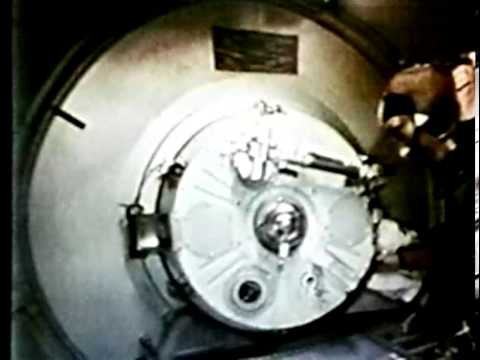
Negotiating these seemingly intractable differences demanded more than technical acumen—it demanded political flexibility, secure lines of trust, and displays of vulnerability rarely seen in exchanges between these programs. The resulting “docking module,” a sophisticated airlock designed to bridge the two vessels, became a potent symbol of the mission’s overarching aim: creating a literal and figurative interface between isolationist national projects. It was less an engineering marvel than a tangible commitment to compromise. The machinery of space, once a tool of absolutism and demonstration, became a medium of cautious but meaningful diplomacy. This transformation mirrored wider shifts described in the era’s overhaul of global intelligence and surveillance structures, as chronicled in works like Technological Networks and the Global Expansion of NATO’s Intelligence Infrastructure, 1949–1991 global intelligence infrastructure
Societal Impact: Shifting Perceptions and Redefining the Possible
For governments and their citizens alike, the Apollo-Soyuz mission offered more than a fleeting reprieve from the anxieties of confrontation. The image of astronauts Thomas Stafford and Alexei Leonov clasping hands in microgravity seized the global imagination and inspired new possibilities about the future of international cooperation—possibilities that directly challenged years of rhetoric painting the 'other side' as irredeemable adversaries. The ASTP was also broadcast live, beamed into homes across continents, becoming a type of soft-power spectacle that profoundly shaped how societies perceived “the enemy.”
The impact was not confined to international relations; it found purchase in scientific communities and among future generations of engineers. The mission, through its cultural symbolism and scientific results, foregrounded the value of information-sharing and trust-building, as contemporary studies of humanitarian cooperation in wartime (“The Humanitarian Front: The Role of the Red Cross in World War I” humanitarian collaboration) had already begun to suggest. The joint experiments—ranging from atmospheric science to biological studies—reinforced the sense that knowledge, unlike missile silos, could (and should) transcend borders. In classrooms and lecture halls from Houston to Moscow, the new era of space learning reflected an openness previously unimaginable in the crucible of Cold War rivalry.
Technological Synergy and the Shaping of Future Cooperation
The immediate technological gains of the ASTP were tangible, yet their most important legacy was the creation of new frameworks for collaboration. Before Apollo-Soyuz, both NASA and the Soviet space program had guarded their procedures, innovation pipelines, and even problem-solving methods with utmost secrecy. The ASTP forced both teams to devise “universal” systems and protocols, introducing shared measurement units, communication standards, and emergency responses. These breakthroughs extended beyond the operational parameters of a single mission—they became building blocks for future joint ventures, contributing indirectly to what would eventually become the International Space Station.
The Apollo-Soyuz mission also proved that collaborative innovation required more than sheer scientific ability. Teams learned, through painstaking trial and error, how to negotiate differences of language, work culture, and even risk tolerance. This early experience in multilateral problem-solving echoed trends found in other historical contexts in which adversaries cooperated toward wider structural goals, as seen in postwar reconstruction efforts like those described in Rebuilding Europe: The Economic Impact of the Marshall Plan After World War II economic cooperation after World War II. The ASTP thus set precedents not only in hardware but in the “software” of transnational collaboration: formal processes of negotiation, shared leadership, and institutional learning.
Political Dynamics: Changing Norms and the Limits of Détente
The ASTP was the product of, and in turn helped to shape, a moment of relative openness in superpower dealings. Yet détente itself was an unstable equilibrium. As Brezhnev and Ford basked in the congratulations, neither side could fully detach space exploration from strategic calculation. The joint mission was explicitly “test”—temporary, hedged, and subject to recall as soon as political climate cooled. When the Soviet invasion of Afghanistan rekindled hostility by the end of the 1970s, enthusiasm for partnerships cooled. Nonetheless, the habits of cooperation, codified during the ASTP, did not entirely vanish and provided a point of reference as relations alternated between frost and thaw through the subsequent decades.
The symbolic handshake in orbit did not undo decades of suspicion, nor did it eliminate competition for influence. Yet it did, for a moment, establish a new speech: one in which adversaries could acknowledge shared interests and humanize the “other.” In the long tradition of postwar negotiations—like those shaping European borders at the end of World War II—ASTP revealed the possibilities and limits of diplomacy when embedded in concrete, technological projects. Its legacy was thus marked not by absolute transformation, but by incremental, structural shifts that changed the tenor and pace of subsequent negotiations in both the immediate Cold War and the long aftermath, culminating decades later in more robust international space agreements. The arc of such evolution is clear when considering similarly pivotal events in Cold War history—such as the Berlin Airlift Berlin Airlift—where cooperation emerged under duress but yielded long-term diplomatic effects.
Conclusion: The Enduring Legacy of ASTP
The Apollo-Soyuz Test Project remains a singular event at the intersection of structural change, societal imagination, and the subtle recalibrations of power made possible by technological collaboration. While it could not fully dissolve the barriers of ideology, it forced adversaries to see mutual gains in partnership and helped lay the groundwork for future, more ambitious cooperative projects. The ASTP stands as both a testament and a blueprint—a vivid episode in which old rivalries yielded, even briefly, to a pragmatic politics of possibility. The legacy it leaves is an enduring lesson in diplomacy: even when trust is scarce and systems incompatible, audacious effort and willingness to compromise can change the rules that govern not only outer space, but relations here on Earth.
Chronology of the Apollo-Soyuz Test Project
| Date | Event |
|---|---|
| 4 October 1957 | Sputnik 1 launched, opening the superpower contest for orbital supremacy |
| 20 July 1969 | Apollo 11 lands on the Moon, closing the most symbolic phase of the race |
| 24 May 1972 | Nixon and Kosygin sign the US-Soviet agreement on cooperation in space, authorising a joint docking mission |
| 26 May 1972 | SALT I and the ABM Treaty signed in Moscow, giving détente its formal architecture |
| 1973–1975 | Joint design work and crew training in Houston and Star City; the docking module is developed to bridge the two incompatible systems |
| 15 July 1975 | Soyuz 19 launches from Baikonur; the Apollo spacecraft follows from Kennedy Space Center hours later |
| 17 July 1975 | The two craft dock in Earth orbit; Thomas Stafford and Alexei Leonov shake hands before a live international broadcast |
| 17–19 July 1975 | Two days of docked flight, crew exchanges and joint experiments |
| 19 July 1975 | Final undocking after a second, repeat docking test |
| 21 July 1975 | Soyuz 19 lands in Kazakhstan |
| 24 July 1975 | Apollo splashes down in the Pacific, the last flight of an Apollo spacecraft |
| December 1979 | Soviet invasion of Afghanistan; détente collapses and appetite for joint ventures fades |
| 1998 | First modules of the International Space Station launched, on foundations of US-Russian cooperation |
Frequently asked questions
What was the Apollo-Soyuz Test Project? The Apollo-Soyuz Test Project (ASTP) was a joint American-Soviet space mission carried out in July 1975, in which a NASA Apollo spacecraft and a Soviet Soyuz capsule docked in Earth orbit and their crews spent two days conducting joint experiments. It was the first cooperative human spaceflight between the two Cold War rivals, made famous by the handshake between astronaut Thomas Stafford and cosmonaut Alexei Leonov. Making the docking possible required a specially engineered module that bridged the two nations' otherwise incompatible spacecraft systems.
Why did the United States and the Soviet Union agree to cooperate in space during the Cold War? By the early 1970s the costs of unrelenting rivalry, including the ongoing threat of nuclear war, the drawn-out conflict in Vietnam and mounting economic strain, pushed both superpowers toward a policy of détente. Space cooperation offered a highly visible way to show that ideological adversaries could find common ground without abandoning their broader competition. The ASTP became one of the most concrete diplomatic expressions of that limited rapprochement.
What technical problems did engineers have to solve to make the joint docking possible? American and Soviet engineers had to reconcile fundamentally different measurement systems, docking mechanisms and communication protocols built up over decades of separate, secretive development. Their solution was a purpose-built docking module that functioned as an airlock and adapter between the Apollo and Soyuz spacecraft. Devising it demanded technical compromise and an unusual degree of mutual trust between programs that had spent years guarding their methods from one another.
Did the Apollo-Soyuz Test Project lead to lasting cooperation between the US and Soviet space programs? The habits of collaboration built during the ASTP did not immediately produce a permanent partnership, and enthusiasm cooled again after the Soviet invasion of Afghanistan at the end of the 1970s. Even so, the shared standards, negotiation processes and institutional experience the mission generated survived as a point of reference and contributed indirectly to the far more extensive cooperation that later produced the International Space Station.
Bibliography
- Agreement Concerning Cooperation in the Exploration and Use of Outer Space for Peaceful Purposes. 1972.
- Apollo-Soyuz Test Project mission reports. National Aeronautics and Space Administration, 1975.
- National Aeronautics and Space Administration. National Aeronautics and Space Administration.
- Siddiqi, Asif A. Challenge to Apollo: The Soviet Union and the Space Race. National Aeronautics and Space Administration, 2000.
Recommended reading
The Partnership: A NASA History of the Apollo-Soyuz Test Projectis the authorized NASA account of the mission, drawing on interviews with the engineers and diplomats who built the docking module described in this article.
View on Amazon →: The Partnership: A NASA History of the Apollo-Soyuz Test Project
Two Sides of the Moon: Our Story of the Cold War Space Raceis a dual memoir from an Apollo commander and the Soviet cosmonaut who clasped hands with Thomas Stafford in orbit, offering a firsthand account of the rivalry the ASTP briefly interrupted.
View on Amazon →: Two Sides of the Moon: Our Story of the Cold War Space Race
...The Heavens and the Earth: A Political History of the Space Ageis a Pulitzer Prize-winning history that situates the ASTP within the broader arc of superpower space competition and the political calculations behind it.
View on Amazon →: ...The Heavens and the Earth: A Political History of the Space Age
Détente and Confrontation: American-Soviet Relations from Nixon to Reaganis a comprehensive diplomatic history that explains the détente-era context in which the ASTP was negotiated and the limits it later encountered.
View on Amazon →: Détente and Confrontation: American-Soviet Relations from Nixon to Reagan
Image: Cosmonaut Aleksey Leonov and astronaut Thomas Stafford, commanders of the joint mission, during Apollo-Soyuz crew training at NASA's Johnson Space Center (1975). NASA, public domain, via Wikimedia Commons.
Prefer to listen? Hear this story as a podcast episode or play it on Spotify or Apple Podcasts.
As an Amazon Associate I earn from qualifying purchases. Affiliate links in Recommended reading — and in Further reading on older articles — may earn Writesides of History a commission at no extra cost to you.
From the archive
Free for the curious, supported by you
Writesides of History publishes free, in-depth history articles every week. If you enjoy reading, you can support the work: become a member for exclusive deep-dive dossiers and early access, or browse the maps, classroom packs and dossiers in the shop.
Become a Member Donate Visit the Shop