Digital Bureaucracies and the Expansion of European Governance: The Schengen Information System’s Impact, 1995–2010
How the Schengen Information System reshaped European security data sharing, digital bureaucracy and sovereignty between 1995 and 2010.

On a spring morning in 2004, the border between Germany and Poland buzzed with the ordinary bustle of trains, trucks, and travelers. Few noticed the invisible web binding their passage: massive, interconnected databases carrying thousands of alerts spanning the continent. The Schengen Information System (SIS), which began operational service alongside the expanding Schengen Area in 1995, had by then quietly revolutionized European governance—not with new treaties or border fortifications, but with digital bureaucracies that reshaped the very structure of state power and cooperation. The period from 1995 to 2010 saw SIS at the heart of a profound transformation in European order, where digital systems, rather than treaties alone, became chief instruments of integration, security, and contestation.
The creation and expansion of SIS belonged to a broader, rapidly evolving landscape of technological adaptation among European governments. Having witnessed the early emergence of automated governance infrastructures in the 1970s and 1980s, as tracked in works such as Computers, Contested Sovereignty, and the Birth of Automated Governance: The European Commission’s First Digital Transformation, 1970–1990, the European Union entered the late 20th century with a new vision—one in which the fluidity of borders could be maintained not by physical checks but by digital vigilance and collaboration. How did this new system transform the institutional character of European governance, and with what effects for sovereignty, civil liberties, and everyday life?
Building Digital Bureaucracies: The Architecture of SIS
From its inception, the Schengen Information System represented a radical departure from previous modes of cross-border cooperation. Rather than simple data exchanges or paper-based watch lists, SIS was a distributed digital infrastructure, linking national police, customs, and judiciary agencies through a real-time, transnational database. At its heart was the Central SIS, hosted in Strasbourg, and a network of National SIS platforms, which interfaced directly with border control units, police stations, and consular offices across member states. This structure allowed alerts on wanted persons, missing minors, stolen vehicles, or forged documents to propagate rapidly across Europe, ensuring that information generated in Lisbon could moments later shape decisions made in Helsinki.
The operationalization of SIS required more than technical innovation. Each member country had to redesign internal bureaucratic routines, retrain officers, and adapt legal frameworks for data sharing and privacy. The shift highlighted a paradox: the 'borderless Europe' facilitated by Schengen agreements actually depended on constructing highly sophisticated and interlinked digital borders within state institutions. This new bureaucracy differed from previous models by privileging code, algorithms, and standardized protocols—an evolution explored in the context of early digital adoption by the European Commission. Digital operability was as much a test of political synchronization as technical ability, resulting in new forms of inter-agency dependency and oversight at both national and supranational levels.
European Integration and the Expansion of Governance
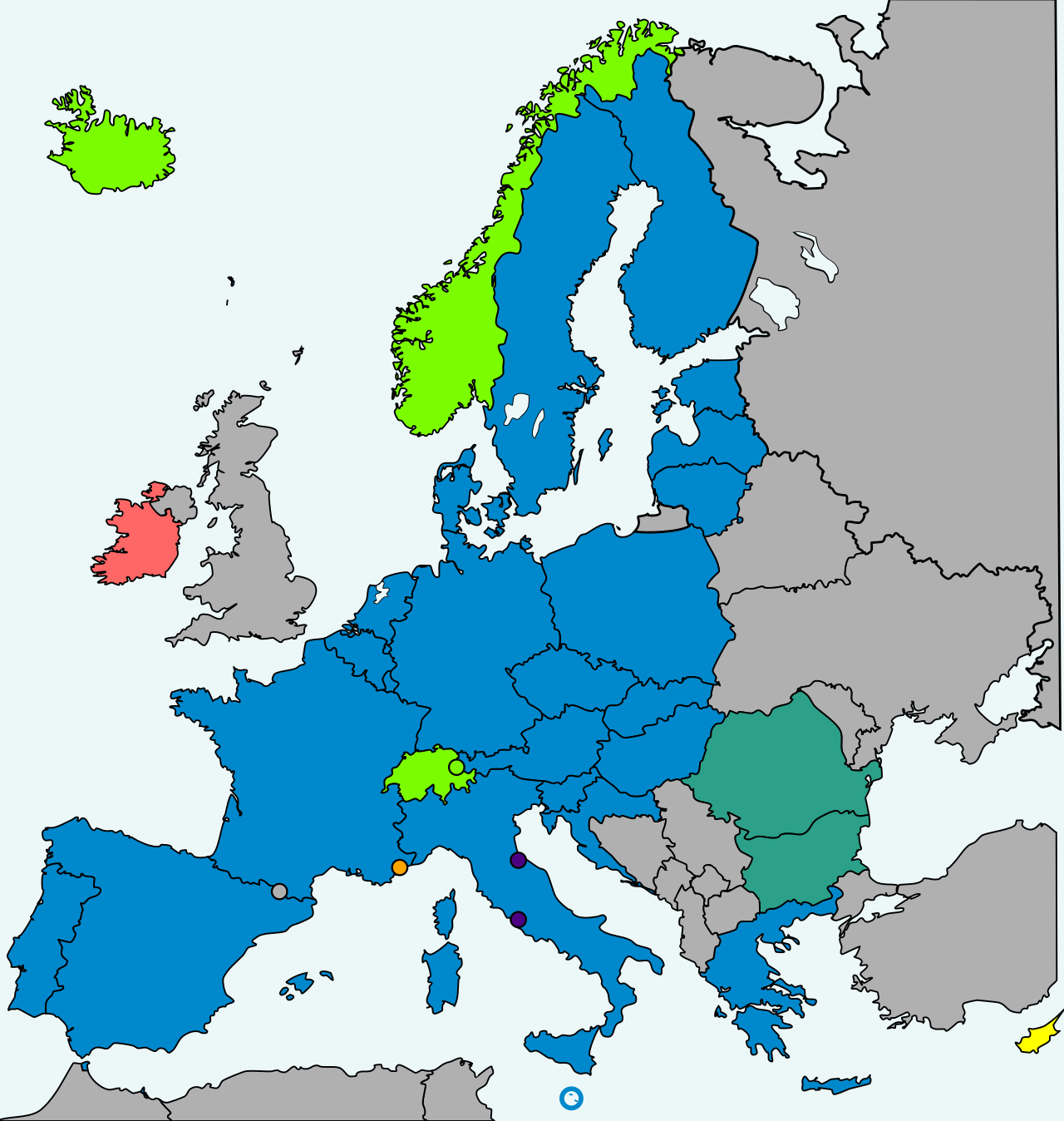
Between 1995 and 2010, the Schengen Area expanded from its founding core—France, Germany, Belgium, Luxembourg, Netherlands, Spain, and Portugal—to include the Nordics, Italy, Greece, Austria, and eventually the wave of Central and Eastern European nations following the 2004 EU enlargement. Each accession to the Schengen zone meant a recalibration of the SIS architecture: not merely plugging in new terminals, but aligning policing standards, data protection laws, and operational vocabularies. Integration thus went hand in hand with standardization and the rise of an ‘infrastructural Europe’—a continent increasingly governed as much by shared digital platforms as by parliamentary negotiation or diplomatic compromise.
Yet, SIS also raised profound questions about the nature of European sovereignty. If decisions about whose alerts appeared in the system—whose borders mattered, whose criminal records were flagged—were made according to shared protocols, did national states still exercise full control over security? Political debates in the European Parliament, ministries, and the press reflected unease. National sovereignty was not so much lost as made interoperable—a flexible but sometimes fragile arrangement that functioned as long as mutual trust persisted among member states. The politics of digital integration became especially apparent in moments of crisis or scandal, such as disputes over data quality or mismatched policing standards between east and west, north and south.
Societal Transformations: Mobility, Security, and Surveillance
For millions of Europeans, the practical effects of SIS were felt in the ease with which they could travel, work, and live across borders. The disappearance of passport checks on the ground was made possible by the ramping up of digital controls behind the scenes. In this sense, SIS acted as both the enabler and the regulator of unprecedented pan-European mobility. Yet, its reach extended beyond matters of convenience. The centralization and automation of watch lists transformed the nature of surveillance, reducing the risk of criminals simply fleeing to another jurisdiction—but also exposing ordinary Europeans to potential abuses, data errors, and legal ambiguity in ways beyond earlier analog regimes.
Civil liberties campaigns quickly recognized this tension. With each expansion of SIS functionalities—such as the introduction of biometric data and broader categories of alerts—debate intensified about privacy, transparency, and due process. Whose data was kept in the system? For how long? And what mechanisms existed for correcting mistakes? Activists and journalists pointed to the risk of a creeping security state, echoing concerns raised in earlier episodes of mass bureaucratic innovation chronicled in Rebuilding Europe: The Economic Impact of the Marshall Plan After World War II, where new administrative tools brought both promise and peril. The Schengen Information System, in this sense, was more than an administrative device; it was a powerful lens onto the evolving relationship between citizens, states, and supranational authorities in Europe’s digital era.
The Politics of Data and the Contest of Power
The growth of SIS was never simply a technical affair. Behind its protocols and databases lay fierce contestations over access, control, and accountability. Some member states—especially those at the external frontiers of the Schengen Area—felt both empowered and encumbered by their unique responsibilities. Their border posts became not just physical but digital bridges, charged with guarding the perimeter of a zone whose interior was rapidly integrating. Meanwhile, debates surged around data retention rules, the rights of data subjects, and the adequacy of data protection authorities, bringing together coalition of states with sharply differing priorities and administrative traditions.
Inter-institutional competition also surfaced between supranational bodies such as the European Commission, the Council of the EU, and intergovernmental committees tasked with SIS oversight. The management of Schengen’s digital bureaucracy triggered, at times, jurisdictional disputes reminiscent of earlier struggles to define European legal space, but now recast in the idiom of code, databases, and borderless networks. By the mid-2000s, the push for a second-generation SIS (SIS II) signaled both the system’s technical maturation and the ongoing political negotiation over who, ultimately, would set the terms of European integration in the digital age.
Everyday Life and the Bureaucratization of Identity
Perhaps most profoundly, the spread of SIS changed the experience of identity and belonging in Europe. For border officers in Italy, train conductors in Austria, or police investigators in Poland, the system became a daily reference point—an omnipresent authority shaping the contours of risk assessment, routine checks, and investigatory action. The act of moving from one side of a formerly guarded frontier to another was no longer a matter of inspection at a bureaucratic booth, but an invisible transaction mediated by database queries and alerts that could follow a person across the continent in real time.
For citizens and residents, the consequences were double-edged. European integration promised unrivaled mobility, but also made personal data the new passport to everyday life. Errors or wrongful entries in SIS could lead to travel disruptions, unexpected detentions, or administrative limbo. The expansion of digital bureaucracy thus magnified both the potential for seamless European experience and the anxieties of control by distant, often opaque, supranational systems. This transformation mirrored similar dynamics seen elsewhere in the 20th-century rise of bureaucratic authority, evoking historical parallels to the technological and administrative revolutions outlined in From Kitchen to Kitchenette: The Transformation of Domestic Space and Everyday Life in Postwar Western Europe, 1945–1975.
Conclusion: Legacy and Lessons of a Digital Transformation
By 2010, the Schengen Information System stood as one of the world’s largest shared policing and security databases, a technical and political achievement that crystallized the paradoxes of European governance at the dawn of the digital age. SIS did not only make borderless Europe possible; it gave concrete, invisible form to new architectures of mutual surveillance, accountability, and cooperation. In the process, it generated enduring debates about liberty, sovereignty, and the democratic oversight of digital power—debates that would only intensify as subsequent technologies (from biometrics to artificial intelligence) entered the scene.
The period from 1995 to 2010 marked not the end, but the opening act of an ongoing negotiation between integration and autonomy, efficiency and rights, bureaucracy and innovation. Ultimately, the creation of SIS invites us to reconsider what it means to govern, and to be governed, in a European Union where the algorithms of digital bureaucracy now underpin some of the most consequential political choices of modern history.
Chronology: Schengen and its information system, 1985–2010
| Date | Event |
|---|---|
| 1985 | The Schengen Agreement is signed at Schengen, Luxembourg, by France, West Germany, Belgium, Luxembourg and the Netherlands |
| 1990 | The Schengen Convention is signed, providing the legal basis for a shared information system alongside the removal of internal border checks |
| 1991 | Spain and Portugal accede to the Schengen agreements, completing the founding core |
| 1995 | Internal border controls are lifted among the first Schengen states and the Schengen Information System enters operational service, with the Central SIS hosted in Strasbourg |
| 1997 | The Treaty of Amsterdam incorporates the Schengen acquis into the framework of the European Union, placing SIS under EU institutional oversight |
| 1997–2000 | Italy, Austria and Greece are brought into operational Schengen cooperation and connected to the system |
| 2001 | The Nordic states, including Denmark, Finland and Sweden together with non-EU members Iceland and Norway, join operationally |
| 2004 | The largest EU enlargement admits ten new member states, setting in motion the alignment of their policing and data protection standards with SIS requirements |
| 2006 | Legal instruments for a second-generation system, SIS II, are adopted, opening a prolonged period of technical and political negotiation |
| December 2007 | Nine Central and Eastern European states and Malta are connected to the existing system; land and sea border checks with them are lifted |
| 2010 | SIS stands among the world's largest shared policing and security databases, with SIS II still awaiting deployment |
Frequently asked questions
What was the Schengen Information System and how did it actually work? SIS was a distributed digital infrastructure rather than a single filing system: a Central SIS hosted in Strasbourg was mirrored by National SIS platforms in each member state, which in turn connected border posts, police stations and consular offices. Officers entered alerts on wanted persons, missing minors, stolen vehicles or forged documents, and those alerts propagated across the network in near real time. An entry made in Lisbon could therefore shape a decision taken in Helsinki within moments.
Why did a borderless Europe require more digital infrastructure rather than less? This is the central paradox of the Schengen project. Removing physical checkpoints only became politically acceptable once states could satisfy themselves that surveillance had not disappeared but had been relocated into shared databases. The internal borders that came down at the roadside were, in effect, rebuilt inside state institutions as standardised protocols, retrained officers and interlinked systems.
Did SIS take sovereignty away from member states? Not in any straightforward sense. National authorities retained the power to issue and act on alerts, but they now did so according to shared protocols, common data categories and mutually recognised standards. Sovereignty was made interoperable rather than surrendered — a flexible arrangement that worked while mutual trust held, and that strained visibly during disputes over data quality or mismatched policing standards between member states.
What civil liberties concerns did the system raise? Campaigners, journalists and parliamentarians pressed persistently on questions of retention, transparency and redress: whose data was held, for how long, and by what mechanism could an error be corrected. Because an entry could follow a person across the continent, a wrongful or outdated alert could produce travel disruption, unexpected detention or administrative limbo. Each expansion of the system's functions, including the addition of biometric data and broader alert categories, sharpened rather than settled the debate.
Bibliography
- Convention Implementing the Schengen Agreement. 1990.
- Council Decision 2007/533/JHA on the establishment, operation and use of the second generation Schengen Information System. 2007.
- eu-LISA. European Union Agency for the Operational Management of Large-Scale IT Systems.
- EUR-Lex. Publications Office of the European Union.
Recommended reading
Cultures of Border Control: Schengen and the Evolution of European Frontiersthe fullest account of how Schengen reshaped the assumptions and practices of European border officials.
View on Amazon →: Cultures of Border Control: Schengen and the Evolution of European Frontiers
Controlling Frontiers: Free Movement Into and Within European interdisciplinary volume connecting internal security policing to the movement of people across Schengen space.
View on Amazon →: Controlling Frontiers: Free Movement Into and Within Europe
Migration and the New Technological Borders of Europeessays on the technological infrastructures that replaced physical checks, and the tensions they created between politics, technology and rights.
View on Amazon →: Migration and the New Technological Borders of Europe
Identifying Citizens: ID Cards as Surveillancea comparative sociology of citizen identification that frames what it means when personal data becomes the passport to everyday life.
View on Amazon →: Identifying Citizens: ID Cards as Surveillance
Project Europe: A Historya critical history of European integration that situates infrastructures like SIS within the wider institutional story.
As an Amazon Associate I earn from qualifying purchases. Affiliate links in Recommended reading — and in Further reading on older articles — may earn Writesides of History a commission at no extra cost to you.
From the archive
Free for the curious, supported by you
Writesides of History publishes free, in-depth history articles every week. If you enjoy reading, you can support the work: become a member for exclusive deep-dive dossiers and early access, or browse the maps, classroom packs and dossiers in the shop.
Become a Member Donate Visit the Shop