How the Tokugawa Shogunate Crafted Japan’s Edo Period Stability
How the Tokugawa shogunate built two centuries of peace in Edo-period Japan through sankin-kōtai, a fixed social order and controlled foreign contact.

When Tokugawa Ieyasu claimed victory at the Battle of Sekigahara in 1600, he laid the foundation for a political order that would shape Japan for over 260 years. The Tokugawa shogunate, established in 1603, transformed a fractious archipelago of warring clans into a centralized and peaceful society known as Edo-period Japan. This era saw remarkable social stability, economic growth, and cultural flourishing, orchestrated by shogunate policies that balanced control with innovation.
Tokugawa Ieyasu and the Establishment of Centralized Rule
After decades of civil wars, Ieyasu’s victory was not merely military but the beginning of a systemic change. The Tokugawa shogunate centralized power in Edo (modern-day Tokyo), enforcing a strict feudal hierarchy. This restructuring limited the autonomy of regional daimyos—feudal lords—through mechanisms like the sankin-kōtai, a system requiring them to spend alternate years in Edo. This policy ensured loyalty and deterred rebellion by effectively controlling the political elite.
The shogunate’s military government (bakufu) functioned alongside the emperor in Kyoto, who retained religious and symbolic authority but was politically sidelined. This dual structure maintained a veneer of imperial legitimacy while real power rested firmly with the shogun.
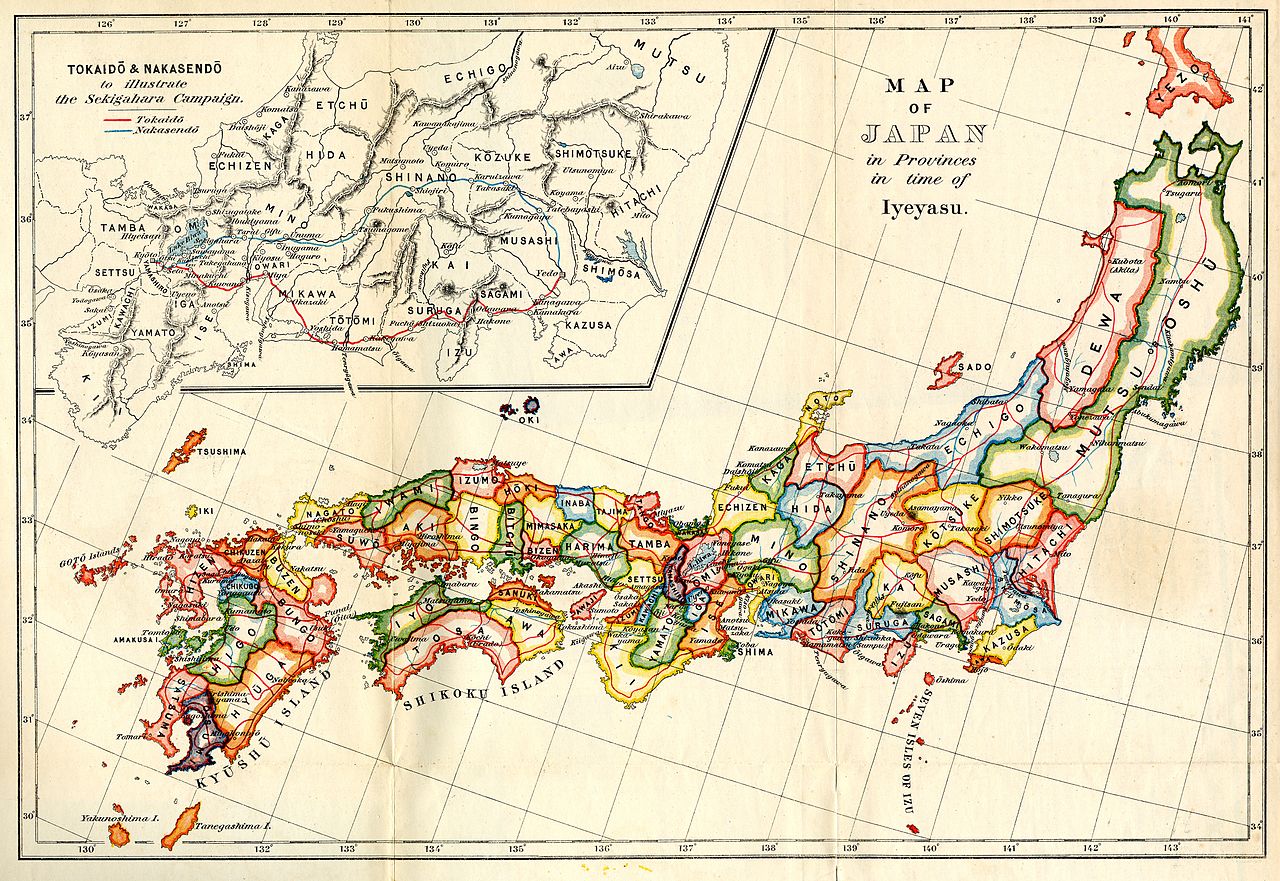
The machinery behind the arrangement was legal as well as geographical. In 1615 the bakufu issued the Buke Shohatto, the code of conduct for the military houses, and ordered each domain to keep only one castle; marriages between daimyo houses now required shogunal approval. The lords were sorted into categories — collateral Tokugawa branches, the fudai vassals who had served the family before Sekigahara, and the tozama or “outside” lords who submitted only after it — and their territories distributed so that trusted domains sat astride the roads an outside lord would need to march on Edo. A house that broke the code could be moved to a poorer province or abolished outright.
Sankin-kōtai made obedience continuous rather than occasional, since a lord’s wife and heir stayed permanently in Edo while he alternated between capital and domain. The processions were also ruinously expensive — hundreds of retainers, porters and horses moving along the Tōkaidō at the domain’s cost — and that expense consumed revenue that might otherwise have paid for armies.
Social Order and the Rigid Class System
Integral to Tokugawa stability was its four-tier social hierarchy: samurai, farmers, artisans, and merchants. The shogunate codified these classes to control social mobility and maintain order. Samurai were the ruling warrior class, granted stipends and tasked with administration and policing, while farmers were revered as the backbone of society for their role in food production. Merchants, despite their wealth, were placed at the bottom, reflecting Confucian values prioritizing productive labor over commerce.
This stratification, while rigid, created clear roles and expectations, preventing the kind of social upheavals that had fueled decades of war. It also supported the emergence of a sophisticated urban culture, especially in Edo, Osaka, and Kyoto.
Status in this scheme belonged to the household rather than the individual, and it was written down. From the 1630s every family had to register at a Buddhist temple, a measure devised to root out Christianity that doubled as a census. In practice the categories leaked: prosperous farmers lent money at interest, merchants acquired samurai standing through adoption, poor warriors took up crafts. What the hierarchy removed was not mobility but the armed independence that had made the previous century so violent. Its one unplaceable residue was the masterless samurai created whenever a house was abolished, and a rōnin conspiracy uncovered in Edo in 1651 persuaded the bakufu to slow those confiscations.
Economic Policies and Urban Growth
Despite its isolationist diplomacy, the Tokugawa shogunate oversaw a period of significant economic development. Peace reduced the drain of constant warfare, allowing agriculture to flourish. Rice production increased steadily, underpinning Japan’s economy with a reliable tax base. The sankin-kōtai system also stimulated internal commerce by requiring daimyos and their entourages to regularly travel, fostering infrastructure like roads and inns.
The tax base itself was measured in rice. Domains were rated by assessed yield in koku, samurai drew stipends in grain, and lords sold their surplus through warehouses in Osaka to raise the coin their Edo establishments demanded. The Dōjima rice market was dealing in contracts on future harvests by the early eighteenth century — sophisticated commerce, but it tied warrior incomes to a commodity whose price sagged as production rose. Samurai on fixed stipends grew steadily poorer against the merchants they nominally outranked, and by the Kyōhō era of the 1720s the shogunate was legislating against debt and luxury to relieve a squeeze its own system had produced.
Merchant towns grew alongside castle towns and Edo became one of the largest cities globally by the eighteenth century. The rise of the chōnin—townsmen including merchants and artisans—contributed to vibrant cultural advances such as ukiyo-e woodblock prints, kabuki theater, and haiku poetry, illustrating how the shogunate indirectly nurtured a rich middle-class culture within its strict social confines.
The Policy of Sakoku: Japan’s Closed Country
Perhaps the most defining feature of Tokugawa Japan was its sakoku (locked country) policy, a near-total ban on foreign contact implemented in the 1630s. Except for limited trade with the Dutch and Chinese through Nagasaki, international relations and Christian missionary activity were tightly controlled or forbidden. This isolation served multiple purposes: it prevented colonial influence, kept the social order intact from foreign religious ideologies, and allowed the shogunate to maintain sovereignty without outside interference.
While traditionally criticized as backward-looking, sakoku contributed to internal cohesion and allowed economic and cultural systems to mature without disruptive external shocks for over two centuries until the arrival of Commodore Perry’s black ships in 1853.
Modern scholarship has softened the picture of total closure. Japan kept four regulated gateways rather than none: Nagasaki for the Dutch and Chinese, Tsushima for Korea, Satsuma for the Ryukyu kingdom and its indirect commerce with China, and Matsumae for exchange with the Ainu of Ezo. The annual reports the Dutch company delivered from its post at Dejima kept the bakufu briefed on European affairs, and a licensed scholarly tradition known as rangaku, or Dutch learning, translated European medical and astronomical works. What sakoku regulated was not knowledge or trade as such but who controlled them, and the answer was always the shogunate.
Legacy of Tokugawa Stability
The same institutions that produced the peace also shaped the collapse. A treasury built on rice could not readily fund coastal defence against steam warships, hereditary office slowed the promotion of talent, and the outside domains kept too weak to threaten Edo proved strong enough to overthrow it once Satsuma and Chōshū combined. What the Meiji state inherited was nonetheless formidable — a widely literate population, a working highway network, and two and a half centuries of administrative habit that made the centralization of the 1870s possible.
The dissolution of the Tokugawa shogunate in 1868 ended the Edo period and initiated rapid modernization during the Meiji Restoration. Yet the legacy of Tokugawa rule—centralized governance, social order, economic networks, and cultural achievements—profoundly shaped modern Japan’s foundations. The era’s lengthy peace proved that strong, strategic rule could foster societal stability and growth even in a feudal setting.
The Tokugawa shogunate’s success in unifying Japan after centuries of conflict remains an essential chapter in world history, highlighting the complex interplay of military power, social control, and isolationist policy in shaping a nation’s destiny.
This period continues to captivate historians and enthusiasts alike, serving as a rich case study of governance, culture, and resilience in early modern East Asia.
Tokugawa Ieyasu’s leadership set the machinery in motion, but it was the durability of the institutions he left behind, rather than any single victory, that gave Japan its long peace.
Chronology of Tokugawa rule
| Date | Event |
|---|---|
| 1600 | Tokugawa Ieyasu wins the Battle of Sekigahara |
| 1603 | Ieyasu is appointed shogun and establishes the bakufu at Edo |
| 1615 | Osaka Castle falls, ending Toyotomi resistance; the Buke Shohatto codifies the rules governing daimyo houses |
| 1633–1639 | A sequence of edicts closes Japan to most foreign contact and forbids Japanese to travel abroad |
| 1635 | Sankin-kōtai is made a formal obligation for every daimyo |
| 1637–1638 | The Shimabara rebellion is crushed and the suppression of Christianity completed |
| 1641 | The Dutch trading post is confined to Dejima in Nagasaki harbour |
| 1651 | A rōnin conspiracy in Edo prompts the bakufu to ease its policy of abolishing daimyo houses |
| 1657 | The Meireki fire destroys much of Edo, which is rebuilt on a wider plan |
| 1688–1704 | The Genroku era marks the height of chōnin culture in ukiyo-e, kabuki and poetry |
| 1716–1736 | The Kyōhō reforms attempt to restore shogunal finances |
| 1853 | Commodore Perry’s squadron arrives at Uraga |
| 1868 | The shogunate falls and the Meiji Restoration begins |
Frequently asked questions
What made sankin-kōtai such an effective control on the daimyo? Alternate attendance obliged every lord to spend alternate years in Edo while his wife and heir remained there permanently, so any revolt would have started by abandoning his own family to the shogun. It also drained domain treasuries, because the great processions along the highways and the upkeep of an Edo residence had to be paid for out of domain revenue. The result was a nobility kept simultaneously visible, indebted and hostage to the capital.
If merchants sat at the bottom of the hierarchy, why did they become so wealthy? The four-tier order ranked status according to Confucian ideas about productive labour, not according to income. Peace, rising rice production and the constant traffic generated by alternate attendance created exactly the commercial opportunities that merchants were positioned to exploit, while samurai remained on fixed grain stipends whose real value fell. By the eighteenth century the townsmen of Edo and Osaka bankrolled a culture — kabuki, ukiyo-e, popular fiction — that the warrior class could rarely afford.
Was Japan genuinely sealed off under sakoku? Not entirely. Trade and diplomacy continued through four supervised channels: the Dutch and Chinese at Nagasaki, Korea via Tsushima, the Ryukyus via Satsuma and the Ainu via Matsumae. The policy was less a wall than a monopoly, ensuring that contact with the outside world passed through hands the shogunate controlled rather than through independent lords or Christian missionaries.
If Tokugawa rule was so stable, why did it fall in 1868? The very features that produced the peace made adaptation difficult once Perry’s squadron forced the question of foreign relations in 1853. A rice-based fiscal system could not easily finance modern coastal defence, hereditary office slowed the promotion of capable men, and the outside domains the settlement had marginalized had every reason to seek an alternative to bakufu rule. Satsuma and Chōshū supplied one by rallying to the emperor whose symbolic authority the shogunate had preserved for two and a half centuries.
Bibliography
- Buke shohatto. 1615.
- National Archives of Japan. National Archives of Japan.
- Ooms, Herman. Tokugawa Ideology: Early Constructs, 1570-1680. Princeton University Press, 1985.
- Sakoku edicts. 1639.
Recommended reading
Early Modern Japanthe most comprehensive single-volume survey of the whole Tokugawa era in English, strong on ecology and demography as well as politics.
The Making of Modern Japantraces the line from Sekigahara to the twentieth century, and is unusually clear on how Edo-period institutions shaped the Meiji state.
Tour of Duty: Samurai, Military Service in Edo, and the Culture of Early Modern Japanthe fullest account of alternate attendance as lived experience, from the cost of processions to their cultural consequences.
State and Diplomacy in Early Modern Japan: Asia in the Development of the Tokugawa Bakufuthe study that dismantled the idea of a wholly closed country by reconstructing the shogunate’s Asian diplomacy.
Japan in Print: Information and Nation in the Early Modern Periodshows how maps, gazetteers and encyclopedias turned the Tokugawa public into readers with a shared picture of their country.
View on Amazon →: Japan in Print: Information and Nation in the Early Modern Period
As an Amazon Associate I earn from qualifying purchases. Affiliate links in Recommended reading — and in Further reading on older articles — may earn Writesides of History a commission at no extra cost to you.
From the archive

Free for the curious, supported by you
Writesides of History publishes free, in-depth history articles every week. If you enjoy reading, you can support the work: become a member for exclusive deep-dive dossiers and early access, or browse the maps, classroom packs and dossiers in the shop.
Become a Member Donate Visit the Shop