The Unsung Warriors: Women’s Crucial Role in the Crusades
Explore the vital yet often overlooked roles women played during the Crusades, from battlefield support to political influence across the medieval world.

The Crusades have long been characterized as a series of brutal conflicts dominated by knights and kings, fought on foreign soil by armies of men driven by faith and ambition. Yet beneath this popular narrative lies a profound and nuanced story about the roles women played during these centuries-long campaigns. Far from passive bystanders, women were vital agents shaping the Crusades’ social, military, and political landscapes. Understanding their contributions reveals a richer and more complex history of these medieval holy wars.
Women on the Crusader Home Front
For many women in Europe, the departure of their husbands, fathers, or brothers on crusade transformed their daily lives completely. Noblewomen, often left to manage estates and ensure the survival of their households, stepped into roles traditionally reserved for men. They oversaw agricultural production, administered justice on behalf of absentee lords, and even negotiated local disputes to maintain peace on their lands. This heightened responsibility empowered some women to wield authority—and in a few cases, it forged political careers that extended beyond the period of the Crusades.
Additionally, women cultivated important networks of communication and support. They coordinated the collection of funds, supplies, and knights to send to the front lines. Convent communities became hubs of organization, producing letters and managing resources for crusader campaigns. These parallel efforts were crucial for sustaining the armies thousands of miles distant in the Levant.
The Law and Money Behind a Lady’s Authority
That authority rested on property law as much as on necessity. Taking the cross was ruinously expensive, and most families paid for it by mortgaging or selling land. Because a wife’s dower was charged against those same estates, her consent was often required for the sale to stand, and monastic cartularies preserve charters naming wives and mothers alongside the departing lord — among the clearest surviving records of medieval women acting as legal persons in their own right.
The Church reinforced the arrangement. Popes placed the crusader’s family, lands and debts under ecclesiastical protection — restated by Eugenius III in 1145 — so a wife left in charge could invoke Rome against neighbours who treated an absent lord as an opportunity. Canon law had also required a wife’s consent before her husband took a vow that removed him for years; Innocent III set that aside in 1201 because it obstructed recruitment, a reversal that measures how much weight her position had carried.
The Journeys and Roles of Women Crusaders
While less common than men, many women made the dangerous journey to the Holy Land themselves. These ranged from noblewomen accompanying their husbands or fathers to independent female pilgrims determined to visit sacred Christian sites. Some aristocratic women traveled with their retinues, often taking on diplomatic duties, fostering alliances, or even engaging in direct political negotiations with local rulers — both Christian and Muslim.
One extraordinary example is Queen Melisende of Jerusalem, who not only ruled but actively participated in the defense and governance of the Crusader Kingdom. Her leadership underscored the fact that women could hold sovereign authority amidst the gendered constraints of their time. Other women served as camp followers, nurses, or providers of medical care, their contributions vital on the battlefield’s periphery.
Western noblewomen came east throughout the period: Eleanor of Aquitaine reached Antioch and Jerusalem in 1148 — the year in which three of the noblemen in our register of crusader nobility deaths died on the same expedition — and Margaret of Provence, at Damietta when Louis IX was captured in 1250, secured the Italian merchants’ agreement to stay and provision the army.
Melisende and the Queens of Jerusalem
Melisende’s career shows how far that authority could reach. Eldest daughter of Baldwin II, she was designated his heir and crowned in 1131 with her husband Fulk of Anjou and their infant son. When Fulk tried to sideline her, the crisis of 1134 around Hugh of Jaffa ended with the king’s authority curbed and Melisende restored to a full share in government; after his death in 1143 she ruled with Baldwin III until he took the kingdom from her by force in 1152.
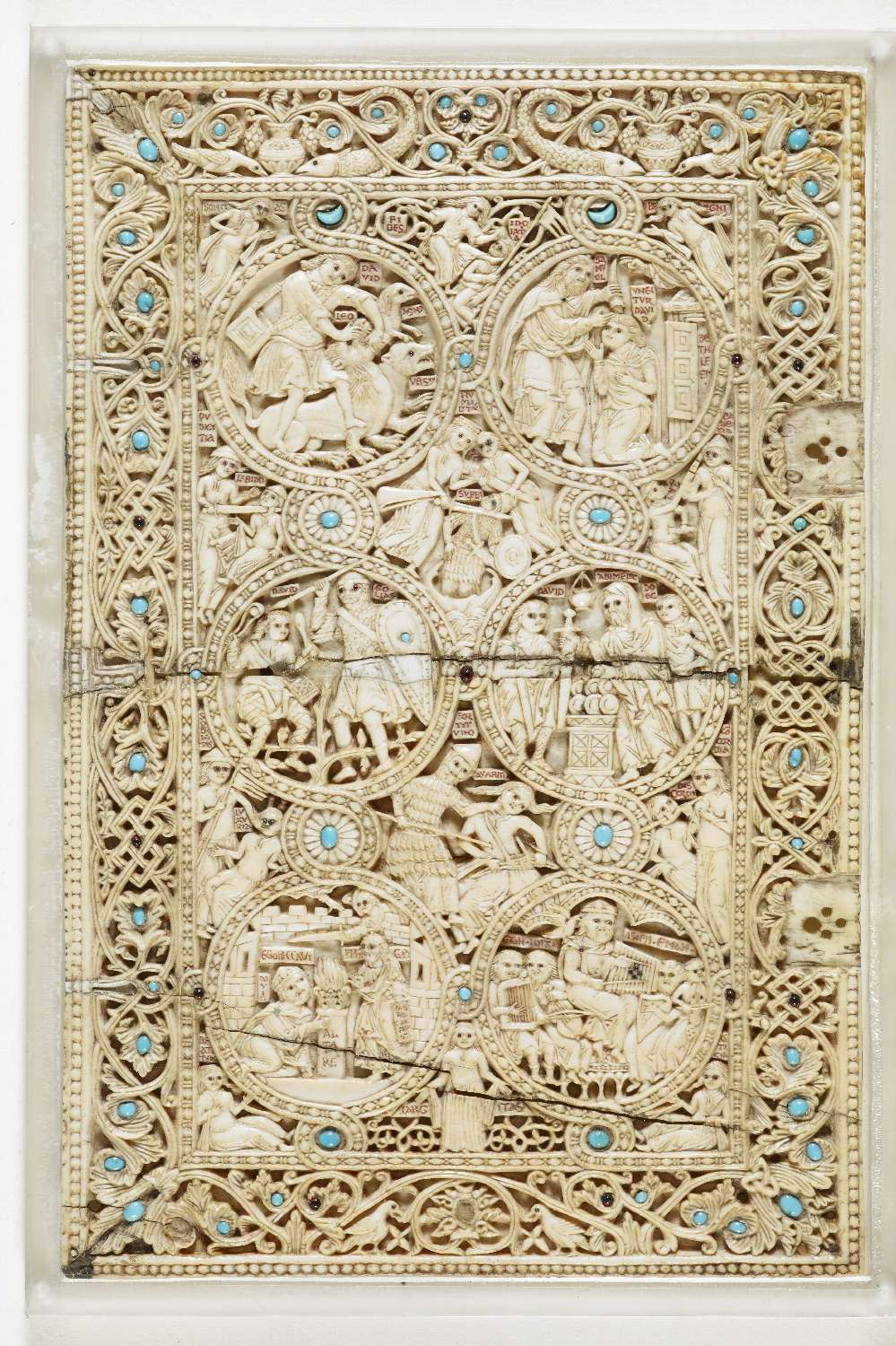
Her patronage outlasted the quarrel: the rebuilt Church of the Holy Sepulchre was consecrated in her reign, she endowed the convent at Bethany where her sister Ioveta became abbess, and the psalter illuminated for her survives as one of the finest objects of Crusader art. Nor was she unique. The crown of Jerusalem descended repeatedly through women — Melisende, then Sibylla, then Isabella I — because male lines kept failing and a man reached the throne by marrying the heiress, which made the choice of a queen’s husband the kingdom’s central political question.
Religious Women and the Crusading Spirit
Convents and nuns played a unique and powerful role in Crusading culture. Many religious women encouraged the crusading zeal through prayers, sermons, and the production of hagiographies glorifying crusader saints. Some even advocated for crusades or supported recruitment through their spiritual influence.
Notably, the development of military orders such as the Order of St. John (Knights Hospitaller) included female members who served in caregiving roles, tending to wounded knights and pilgrims. These women combined religious devotion with practical service, embodying a critical humanitarian dimension often overshadowed by tales of martial valor.
What the Chroniclers Recorded
Nearly everything the narrative sources say about women on crusade came from clerics with a case to argue, and they worked with two fixed images. In the first, women are indispensable: at Antioch, and again during the siege of Acre between 1189 and 1191, Latin and Muslim writers alike describe women carrying water to the line, hauling earth to fill the ditches and tending the wounded. In the second, women are a source of pollution whose presence explains defeat: when a campaign stalled the clerical explanation was sin in the camp, and the ordinances of 1190 barred women from the Third Crusade army except elderly laundresses.
Both images say more about the writer than about what happened, which is why the modern reassessment leans so heavily on charters, wills, papal registers and estate accounts: they record what women did rather than what a chronicler thought they signified.
The Impact of Women in Post-Crusade Societies
The influence of women extended beyond the immediate Crusader period. The marriages they arranged, the estates they managed, and the cultural links they maintained shaped relations between East and West. Some women fostered trade, facilitated cultural exchange, and contributed to the establishment of new social norms within Crusader states and in Europe upon their return.
Moreover, the heightened visibility of women in administrative and social roles during the Crusades contributed to gradual shifts in medieval attitudes towards female agency and leadership. While these changes were uneven and limited, the Crusades offered a rare historical moment when women’s contributions in warfare and governance could not be easily ignored.
Conclusion: Reassessing the Narrative of the Crusades
Women in the Crusades were far more than passive backdrops to male heroism. They were essential architects of the crusading endeavor—managing estates, supporting armies, leading crusader states, and participating in religious life. These multifaceted roles challenge the traditional narrative that sidelines women’s historical significance in medieval warfare.
Recognizing women’s contributions enriches our understanding of the Crusades as a total social phenomenon involving the complexities of gender, power, and faith. As historical research continues to uncover more about these unsung protagonists, the medieval Crusades emerge not merely as battles for territory, but as vivid human dramas shaped equally by women’s enduring influence.
For broader context on medieval political dynamics during this period, readers may consult the political intrigue of the Byzantine Empire.
Chronology of women in the crusading era
| Date | Event |
|---|---|
| 1095 | Urban II preaches the First Crusade at Clermont |
| 1096–1099 | Women travel with the First Crusade as pilgrims, servants and camp labour |
| 1113 | Paschal II recognises the Order of St John, later home to sisters as well as brothers |
| 1131 | Melisende is crowned queen of Jerusalem with Fulk of Anjou and their infant son |
| 1134 | The revolt of Hugh of Jaffa ends with Fulk's authority curbed and Melisende restored |
| 1147–1149 | Second Crusade; Eleanor of Aquitaine reaches Antioch and Jerusalem |
| 1152 | Baldwin III takes the kingdom of Jerusalem from his mother by force |
| 1189–1191 | Siege of Acre; chroniclers describe women labouring at the siege works |
| 1190 | Third Crusade ordinances bar women from the army except elderly laundresses |
| 1201 | Innocent III dispenses crusaders from needing their wives' consent |
| 1250 | Margaret of Provence holds Damietta together after the capture of Louis IX |
| 1291 | The fall of Acre ends Latin rule in the Holy Land |
Frequently asked questions
Did women fight in the Crusades? Only very rarely as soldiers. Chroniclers at Antioch and Acre describe women carrying water to the siege lines, hauling earth to fill ditches and caring for the wounded — dangerous work, but not combat. The decisive female contribution to crusading was logistical, financial and political rather than martial.
What did noblewomen actually do while their husbands were away? They ran the estate: collecting rents, administering justice on the absent lord's behalf, defending the family's claims and raising the cash that paid for the expedition. Where the heir was a minor, guardianship commonly fell to the mother, which could mean a decade or more of effective rule. Papal protection of a crusader's lands gave that authority a legal backbone.
Who was Melisende of Jerusalem? She was the eldest daughter of King Baldwin II, crowned in 1131 and a ruler of the kingdom in her own right for more than twenty years. She survived her husband Fulk's attempt to sideline her, governed with her son Baldwin III after 1143, and endowed churches and convents whose surviving art still records her reign.
Were there women in the military orders? Yes, though not as knights. The Order of St John admitted sisters who lived under its rule and served in its houses and hospitals, caring for the sick and for pilgrims. They were not fighting members, but the order's charitable work depended on them.
Bibliography
- Archives nationales. Archives nationales, France.
- Charters of departing crusaders. Archives nationales, France.
- Chartres, Fulcher of. Historia Hierosolymitana.
- Friedman, Yvonne. Encounter between Enemies: Captivity and Ransom in the Latin Kingdom of Jerusalem. Brill, 2002.
- Komnene, Anna. Alexiad.
Recommended reading
Women and the Crusadesthe fullest modern survey of women's involvement in crusading, from the battlefield to patronage, propaganda and prayer.
Women, Crusading and the Holy Land in Historical Narrativeshows how the chroniclers shaped what they recorded about women, and why their portraits must be read against the documents.
View on Amazon →: Women, Crusading and the Holy Land in Historical Narrative
Gendering the Crusadesthe collection that opened the field, gathering studies of women's military, political and family roles across the expeditions.
Queens of Jerusalem: The Women Who Dared to Rulea readable narrative of Melisende and the queens who followed her, and of how the crown of Outremer passed through women.
View on Amazon →: Queens of Jerusalem: The Women Who Dared to Rule
God's War: A New History of the Crusadesthe standard one-volume history, indispensable for placing women's contributions inside the campaigns themselves.
As an Amazon Associate I earn from qualifying purchases. Affiliate links in Recommended reading — and in Further reading on older articles — may earn Writesides of History a commission at no extra cost to you.
From the archive
Free for the curious, supported by you
Writesides of History publishes free, in-depth history articles every week. If you enjoy reading, you can support the work: become a member for exclusive deep-dive dossiers and early access, or browse the maps, classroom packs and dossiers in the shop.
Become a Member Donate Visit the Shop