Knights Templar: The Warrior-Monks Who Ruled the Crusades
Who were the Knights Templar and what was their purpose? Inside the crusader knights who became medieval Europe’s most powerful military order.

The Knights Templar, founded in the early 12th century, stand as one of the most iconic and mystifying military orders of the medieval period. Born amid the fervor of the Crusades, their journey from humble protectors of pilgrims to powerful financiers and warriors has captivated historians and enthusiasts alike. Delving into the pivotal role the Knights Templar played during the Crusades reveals not only their military significance but also their profound impact on medieval society and politics.
Origins: From Pilgrim Protection to Military Order
The inception of the Knights Templar is deeply intertwined with the fervent zeal of the First Crusade and the volatile atmosphere of the Holy Land in the early 12th century. Established around 1119 by Hugues de Payens and eight fellow knights, their initial mission was to safeguard Christian pilgrims traveling to Jerusalem following its capture by Crusader forces in 1099. The promise of safe passage through hostile territory was vital, as surrounding Muslim powers still viewed Crusader states as tenuous outposts.
By 1129, their military role had expanded significantly, formalized during the Council of Troyes where the Templar Rule was established with the backing of Bernard of Clairvaux, enhancing their religious stature. Adopting a code combining monastic discipline and martial obligations, the Knights Templar became the first religious military order, taking vows of poverty, chastity, and obedience.
The Rule answered an objection that had troubled Latin Christendom for centuries. A monk was forbidden to shed blood, yet the Crusader states needed soldiers who would not sail home once their pilgrimage was done. Bernard of Clairvaux met the difficulty head-on: a knight who killed in defence of Christendom committed not murder but a form of service. That was a legitimacy no mercenary company could claim, and donations followed. In 1139 the bull Omne datum optimum placed the Templars under the pope alone, free of local bishops and of tithes — a small escort of pilgrims turned permanent, self-financing garrison.
Military Prowess and Strategic Significance During the Crusades
The Knights Templar were not mere bodyguards; they became formidable warriors whose discipline and battlefield innovations were crucial in the many campaigns of the Crusades. Their white mantles emblazoned with the distinctive red cross soon became a symbol of unwavering Christian resolve. This was evident in significant battles, such as the Siege of Jerusalem (1147) and the defense of the Kingdom of Jerusalem during the turbulent period after Saladin’s ascendance.
Their fortified castles, strategically constructed along key routes in the Holy Land, served both as military strongholds and logistical hubs. The Templar castles at Gaza, Safed, and Krak des Chevaliers underscored their architectural and tactical ingenuity. These fortifications not only resisted Muslim counterattacks but also projected Crusader power across sensitive borders.
Discipline, more than numbers, explains their reputation. The order's knights were always few — a heavy cavalry core supported by larger bodies of sergeants, turcopoles and hired troops — and the Rule bound them to fight as a formed unit, forbidding a brother to break ranks or charge before the command. It also forbade them to be ransomed, which removed the calculation that shaped so much aristocratic warfare: a captured Templar could expect death rather than negotiation, so the order held where a feudal levy might not. The kings of Jerusalem used them accordingly, in the vanguard or the rearguard.
Notable Engagements
In 1187, despite the catastrophic Christian loss at the Battle of Hattin to Saladin’s forces, where many Templars fought valiantly, their resilience remained iconic. Although Jerusalem fell, the Templars regrouped and fortified remaining holdings such as Acre, playing a central role in the Third Crusade’s efforts led by Richard the Lionheart.
Financial Innovations and Influence in Europe
Perhaps less recognized but equally transformative was the Knights Templar’s role as medieval bankers. As their reputation as trustworthy warriors and men of faith grew, European nobility and monarchs entrusted the Templars with vast sums of money, land, and valuables. Pilgrims and nobles alike began depositing fortunes with the order, enabling the Templars to establish a rudimentary yet effective banking network throughout Christendom.
This centralized trust allowed the Templars to facilitate funds transfers, issue letters of credit, and underwrite military expenditures, thus fueling Crusading ventures and European power politics. Their financial acumen brought burgeoning wealth and political leverage that extended far beyond the battlefield. In many ways, the Knights Templar were pioneers of financial instruments that echoed into later banking history.
None of this was separable from the war. The order's commanderies in France, England, Aragon and Italy worked estates, collected rents and sent a fixed share of their revenue east each year, so that Western agriculture paid for Eastern garrisons. The Templar banking network grew out of that logistical problem before it became a service to outsiders: an institution already moving its own money across Christendom could move other people's for a fee. The Paris Temple came to hold the French royal treasure itself, which made the order indispensable to the crown — and dangerously close to it.
The Fall of the Templars and Their Enduring Legacy
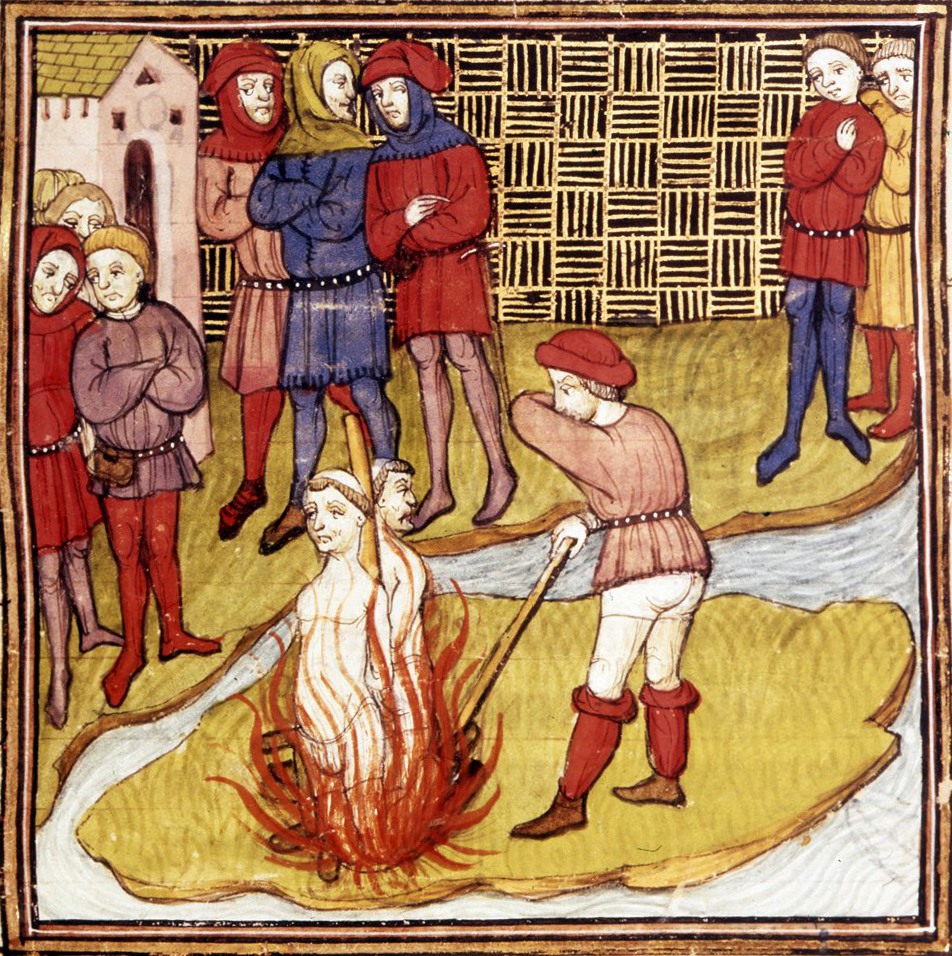
The dramatic downfall of the Knights Templar in the early 14th century illustrates the complex entanglement of politics, power, and religion. King Philip IV of France, burdened by debts to the order and covetous of their wealth, initiated a systematic campaign to dismantle the Templars. Accusations of heresy, blasphemy, and immorality, often extracted under torture, led to arrests across Europe, culminating in the order’s official suppression by Pope Clement V in 1312.
The order's vulnerability was not only financial. When Acre fell in 1291, the Templars lost the last of the bases that justified their privileges, and a wealthy, exempt, heavily armed corporation with no war left to fight was an awkward thing in Latin Europe. The French arrests came as one co-ordinated sweep on Friday 13 October 1307, and the confessions taken afterwards gave Philip the material with which to press Clement V. The pope, unable to protect the order and unwilling to condemn it, dissolved it at the Council of Vienne by administrative decision rather than by verdict: Vox in excelso suppressed the Templars without finding the accusations proved.
The Grand Master Jacques de Molay’s public recantation before his execution in 1314 symbolized the tragic end of a once-mighty institution. Yet, the Templars’ influence persisted in folklore, secret societies, and as a symbol of chivalric virtue and mystery. Their castles, financial models, and martial ethos shaped medieval Europe’s socio-political fabric long after their dissolution.
Modern scholarship has spent much of its effort separating record from legend. The trial documents survive in quantity, and they show a case built on confessions taken under torture and retracted wherever the accused stood beyond Philip's reach: in Aragon, Cyprus and England the same charges produced few admissions. Historians read them as a political instrument, not evidence of a secret creed — which leaves the better question intact: how a religious corporation acquired, in two centuries, both the wealth that destroyed it and the mystery that outlived it.
Conclusion: Guardianship, Innovation, and Medieval Power
The Knights Templar were far more than just warriors of the Crusades; they were innovators in warfare, finance, and international politics. Their rise from protectors of pilgrims to a major medieval institution underscores the complexities of Crusader history. Though their dramatic fall cast a shadow, the imprint of the Knights Templar remains vivid within the saga of the Crusades and the evolution of medieval Christendom.
Their story invites reflection on how faith, ambition, and power intermingled to shape a transformative epoch, echoing through history and continuing to inspire curiosity in our modern age.
Muslim leadership in Crusading conflicts
Chronology of the Knights Templar
| Date | Event |
|---|---|
| 1099 | Crusader forces capture Jerusalem |
| c. 1119 | Hugues de Payens and eight companions band together to protect pilgrims |
| 1129 | Council of Troyes approves the Templar Rule, backed by Bernard of Clairvaux |
| 1139 | Omne datum optimum places the order under papal authority alone |
| 1147–1149 | Templars serve in the Second Crusade |
| 1187 | Defeat at Hattin; Saladin takes Jerusalem |
| 1189–1192 | Third Crusade; the Templars hold Acre alongside Richard the Lionheart |
| 1240s | Safed refortified as a principal Templar stronghold |
| 1291 | Acre falls; the order loses its last Holy Land base |
| 13 October 1307 | Philip IV has the Templars of France arrested |
| 1310 | Fifty-four brothers burned near Paris after retracting confessions |
| 1312 | Clement V suppresses the order by Vox in excelso at the Council of Vienne |
| 1314 | Jacques de Molay burned in Paris |
Frequently asked questions
Why were the Knights Templar called warrior-monks? Because they were both at once: from the Council of Troyes in 1129 the brothers took the vows of poverty, chastity and obedience and lived under a written Rule, yet their obligation was armed service rather than the cloister. Bernard of Clairvaux supplied the argument that made the combination defensible — a knight who fought for Christendom performed a duty, not a sin.
How did an order of knights end up running a bank? It began as logistics: the Templars held estates across Western Europe and had to move that income safely to their garrisons in the East. Once the network existed, pilgrims, nobles and monarchs began depositing their own valuables with an order famous for trustworthiness, and letters of credit followed.
Why did Philip IV of France destroy the Templars? Philip was deep in debt to the order and covetous of its wealth, and after the loss of Acre in 1291 the Templars had no war left to justify their privileges. He arrested the French brothers in October 1307 and used confessions extracted under torture to force Clement V's hand; the order was suppressed in 1312, the charges never proved.
Did the Knights Templar really vanish after 1314? The institution did: no continuous organisation survived the suppression. What survived was the story — the Templars passed into folklore, into the imagined ancestry of later secret societies, and into an image of chivalric mystery far more durable than the order itself.
Bibliography
- Forey, Alan. The Military Orders from the Twelfth to the Early Fourteenth Centuries. Macmillan, 1992.
- II, Innocent. Omne Datum Optimum. 1139.
- The Rule of the Templars. 1129.
- V, Clement. Vox in excelso. 1312.
- Vatican Apostolic Archive. Archivio Apostolico Vaticano.
Recommended reading
The New Knighthood: A History of the Order of the Templethe standard scholarly history from foundation to suppression.
View on Amazon →: The New Knighthood: A History of the Order of the Temple
The Trial of the Templarsthe authoritative account of the arrests and Philip IV's case.
The Knights Templar: A New Historysets the order's estates and finances beside its military role.
The Templars: The Rise and Spectacular Fall of God's Holy Warriorsthe most readable modern narrative of the order.
View on Amazon →: The Templars: The Rise and Spectacular Fall of God's Holy Warriors
Crusader Castlesthe best study of the fortifications on which Templar power rested.
As an Amazon Associate I earn from qualifying purchases. Affiliate links in Recommended reading — and in Further reading on older articles — may earn Writesides of History a commission at no extra cost to you.
From the archive
Free for the curious, supported by you
Writesides of History publishes free, in-depth history articles every week. If you enjoy reading, you can support the work: become a member for exclusive deep-dive dossiers and early access, or browse the maps, classroom packs and dossiers in the shop.
Become a Member Donate Visit the Shop