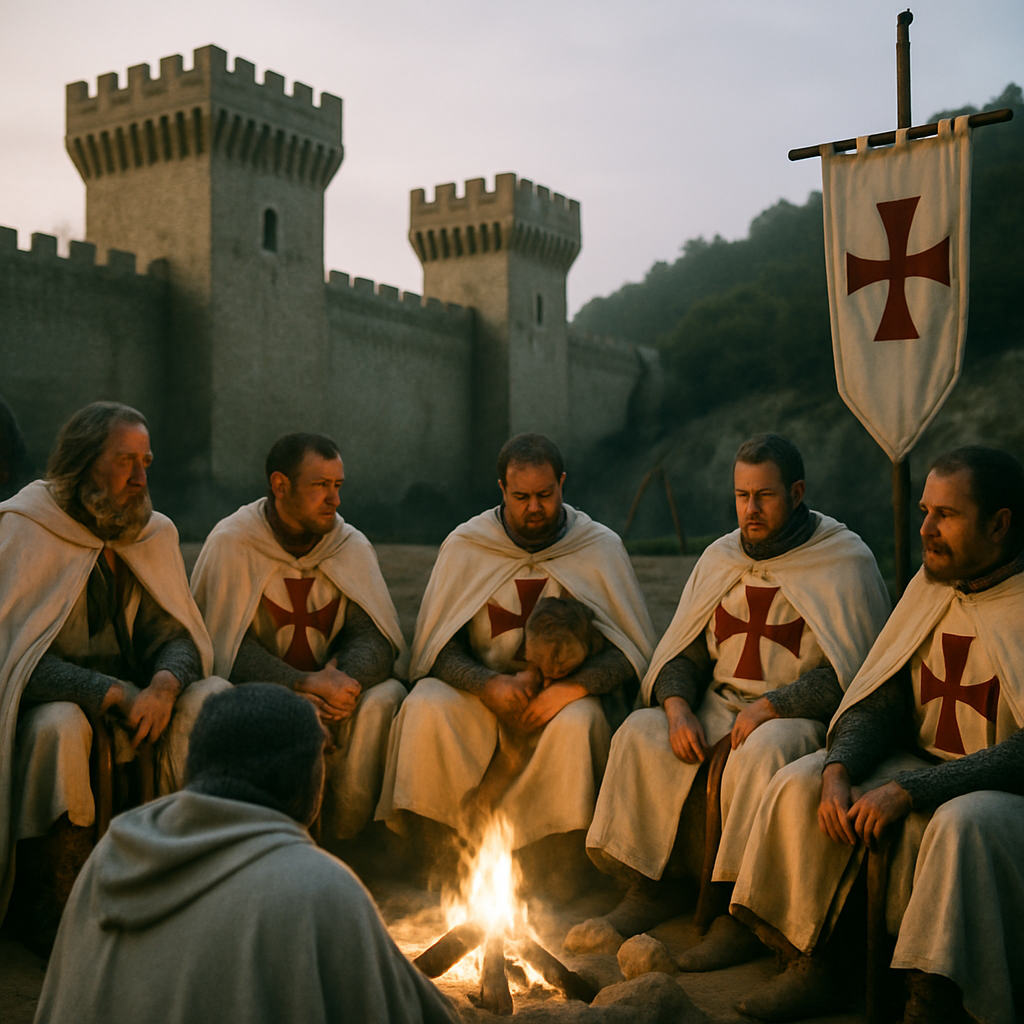
In the turbulent era of the Crusades, few institutions captured the imagination and fear of contemporaries like the Knights Templar. Founded in the early 12th century, the Templars evolved from humble protectors of pilgrims en route to Jerusalem into one of the most elite military and financial organizations of medieval Christendom. Their legendary combat prowess and far-reaching influence shaped the course of the Crusades and left an indelible mark on European history.
Origins and Mission of the Knights Templar
The Knights Templar were born out of a desperate need to secure the Holy Land for Christian pilgrims and crusaders. Established around 1119 by a small band of knights led by Hugh de Payens, a nobleman from Champagne, their original mission was to safeguard pilgrims traveling to Jerusalem after its capture in the First Crusade. The group’s full name, Poor Fellow-Soldiers of Christ and of the Temple of Solomon, reflected their vow to protect Christian sites and their ambition to emulate the monastic discipline of monks.
The Vatican’s formal endorsement of the Templars during the Council of Troyes in 1129 transformed the small protective order into a recognized military force, unique as monk-warriors who combined strict religious observance with military discipline. Their white mantles emblazoned with a red cross became symbolic of an elite warrior fraternity.
The Military Innovations and Crusading Role
The Templars’ reputation was built largely on the battlefield. Their contribution was not merely numerical but strategic and tactical. In the harsh conditions of the Levant, the Templars adapted genuinely innovative approaches to medieval warfare. They utilized heavy cavalry tactics with a dedication to discipline, cohesion, and shock combat unrivaled by other crusader forces.
Perhaps most iconic was their formation of tightly coordinated cavalry charges that broke enemy lines and their effective use of heavily armored knights supported by well-trained sergeants and squires. Their strict military hierarchy and training regimens allowed them to act as a disciplined core during the various battles that characterized the Crusades, including key engagements such as the Battle of Montgisard in 1177 and the protracted Siege of Acre (1189–1191).
Beyond combat, the Templars also developed a proto-banking system to manage finances for their members and the wider crusader community. Their network of commanderies across Europe financed military campaigns and facilitated the transfer of money and resources, making them a backbone of crusading logistics.
Political Power and Influence in Europe and the Holy Land
As their reputation and wealth grew, the Knights Templar became increasingly involved in political affairs both in the Holy Land and across Europe. They were not only military leaders but also trusted advisors to kings and popes. Their autonomy was such that they reported directly to the pope, granting them unique independence from local secular authorities.
This status made the Templars pivotal players during the fragmented politics of crusader states like the Kingdom of Jerusalem and influenced European monarchies—especially in France, England, and the Iberian Peninsula. Their economic power, amassed through landholdings, donations, and commercial enterprises, turned them into a formidable political actor.
Their influence also attracted envy and suspicion, sowing the seeds for the dramatic downfall they would later face, especially under King Philip IV of France, who coveted their wealth and power.
The Downfall and Legacy of the Knights Templar
The abrupt suppression of the Knights Templar in the early 14th century marked one of medieval history’s more shocking political intrigues. On Friday, October 13, 1307, King Philip IV ordered the arrest of hundreds of Templars in France on charges ranging from heresy and blasphemy to secret conspiracies. Coerced confessions and show trials led to the dissolution of the order by Pope Clement V in 1312.
Despite their abrupt fall, the Knights Templar legacy persisted in numerous ways. Their military tactics influenced European knights for generations, and their pioneering financial innovations laid groundwork for modern banking practices. The mystique surrounding their sudden destruction fueled myths and legends that endure today.
Historically, the Templars remain emblematic of the complex entanglement of faith, warfare, and power in the medieval period, illuminating the turbulent nature of the Crusades themselves.
Conclusion: The Enduring Historical Impact of the Templars
The Knights Templar stand as a symbol of medieval chivalry and religious zeal, intertwined with the harsh realities of warfare and politics during the Crusades. Their role extended beyond mere fighters to financial innovators and political actors, shaping key events that defined the medieval era. Although their order was violently dismantled, the echoes of their influence resonate through history, capturing imaginations and continuing to provoke scholarly debate.
Their story offers a window into the ambitions, conflicts, and complexities of the Crusader period, reminding us how military orders could wield power on scales that transcended the battlefield and altered the medieval world.
For deeper insight on related medieval conflicts and organizations, consider exploring transformative medieval battles and enduring medieval powers.