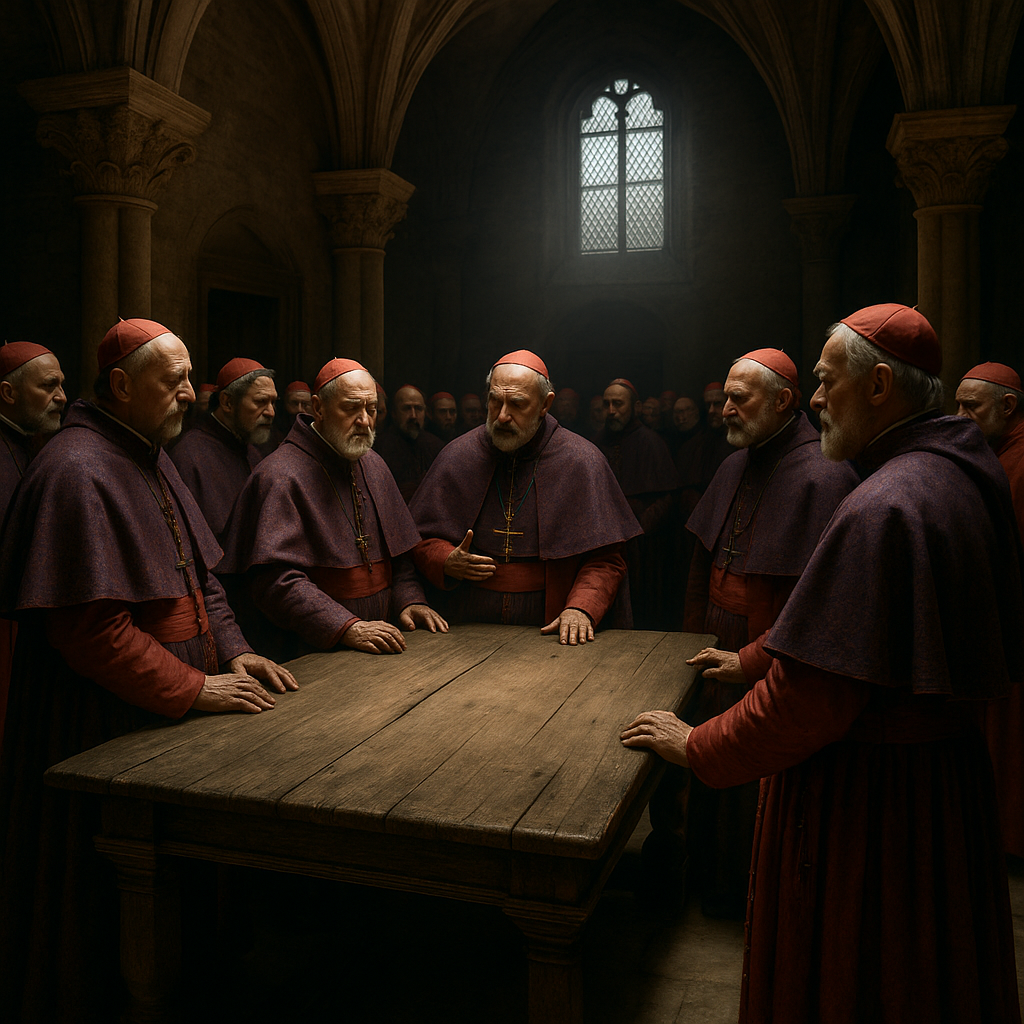
In the heart of the 14th century, the papacy was no longer centered in Rome but was firmly established in Avignon, France. This period, known as the Avignon Papacy, was marked by complex political pressures and factional divisions that shaped the Catholic Church for nearly seven decades. One of the most dramatic moments in this era unfolded during the papal conclave of 1340, which culminated in the election of Pope Clement VI. This conclave encapsulates the fraught intersection of religious authority and political intrigue during medieval Europe.
The Avignon Papacy: A Shift in Power and Perception
The relocation of the papal seat from Rome to Avignon in 1309 under Pope Clement V had already created considerable tension. Many in Europe viewed the papacy as increasingly subject to French royal influence, leading to suspicions and alienation among other European powers. By 1340, this perception contributed to a highly charged environment within the College of Cardinals, where memberships were often split along national lines, particularly between French and Italian cardinals.
As Pope Benedict XII approached the end of his papacy, the coming conclave was expected to be highly contentious. The political stakes were enormous—not only determining the spiritual leadership of Christendom but also the church’s ideological trajectory as it navigated threats like burgeoning heresy movements and rising national monarchies.
The 1340 Papal Conclave: A Battle of Factions
When Benedict XII died in 1342, the conclave convened in Avignon was dominated by two primary factions. The first was largely French, favoring a pontiff who would maintain strong ties with the French crown and continue the papacy’s Avignon residency. The second faction, while smaller, was more international and wary of French dominance, pushing for reforms and a more independent papal stance.
The conclave was marked by intense debate and political maneuvering. Rumors swirled of secret pacts and potential vetoes influenced by external monarchs, notably King Philip VI of France, who exerted considerable leverage over the cardinal electors. The cardinals were also acutely aware of the geopolitical instability affecting Europe, including the early tremors of the Hundred Years’ War and the spread of the Black Death, which further complicated the urgency of choosing a strong spiritual leader.
The Election of Pope Clement VI: A Controversial Compromise
After weeks of negotiation and deadlock, Cardinal Pierre Roger was ultimately elected Pope Clement VI—a decision that reflected both compromise and the prevailing French influence. Born into a noble French family and previously the Bishop of Arras, Clement VI was considered a skilled administrator with diplomatic acuity but faced criticism for his lavish lifestyle and perceived partisanship.
His election was controversial, particularly among the Italian cardinals, who feared a continuation of Avignon residency would further alienate Rome and weaken papal authority. Yet, Clement VI’s tenure would prove influential; he maintained the papacy in Avignon, navigated complex European politics, and sought to bolster the Church’s moral authority through patronage of the arts and learning.
Legacy of the 1340 Conclave: Impermanence and Influence
The 1340 conclave stands as a critical moment in the Avignon Papacy, illustrating the complex interplay of religious leadership and secular power in medieval Europe. It underscored the challenges of maintaining spiritual independence amid increasing political entanglements. While Clement VI’s election did not resolve the papacy’s foundational crisis of legitimacy, it exemplified the nuanced realities of church politics during a turbulent era.
Moreover, the conclave highlighted the broader implications of the Avignon Papacy on European Christendom—laying the groundwork for future conflicts and eventual calls for reform, which culminated centuries later in the Western Schism and Reformation. The 1340 papal election remains a poignant example of how medieval religious institutions were deeply enmeshed with the political currents of their time.