Tulip Mania in the Dutch Republic: The First Major Financial Bubble and Its Sudden Collapse
How tulip bulb prices in the 1630s Dutch Republic became the first great speculative bubble, and why the market collapsed in February 1637.

The 1630s in the Dutch Republic were marked by an extraordinary economic phenomenon now known as Tulip Mania. This speculative frenzy over tulip bulb prices has since become a classic example of an economic bubble that gripped an entire society before abruptly bursting. Unlike most grand historical events focused on politics or war, Tulip Mania offers a unique glimpse into early modern finance, culture, and social behavior.
Origins of the Tulip Craze in the Dutch Golden Age
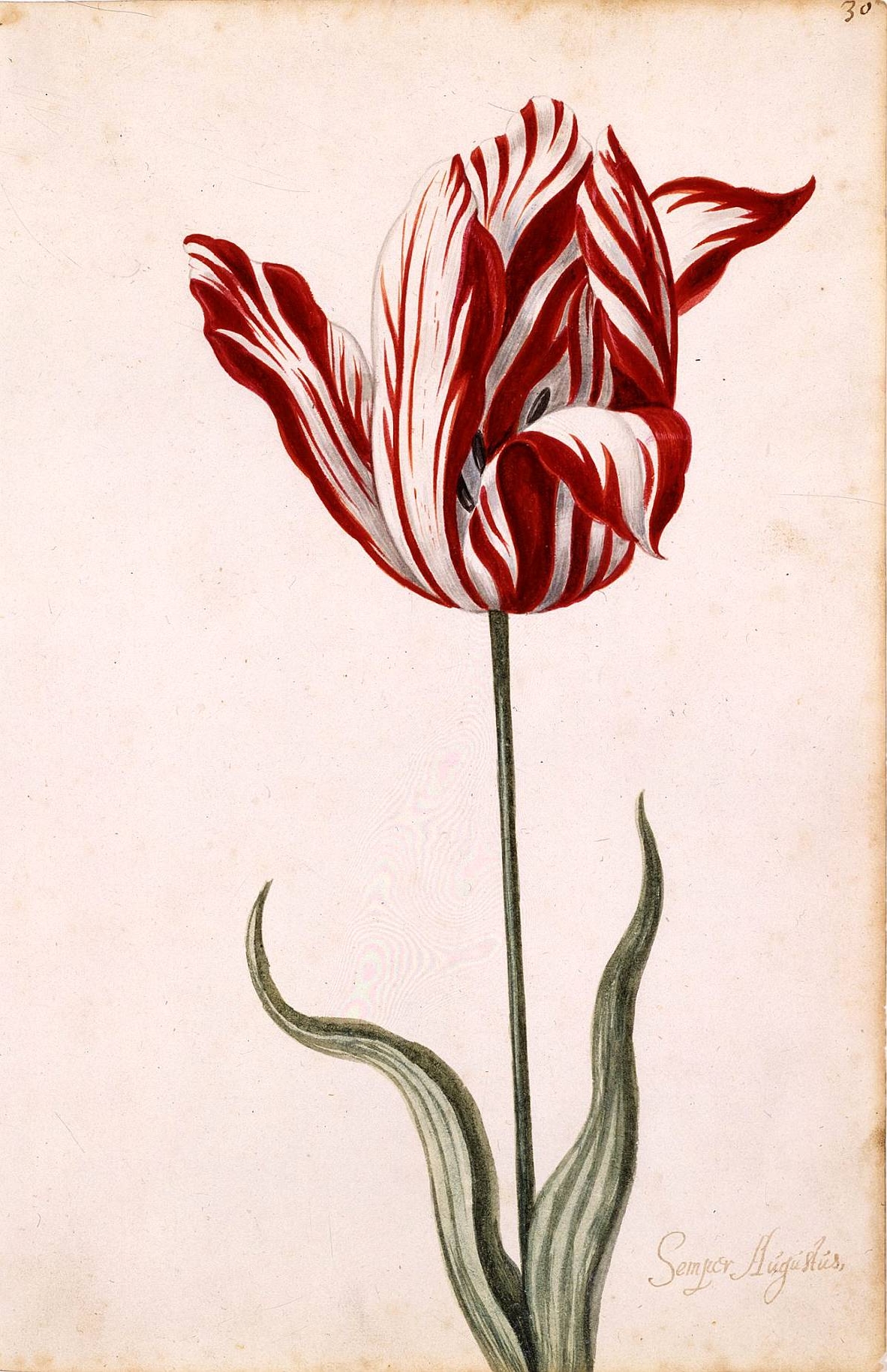
In the early 17th century, the Dutch Republic was enjoying unprecedented prosperity. Its global trade empire, pioneering financial institutions, and vibrant culture made it a beacon of early modern innovation. Tulips, originally imported from the Ottoman Empire, quickly became status symbols among the wealthy elite. Their vibrant colors and patterns—especially rare varieties produced by a mosaic virus that created complex variegations—were immensely prized and seen as luxury items worthy of enormous expense.
By the late 1630s, tulip bulbs were no longer just horticultural curiosities but objects of intense speculation. Their prices climbed rapidly as more people sought to own and trade rare bulbs. Special contracts called "futures" for bulbs to be delivered months later became widespread, allowing speculators to buy and sell at soaring prices without immediate delivery. This speculative market spread beyond aristocrats to merchants, craftsmen, and even some laborers, capturing the public imagination with promises of vast wealth.
The Fever Pitch: Speculation and Trading Practices
At the height of Tulip Mania, around 1636 and early 1637, single tulip bulbs were reportedly changing hands for prices equivalent to a skilled craftsman’s annual income or even a grand house in Amsterdam. Auctions regularly featured frenzy bidding on rare bulbs like the Semper Augustus. Prices were given in guilders and sometimes reached up to 10,000 guilders — an astronomical sum for the time.
This speculative bubble was fueled by several factors: readily available credit, widespread optimism in the Republic’s economic future, and the introduction of futures contracts known locally as "windhandel" (wind trade) which allowed trading without full payment until delivery. The tulip market’s liquidity and novelty enticed more participants. However, many buyers were unaware of the inherent risks as prices disconnected from the tulip’s intrinsic value and horticultural utility.
How a Bulb Became a Contract
The physical facts of tulip growing shaped the trade. A known variety could not be raised from seed; it came only from the offsets a mother bulb sets beside itself, a slow cloning that might yield two or three saleable bulbs in a season. Scarcity was a property of the plant, not of the market. Bulbs were sold by weight, measured in azen, so a contract named a particular bulb of a particular size.
The calendar mattered as much. Lifted only in summer and replanted in autumn, the bulbs lay buried through the months between, neither inspectable nor deliverable. The trade of the winter of 1636–37 was therefore a trade in paper claims on flowers nobody had seen — precisely what contemporaries meant by windhandel. Deals were struck not on the great exchange that handled grain and Dutch East India Company shares, but in taverns, recorded on slates and sealed with wine money rather than a notarised deed, leaving obligations to rest on reputation rather than enforceable law.
The Collapse: Panic and Consequences
In February 1637, the tulip market suddenly collapsed. Prices began to fall sharply as buyers refused to complete purchases at excessive values. This triggered panic selling and a chain reaction of defaults on futures contracts. Major auctions ended with empty sales or precipitous losses. For many, the speculative bubble’s pop meant serious financial difficulties, especially for those who had bought on credit or invested entire fortunes.
However, the broader Dutch economy absorbed the shock without severe systemic collapse. Despite some personal bankruptcies and market confusion, Dutch trade, banking, and political institutions remained resilient. Historians also debate the depth and scale of the economic damage, with some sources suggesting the impact was less catastrophic than popular myth suggests. The event quickly became a cautionary tale of speculative excess but did not topple the Republic’s prosperous trajectory.
Unwinding the Contracts
Because the collapse struck a market of unsecured promises, its resolution was legal rather than financial. Sellers wanted their contracts honoured; buyers argued that agreements for goods still in the ground, made over drink and never notarised, were closer to wagers than sales. In late February 1637 delegates from the tulip towns met at Amsterdam and proposed settling unfulfilled contracts for a fraction of the agreed price. The Court of Holland refused a general rule and referred the disputes back to the town magistrates, who suspended tulip cases; Haarlem eventually let buyers settle at three and a half per cent.
This is why the crash never became a banking crisis. Little cash had changed hands at the peak, and what evaporated was a stack of claims the courts then declined to enforce. A sovereign default such as Philip II's suspension of payments in 1557 destroyed real capital; the tulip contracts destroyed expectations. The Republic's genuinely systemic emergencies, such as the invasion year of 1672, came from war and politics rather than from flowers.
Legacy and Lessons from Tulip Mania
Tulip Mania endures as a vivid example of the dangers of speculative bubbles and herd behavior in financial markets. It serves as a reminder how social trends, cultural desires, and nascent financial instruments can combine to inflame irrational exuberance. Beyond economics, the mania illuminates early modern Dutch culture: the importance placed on status symbols, the emergence of new financial practices, and the spirit of innovation and risk-taking that characterized the Golden Age.
In modern economic discourse, Tulip Mania is often invoked to illustrate market psychology but remains controversial in its interpretation. Recent scholarship emphasizes complexity and nuance, recognizing it as an early instance of mass speculation rather than a sheer folly. The tulip craze still captivates historians and economists alike as an extraordinary episode when a flower became the centerpiece of a societal obsession with wealth and risk.
Where the Legend Came From
Much of what "tulip mania" conjures today reaches us through a short chain of retellings. In 1637 moralising pamphlets appeared as dialogues between two invented characters, Gaergoedt and Waermondt, denouncing the trade as greed and folly. Written to make a point rather than to record a market, they nonetheless supplied Johann Beckmann in the eighteenth century, and through him Charles Mackay, whose Extraordinary Popular Delusions and the Madness of Crowds (1841) fixed the story in English.
Archival work has since revised the picture. Reconstructions of who actually traded show a small circle in Haarlem and Amsterdam, drawn from prosperous merchants and connoisseurs rather than a nation of labourers staking their savings, and documented bankruptcies attributable to bulbs are few. What the episode damaged was harder to tally — the trust between men who had dealt on a spoken word, in a society whose commercial and learned networks ran on exactly that kind of credit.
Chronology: the tulip and the bubble
| Date or period | Event |
|---|---|
| 1593 | Carolus Clusius plants Ottoman tulips at the new botanical garden in Leiden |
| Early 1600s | Rare "broken" bulbs, their petals flamed by a mosaic virus, become elite status symbols |
| 1634–1636 | Trading widens beyond the connoisseurs; prices climb and futures contracts spread |
| Winter 1636–1637 | The windhandel peaks; buried bulbs change hands repeatedly on paper |
| February 1637 | Buyers refuse to pay, prices collapse, and contracts go unfulfilled |
| Late February 1637 | Delegates from the tulip towns meet at Amsterdam to propose a settlement |
| April 1637 | The Court of Holland refers the disputes back to the town magistrates |
| 1638 | Haarlem lets buyers discharge contracts at three and a half per cent |
Frequently asked questions
Why were some tulip bulbs worth so much more than others? The premium was paid for "broken" bulbs, whose petals carried the flamed and feathered patterns produced by a mosaic virus. Because a named variety could only be reproduced from the offsets of its mother bulb, a celebrated flower such as the Semper Augustus existed in a handful of copies and multiplied slowly, so that no level of demand could conjure more of it.
What did contemporaries mean by "windhandel"? It was the Dutch name for the tulip futures trade, literally "wind trade". Between autumn and summer the bulbs lay in the ground and could be neither inspected nor delivered, so buyers and sellers exchanged written claims on goods that physically could not move. For months at a time nothing but paper circulated — hence the wind.
Did tulip mania ruin the Dutch economy? No. Prices collapsed in February 1637 and many contracts were left unpaid, but little cash had changed hands at the peak and the courts declined to enforce the outstanding agreements. Dutch trade, banking and government carried on, and historians still debate how far the damage reached beyond the circle that traded bulbs.
Why is tulip mania still invoked so often? It remains the clearest early case of a price detaching from any use the object could serve, in a society inventing modern financial instruments as it went. Recent scholarship, however, treats it less as a parable of collective madness than as an early episode of mass speculation with a limited and specific footprint.
Bibliography
- Garber, Peter M. Famous First Bubbles: The Fundamentals of Early Manias. MIT Press, 2000.
- Resolutie van het Hof van Holland. 1637.
- Rijksmuseum. Rijksmuseum.
- Samenspraeck tusschen Waermondt ende Gaergoedt. 1637.
Recommended reading
Tulipmania: Money, Honor, and Knowledge in the Dutch Golden Agethe archival study that reconstructs who actually traded bulbs and dismantles the legend.
View on Amazon →: Tulipmania: Money, Honor, and Knowledge in the Dutch Golden Age
Tulipomania: The Story of the World's Most Coveted Flower and the Extraordinary Passions It Arousedthe most readable narrative of the craze, from Ottoman gardens to the February crash.
The Embarrassment of Riches: An Interpretation of Dutch Culture in the Golden Agethe classic account of the anxieties about wealth that made the mania culturally legible.
View on Amazon →: The Embarrassment of Riches: An Interpretation of Dutch Culture in the Golden Age
The First Modern Economy: Success, Failure, and Perseverance of the Dutch Economy, 1500-1815the standard economic history against which the bubble's scale must be measured.
The Dutch Republic in the Seventeenth Century: The Golden Agea compact survey placing the tulip trade in the Republic's wider social and political life.
View on Amazon →: The Dutch Republic in the Seventeenth Century: The Golden Age
Image: "Semper Augustus," a 17th-century watercolour of the most coveted tulip of the Dutch tulip mania, its flamed petals caused by the tulip breaking virus. Public domain, via Wikimedia Commons.
As an Amazon Associate I earn from qualifying purchases. Affiliate links in Recommended reading — and in Further reading on older articles — may earn Writesides of History a commission at no extra cost to you.
From the archive
Free for the curious, supported by you
Writesides of History publishes free, in-depth history articles every week. If you enjoy reading, you can support the work: become a member for exclusive deep-dive dossiers and early access, or browse the maps, classroom packs and dossiers in the shop.
Become a Member Donate Visit the Shop