The Rivalry Shaping a World: Sparta and Athens Before the Peloponnesian War
How the structural contrasts between democratic Athens and oligarchic Sparta reshaped the Greek world long before the Peloponnesian War broke out.

The olive groves of Attica and the rugged hills of Laconia bore witness to one of history’s most formative rivalries, long before hoplites clashed at the opening of the Peloponnesian War. The tension between democratic Athens and oligarchic, martial Sparta was never a simple contest for supremacy; it was a struggle over models of governance, values, and the very fabric of Greek society. This political and cultural conflict—carrying within it the seeds of innovation and polarization—reshaped the Hellenic world and altered the trajectory of Western civilization itself.
The Roots of Difference: Social and Structural Foundations
The rivalry between Sparta and Athens was profoundly shaped by the contrasting structures of their societies. Spartan life, in every detail, was organized around the needs of a highly disciplined, militarized elite. Spartan citizens, the Spartiates, lived communally, undergoing harsh training (the agoge) from boyhood, their lives defined by martial prowess, austerity, and a strict equality among themselves. This unique system permitted Sparta to maintain a small, cohesive military citizenry atop a far larger population of helots — unfree laborers whose exploitation allowed Spartiates the leisure to hone their warrior skills. The tension between the necessity of subjugating the helots and maintaining a united citizen corps established perpetual internal stress, making the Spartan oligarchy fiercely conservative and resistant to change.
By contrast, Athens’ citizens forged their identity through participation rather than conformity. The reforms of Solon, and later Cleisthenes, fragmented ancient aristocratic power and distributed it across a broad and ever-widening swath of free men. Assembly, law courts, and councils enabled average citizens to be not just passive subjects but active architects of their polis—forging a radical experiment in direct democracy. The bustling agora and the Pnyx became the beating heart of a restless civic life. This openness, however, came at the cost of fierce competition and volatility, as the political process regularly exposed vulnerabilities, especially among those marginalized or excluded from citizenship, such as women and slaves. (For more on Athenian gender politics, see: Athenian gender politics).
Ideology and Image: Competing Visions for Greece
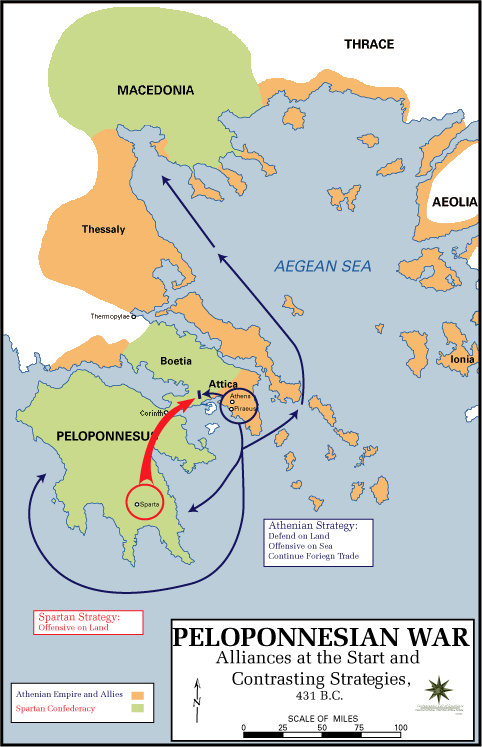
While the Persian Wars of the early 5th century BCE had forced a rare unity among the Greek city-states, in their aftermath, Athens and Sparta emerged as champions of rival ideological models. The former steered a course toward the sea, using naval dominance to build the Delian League—a coalition, at least in theory, of equals resisting Persian encroachment but, in practice, increasingly subject to Athenian dominance. The transformation of voluntary allies into tribute-paying subjects empowered Athenian democracy through wealth and spectacle, giving birth to enduring cultural monuments such as the Parthenon (architectural and cultural legacy of the Parthenon) and amplifying the city's reputation as a center of art, philosophy, and innovation.
Sparta, meanwhile, anchored its prestige and legitimacy in the land, remaining the bulwark against egalitarian excess and external threat, holding fast to ancestral custom. The Peloponnesian League, Sparta’s answer to the Delian, was more clearly an alliance of traditional powers with Sparta as primus inter pares—the first among equals. The city’s conservatism was not merely cultural but strategic, seeking to check the centrifugal forces that Athenian radicalism threatened to unleash across the Greek mainland. For Sparta, Athenian imperialism was not just a political threat but an affront against proper order; the theater of Greek politics thus became a contest between those advocating dynamism and civic innovation and those upholding stability and tradition.
Internal Pressures and Structural Change
Within both city-states, the rivalry compelled adaptation and transformation. In Athens, naval power, initially a response to external threats, became the lynchpin of political and economic change. Rowers of the triremes—often from poorer classes—gained new leverage, fueling further democratization and intensifying debates over citizenship and power. Economic expansion and imperial tribute allowed for public works and payments for jury service, deepening public engagement but also fostering dependency on empire, with an undercurrent of social tension as wealth and expectations grew.
In Sparta, the specter of a vigilant, ambitious Athens forced greater militarization and collective vigilance. Even as Sparta maintained its traditional dual monarchy and rigid council structures, strains emerged. The need to keep the helot population in check required periodic violence and military discipline, but as Sparta faced external threats and calls from allies for intervention in Athenian affairs, its model was stretched to breaking point. The limitations of the rigid, exclusionary system became clear: Sparta risked ossification, and the demands of its allies threatened to drag it into ever more distant and protracted struggles. The contradiction of defending traditional order whilst sustaining leadership on the Greek stage would test Sparta’s system to its core.
The Fabric of Greek Society: Identity, Integration, and Exclusion
The contrasts between the two city-states echoed beyond their borders, shaping the broader Greek world. The Delian and Peloponnesian Leagues were not only military-political alliances but also avenues for the spread of ideology and social practice. City-states across the Aegean confronted choices over whether to embrace Athenian-style democracy—or at least its trappings—or to resist, aligning with Spartan conservatism. This polarization generated both creative ferment and destructive conflict, as communities debated questions of citizenship, justice, and inclusion. Even religious festivals and athletic games became politicized, stages on which the contest of values played out visibly to the wider Hellenic world. (For the interplay between religion and politics, see: interplay between religion and politics in Archaic Athens).
Athenian and Spartan approaches to foreigners, women, and slaves further shaped the course of the rivalry. Athens prided itself on the cultural efflorescence that came with opening its city and mind to new ideas—yet rarely extended these privileges beyond Athenian-born men. Sparta’s insularity was more pronounced, yet its women enjoyed, by ancient standards, remarkable physical autonomy and authority in household management, revealing that divergence often ran deeper than surface appearances. As city-states across Greece grappled with these contrasting standards, social fissures widened; calls for reform or reaction would echo in colonies and allied communities, amplifying the rivalry’s repercussions.
Conflict, Diplomacy, and the Shadow of War
Tension between Sparta and Athens was not only a prelude to war but a crucible for innovation in diplomacy and alliance-building. Each side worked tirelessly to outmaneuver the other, recruiting allies, intervening in disputes, and leveraging trade or coercion. The transformation of the Delian League into an Athenian empire, and Sparta’s willingness to challenge this domination, sent ripples through networks of trade and communication. Each new development required responses—not only tactical, but also institutional—which, in turn, reshaped the societies at the heart of the rivalry. As ever-more-complex systems of alliances formed, Greek diplomacy reached new levels of sophistication, at times foreshadowing future international orders. (For a later parallel in diplomatic tension and crisis management, see: The Battle for the Bosporus).
Despite moments of accommodation—such as the famed Thirty Years’ Peace—the underlying tensions were structural, rooted in the competing visions and internal dynamics previously described. Smaller disputes over allies, trade, or honor could escalate rapidly, since each city’s prestige and authority in the Greek world depended on not yielding to the other. The run-up to the Peloponnesian War was thus not an inevitable march to conflict, but a volatile dance in which deep-set divides, unchecked ambitions, and a series of choices ultimately made peaceful coexistence impossible. (For the negotiations of those final years, see: Athenian and Spartan diplomacy before the war). Yet it is worth remembering that the very intensity of this rivalry forced both Athens and Sparta to sharpen, adapt, and in some respects, define themselves through opposition.
Conclusion: A Legacy Beyond War
Long before the first spear was thrown, the rivalry between Sparta and Athens had already transformed the Greek world. It drove not only innovation in government and military affairs but also encouraged reflection on the meaning of freedom, community, and order. Their competition set the patterns for politics, culture, and diplomacy that would echo through the ages, shaping the institutions and ideas of Western civilization. The tension between radical openness and disciplined tradition, between empire-building and defensive conservatism, shaped an era defined not only by war, but by the contest of visions—a rivalry that, in shaping the Greek world, shaped the world itself.
Chronology: from rival systems to open war
| Date | Event |
|---|---|
| c. 730–650 BCE | Sparta conquers neighbouring Messenia in two long wars, creating the helot population whose forced labour frees the Spartiates for full-time military life. |
| 594 BCE | Solon's reforms at Athens tie political standing to property rather than birth alone, loosening the grip of the old aristocratic families. |
| c. 550 BCE | Sparta binds the states of the Peloponnese into the alliance later known as the Peloponnesian League, standing within it as first among equals. |
| 508/507 BCE | Cleisthenes reorganises the Athenian citizen body into ten new tribes, laying the institutional groundwork for direct democracy. |
| 490 BCE | Athenian hoplites defeat a Persian expeditionary force at Marathon. |
| 480–479 BCE | Xerxes' invasion forces a rare Greek unity: Sparta leads on land at Thermopylae and Plataea, Athens at sea at Salamis. |
| 478/477 BCE | Athens founds the Delian League, in theory a coalition of equals resisting Persian encroachment. |
| c. 460–445 BCE | Intermittent fighting between Athens and Sparta's allies — the so-called First Peloponnesian War — tests the limits of coexistence. |
| c. 454 BCE | The league treasury is moved from Delos to Athens, marking the passage from voluntary allies to tribute-paying subjects. |
| c. 451 BCE | Pay for jury service is introduced at Athens, making sustained civic participation practicable for poorer citizens. |
| 447–432 BCE | The Parthenon is built on the Acropolis, its cost met in large part from the revenues of empire. |
| 446/445 BCE | The Thirty Years' Peace formally divides the Greek world into two recognised spheres of influence. |
| 433–432 BCE | Quarrels over Corcyra, Potidaea and the Megarian decree draw both leagues toward confrontation. |
| 431 BCE | The Peloponnesian War begins, ending the long prelude of rivalry short of open war. |
Frequently asked questions
What made Sparta and Athens so different before the Peloponnesian War? The difference was structural rather than merely cultural. Sparta organised every detail of citizen life around a militarised elite trained from boyhood through the agoge and sustained by the exploitation of the helots, which made its oligarchy fiercely conservative and wary of change. Athens, by contrast, built citizen identity around participation — assembly, law courts, and councils opened to an ever-widening body of free men after the reforms of Solon and Cleisthenes — producing a dynamic but volatile politics.
Why did Athenian naval power change Athenian politics? The triremes were rowed largely by men from the poorer classes, and their indispensability to the city's power gave them new political leverage. That leverage fuelled further democratisation and sharpened arguments over who counted as a citizen. Imperial tribute compounded the effect, funding public works and payment for jury service, which deepened civic engagement while binding Athenian democracy to the continued profits of empire.
How did the Delian League differ from the Peloponnesian League? The Delian League began as a maritime coalition of nominal equals against Persia and was gradually transformed into an Athenian empire, its members converted from allies into tribute-paying subjects. The Peloponnesian League was a more traditional alliance of land powers in which Sparta stood as primus inter pares — first among equals — rather than as a ruler. The contrast meant that Athenian ascendancy grew by absorbing its allies, while Spartan leadership depended on satisfying them.
Was the Peloponnesian War inevitable? The rivalry was structural, but the war was not a straightforward march to a fixed outcome. Accommodations such as the Thirty Years' Peace show that coexistence was possible, and the run-up to 431 BCE was better described as a volatile sequence of choices than a foregone conclusion. What made escalation so hard to contain was that each city's standing in Greece rested on not yielding to the other, so even minor disputes over allies, trade, or honour carried disproportionate weight.
Bibliography
- Forrest, W. G. A History of Sparta 950-192 BC. Hutchinson, 1968.
- Herodotus. The Histories.
- Thucydides. History of the Peloponnesian War.
- Xenophon. Constitution of the Lacedaemonians.
Recommended reading
The Outbreak of the Peloponnesian Warthe fullest scholarly study of the pre-war decades, built around the question of whether the conflict could have been avoided.
The Spartans: The World of the Warrior-Heroes of Ancient Greecean accessible account of the Spartan system, from the agoge and the helots to the unusual position of Spartan women.
View on Amazon →: The Spartans: The World of the Warrior-Heroes of Ancient Greece
Mass and Elite in Democratic Athens: Rhetoric, Ideology, and the Power of the Peopleexplains how ordinary Athenians actually exercised power over an elite that continued to lead them.
The Landmark Thucydides: A Comprehensive Guide to the Peloponnesian Warthe indispensable annotated edition of the contemporary account, with maps and chronology throughout.
View on Amazon →: The Landmark Thucydides: A Comprehensive Guide to the Peloponnesian War
The Peloponnesian Wara single-volume narrative of the war the rivalry produced, written for the general reader.
As an Amazon Associate I earn from qualifying purchases. Affiliate links in Recommended reading — and in Further reading on older articles — may earn Writesides of History a commission at no extra cost to you.
From the archive
Free for the curious, supported by you
Writesides of History publishes free, in-depth history articles every week. If you enjoy reading, you can support the work: become a member for exclusive deep-dive dossiers and early access, or browse the maps, classroom packs and dossiers in the shop.
Become a Member Donate Visit the Shop