How Castle Architecture Evolved: Iron and Innovation in 13th-Century France
How French castles evolved in the 1200s: iron technology, new defensive design, and the building revolution behind strongholds like Carcassonne.

On a mist-covered morning in early 13th-century France, the clang of iron against stone echoed across the rolling hills—a blacksmith’s hammer shaping hinges, grilles, and bolts that would soon fortify the imposing skeleton of a new keep. For centuries, castles had signified power and refuge in the feudal world, but it was in this century, amid political strife and shifting techniques of war, that these fortresses underwent a silent revolution. At its core was the marriage of ironworking ingenuity with architectural imagination—a fusion that redrew the lines of siege, rule, and community in medieval France.
This transformation was not merely a matter of military fashion. Rather, it reflected profound changes in technology, economic organization, and the very psychology of conflict. From the deep cellars of Champagne to the battered ramparts of Carcassonne, iron’s emergence in castle construction shifted the balance of power and protection. This article delves into how innovative uses of iron fundamentally restructured the French castle in the 1200s—and how those changes reverberated far beyond the walls themselves.
The Iron Revolution in Stone
For much of the early medieval period, castles were built of earth, timber, and, where resources permitted, heavy masonry. The 13th century, however, witnessed a seismic shift catalyzed by improved smelting techniques, an expanded ironworking guild network, and a growing class of craftsmen who specialized in lock-making and metalwork for military architecture. The result was a new breed of fortification that fused what had been disparate crafts—masonry, carpentry, and ironworking—into a seamless defensive system.
Iron’s integral role is most visible in the proliferation of elaborately engineered gates, doors, and drawbridges. Where once heavy wooden doors could be burned or battered down, now they were reinforced with bands of iron and embedded with massive rivets. The portcullis—an iron or iron-capped grid that dropped to block a gateway—became a defining symbol of unyielding defense. Artisans crafted intricate locking mechanisms and quick-release systems, allowing defenders to operate these features under siege. Innovations such as turning bridges, metal hinges capable of supporting enormous weight, and complicated closing mechanisms reflected not only advances in metallurgy but also a growing understanding of mechanical leverage and stress. All of these elements combined to create fortresses bristling with technical ingenuity and newly feared by assailants.
Shifting Power: Castles as Instruments of Control
The 13th-century surge in iron-castle design coincided with a period of intense political realignment within France. Kings and local nobility jockeyed for authority, while outbursts like the Albigensian Crusade and the ongoing Capetian expansion pressured regional magnates to protect—and project—their holdings. Castles, now equipped with iron-bound gates and multi-layered defenses, became hubs of governance, intimidation, and resource management.
No longer confined to mere residence or symbolic stronghold, castles employed technological innovation to transform themselves into active instruments of strategic authority. Iron portcullises and secure gatehouses allowed fewer defenders to hold off larger forces, changing the calculus of rebellion and compliance. Lords could maintain tighter control over their fiefs, extracting taxes and overseeing justice from within impregnable walls. In regions like Languedoc and the Île-de-France, the ability to quickly reinforce or retrofit older castles with cutting-edge ironwork often spelled the difference between capitulation and resistance. In this way, the spread of metallurgical knowledge (aided by itinerant artisans and guilds) also served to knit together networks of loyalty and dependence between local rulers and the burgeoning royal bureaucracy.
The Siege Economy: Society and Technology Intertwined
Behind every iron-reinforced castle stood a hidden web of labor, industry, and supply. The rising demand for iron spurred new mining operations in regions like the Ardennes and the Massif Central, where entire communities were bound to the fortunes of the smelter’s fire. Blacksmiths, locksmiths, smelters, and carpenters formed interdependent guilds, many of which fiercely protected their technical secrets. This drive toward specialization mirrors developments seen in other medieval industries, such as the silk workshops described in Guild Secrets and the Artisanal Economy: Silk Weaving in 13th-Century Lucca. The labor required to produce and transport hundreds of kilos of finished iron for a single castle project represented a significant societal investment—one that entangled peasants, craftsmen, and lords in networks of trade and obligation.
In turn, the castle served as an economic engine, providing shelter, employment, and patronage. The very logistics of castle construction and maintenance—securing charcoal, transporting ore, organizing seasonal workforces—wove rural areas tightly into the fabric of regional economies. Some castles even housed their own workshops, with smiths and carpenters employed year-round. The resulting social hierarchy reflected the castle’s new technological complexity: whereas the early motte-and-bailey lords relied mostly on peasant muscle and a handful of military retainers, the iron-clad fortresses of the 13th century demanded a permanent corps of specialized artisans and administrators. In their work and allegiance, we glimpse early forms of bureaucratic management later analyzed in [From Map to Market: The Spread of Arabic Numerals in Medieval Europe and Its Economic Consequences].
Iron and the Psychology of Defense
The castle’s new iron sinews reshaped not only battles, but also the experience and imagination of those who lived inside and outside the walls. For defenders, the visible presence of iron—the shine of grilles, the weighty slam of a portcullis—was a source of reassurance in otherwise uncertain times. For would-be attackers, the prospect of facing these obstacles added a fresh psychological layer to the ordeal of siege warfare. Iron did not make castles truly invulnerable, but it introduced delays and frustrations that could sap enemy morale and force attackers to reconsider costly frontal assaults.
These advances fomented shifts in military tactics. Siege engineers endeavored to counter these new defenses with improved siege engines, sapping techniques, and, when possible, bribery or betrayal. The arms race played out not simply at the battering ram, but in the minds and fears of all involved. Tales of “unbreakable gates” entered the chronicles of the period and shaped popular perceptions of royal or seigneurial authority. Even traveling merchants and pilgrims, passing beneath iron portcullises, internalized the boundaries—both physical and symbolic—that these innovations enforced. Similar transformations of everyday experience and status through technological change can be traced in [Paper and Power: The Introduction of Papermaking to Medieval Europe and Its Social Impact, 1100–1400].
From Fortress to Network: Royal Ambition and Architectural Innovation
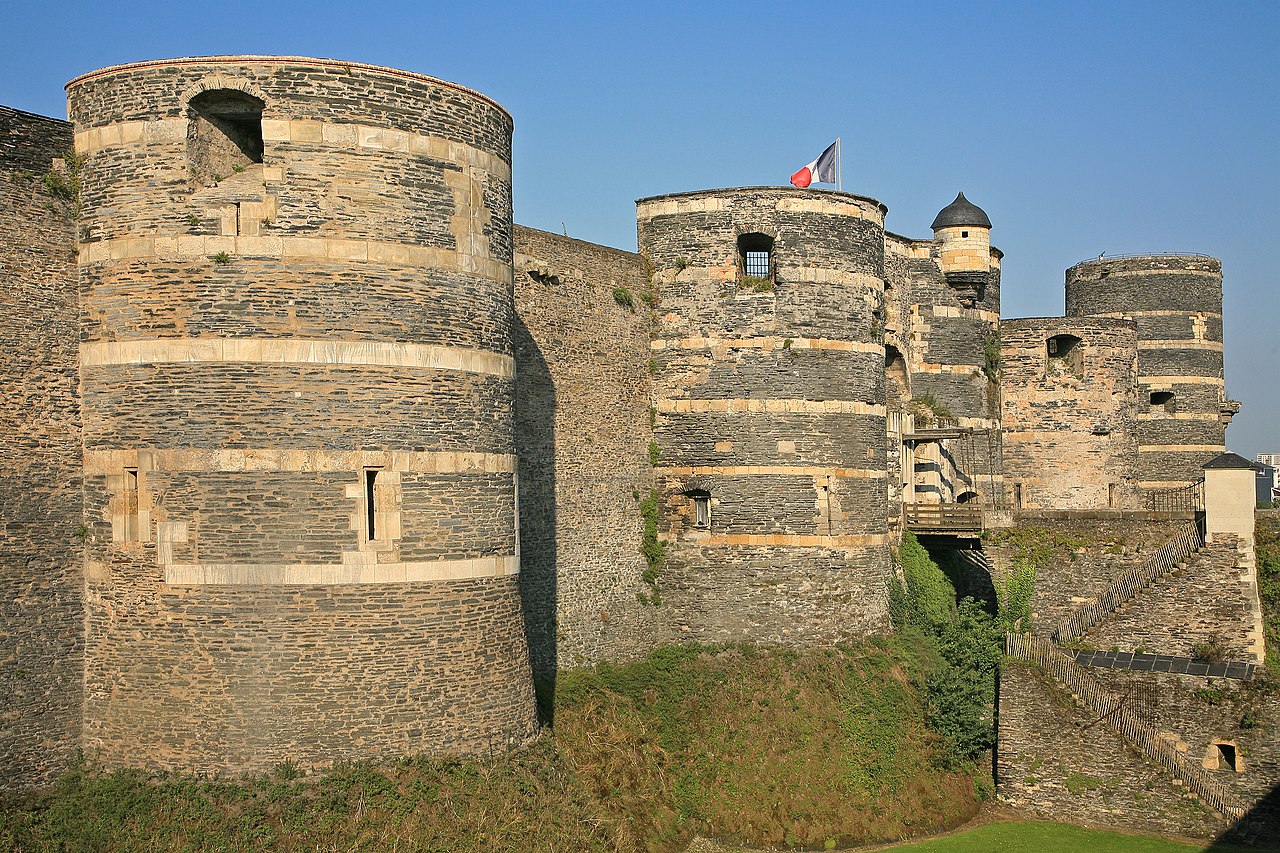
The 13th century was an age of consolidation for the French monarchy. Rulers like Philip II Augustus and later Louis IX recognized the value of technological superiority in stamping royal presence across the realm. Sponsored by the Crown, a number of “model castles” emerged—at the Louvre in Paris, at Château de Coucy, at the mighty concentric ramparts of Carcassonne. Many featured modular plans, allowing for continuous improvement as ironworking techniques evolved. Royal building programs also encouraged the standardization and regulation of guilds, the cross-pollination of craftsmanship, and the movement of expertise, echoing the court culture and exchange documented in [The Court Entertainers of Medieval Burgundy: Culture, Power, and Performance under the Valois Dukes].
This dynamic fostered a kind of “innovation cascade.” As royal engineers and architects introduced new solutions to technical problems—such as the segmented, multi-layered gates or integrated arrow slits with metal fixtures—local lords competed to match these advances, fueling economic investment and reshaping the architectural landscape across much of France. Over time, the cumulative effect was a dense network of fortresses not only defending the kingdom’s fractured borders, but also serving as nodes of communication, taxation, and judicial order. Technology thus amplified the reach of royal and noble authority, even as it spawned new forms of rivalry and local ambition.
Conclusion: Legacy of Iron and Innovation
The technological transformation of castle architecture in 13th-century France was far more than an arms race of steel and stone. Iron innovation—rooted in craft, industry, and the aspirations of rulers—reordered the structures of everyday life, social hierarchy, and state formation. The fortified castles of this era were not monolithic relics but rather living testaments to a society adapting to the new realities of conflict, governance, and collective security. Their gates and grilles protected lives, stored wealth, and projected authority, while their very construction wove together distant villages, artisan guilds, and political centers in a web of unprecedented complexity.
This legacy would persist into the late Middle Ages and beyond. The lessons learned in the workshops and fortresses of 13th-century France set precedents for later innovations in urban defense, fortress design, and even the eventual rise of professional standing armies—all of which would transform the map and memory of Europe for centuries to follow.
Chronology: castles, crown and ironwork in 13th-century France
| Date | Event |
|---|---|
| 1180–1223 | Reign of Philip II Augustus, whose building programme sets the pattern for royal fortification across the expanding Capetian domain. |
| c. 1190 | Philip Augustus begins the great circular keep and enclosure of the Louvre in Paris before departing on crusade. |
| 1209 | The Albigensian Crusade opens in Languedoc; Carcassonne surrenders to the crusading army after a short siege. |
| 1226 | Carcassonne and much of Languedoc pass into the royal domain under Louis VIII. |
| 1226–1270 | Reign of Louis IX, under whom royal engineers extend and standardise fortification in the newly annexed south. |
| c. 1225–1242 | Enguerrand III de Coucy raises the château de Coucy, with a keep and gatehouse among the largest built in medieval France. |
| 1229 | The Treaty of Paris ends the Albigensian Crusade and binds the county of Toulouse to the Crown. |
| 1240 | Raymond Trencavel's attempt to retake Carcassonne fails; the Crown answers by strengthening the site. |
| 1240s–1280s | The outer curtain wall of the Cité de Carcassonne is built, producing the concentric double ring still visible today. |
Frequently asked questions
What did iron actually change about a 13th-century castle? Iron did not replace stone; it transformed the points where stone was weakest. Gates and doors were banded and riveted so they could no longer simply be burned or battered through, portcullises of iron or iron-capped timber dropped to seal a gateway, and hinges, bolts and locking mechanisms allowed enormous leaves and turning bridges to be worked quickly by a handful of defenders under fire. The castle's openings, once its liabilities, became its most heavily engineered features.
Did iron make castles impossible to capture? No. Iron reinforcement bought delay rather than invulnerability, and delay was the point: a siege that dragged on drained an attacker's supplies, money and morale. Besiegers responded by improving siege engines, by sapping and mining beneath the walls, and—often more effectively—by bribery and betrayal. The result was an arms race fought as much in reputations and fears as at the battering ram.
Why did iron-reinforced castles matter politically? Because they altered the arithmetic of rebellion. Secure gatehouses meant fewer defenders could hold off a larger force, so a lord could tax, judge and govern his fief from behind walls that were expensive and slow to reduce. During the Albigensian Crusade and the Capetian expansion that followed, the speed with which an older castle could be retrofitted with modern ironwork often decided whether its holder resisted or capitulated.
Who supplied all this iron, and what did it cost society? Demand pulled new mining and smelting into regions such as the Ardennes and the Massif Central, where whole communities depended on the smelter's fire. Producing and hauling hundreds of kilos of finished iron for a single castle required charcoal burners, carters, smiths, locksmiths and carpenters, many organised in guilds that guarded their techniques closely. A castle was therefore an economic institution as much as a military one, tying villages, artisans and lords into durable networks of trade and obligation.
Bibliography
- Bibliotheque nationale de France. Bibliotheque nationale de France.
- Centre des monuments nationaux. Centre des monuments nationaux, France.
- Honnecourt, Villard de. Portfolio.
- Mesqui, Jean. Chateaux et enceintes de la France medievale. Picard, 1991.
Recommended reading
Castles in Medieval Society: Fortresses in England, France, and Ireland in the Central Middle Agesthe standard revisionist account of what castles were actually for, with France firmly in the frame.
Castle Builders: Approaches to Castle Design and Construction in the Middle Agestakes the castle apart as a construction project, from gatehouse mechanics to the organisation of the site.
View on Amazon →: Castle Builders: Approaches to Castle Design and Construction in the Middle Ages
The Medieval Siegethe best single survey of how attackers answered improved defences, including the great sieges that tested them.
Cathedral, Forge, and Waterwheel: Technology and Invention in the Middle Agesa readable synthesis of medieval metallurgy, mechanics and building craft for the general reader.
View on Amazon →: Cathedral, Forge, and Waterwheel: Technology and Invention in the Middle Ages
The Medieval Machine: The Industrial Revolution of the Middle Agesthe classic argument that the medieval centuries were an age of industrial and mechanical invention.
View on Amazon →: The Medieval Machine: The Industrial Revolution of the Middle Ages
As an Amazon Associate I earn from qualifying purchases. Affiliate links in Recommended reading — and in Further reading on older articles — may earn Writesides of History a commission at no extra cost to you.
From the archive
Free for the curious, supported by you
Writesides of History publishes free, in-depth history articles every week. If you enjoy reading, you can support the work: become a member for exclusive deep-dive dossiers and early access, or browse the maps, classroom packs and dossiers in the shop.
Become a Member Donate Visit the Shop