Blueprints of Control: How IBM's Punch Card Technology Enabled Nazi Bureaucracy
IBM punch card technology turned Nazi bureaucracy into an engine of control, shaping how the regime catalogued, persecuted and destroyed millions.

In the annals of modern history, few technologies so chillingly illustrate the intersection of innovation and atrocity as IBM's punch card system in Nazi Germany. Often associated with mundane data processing, punch cards were reimagined by the Third Reich as blueprints of social control—turning tabulation into a weapon that enabled the Nazi state’s ambitions of oppression and annihilation. The story of IBM's involvement is not one of simple machines but of how a seemingly neutral technology amplified the regime’s bureaucratic might, making mass surveillance, persecution, and genocide possible on an industrial scale.
As the Nazis expanded their reach in the 1930s and 1940s, administrative complexity ballooned. The demand for order, precision, and speed in handling millions of lives—catalogued by ethnicity, profession, and allegiance—outstripped the capabilities of handwritten ledgers. Into this breach stepped the punch card—marketed by IBM’s German subsidiary, Dehomag—offering not only efficiency, but a language of statistics, classification, and cold rationality. The true legacy of this technology lies not merely in its mechanics, but in the structural changes it unleashed and the darkly transformative influence it exerted on statecraft and society.
The Rise of Data-Driven Bureaucracy
Prior to the Nazi era, Germany was already a nation enamored with methodical statecraft. Prussian administrative traditions emphasized detailed record-keeping and population management, a legacy examined in articles such as Prussian economic administration. Under the Weimar Republic and then the National Socialists, the scale shifted: from tracking citizens to managing populations—and soon, to identifying and segregating those targeted by racist and ideological codes.
Punch card tabulation arrived in Germany as more than a productivity booster. For the Nazi regime, which prized categorization and absolute order, it promised unprecedented control over society’s most intimate details. Each card, perforated with accessibly coded information, could stand for a person, a property deed, a criminal record, or—by the 1940s—a camp inmate. The transformation was profound: the sheer act of recording became intertwined with mechanisms of state power, regulation, and, ultimately, annihilation.
IBM, Dehomag, and the Architecture of Persecution
Central to this story is the subsidiary established by IBM: Deutsche Hollerith Maschinen Gesellschaft (Dehomag). From the 1933 population census onwards, Dehomag worked closely with German government ministries and, later, the SS. What began as a national project to track employment, addresses, and ancestry quickly evolved into a vast infrastructure for social sorting. IBM executives in New York were not blind to their subsidiary’s activities. They managed lease arrangements, supplied punch cards (which could not be used without IBM-licensed material), and oversaw technical support, ensuring constant flows of machines and expertise to the Nazi state.
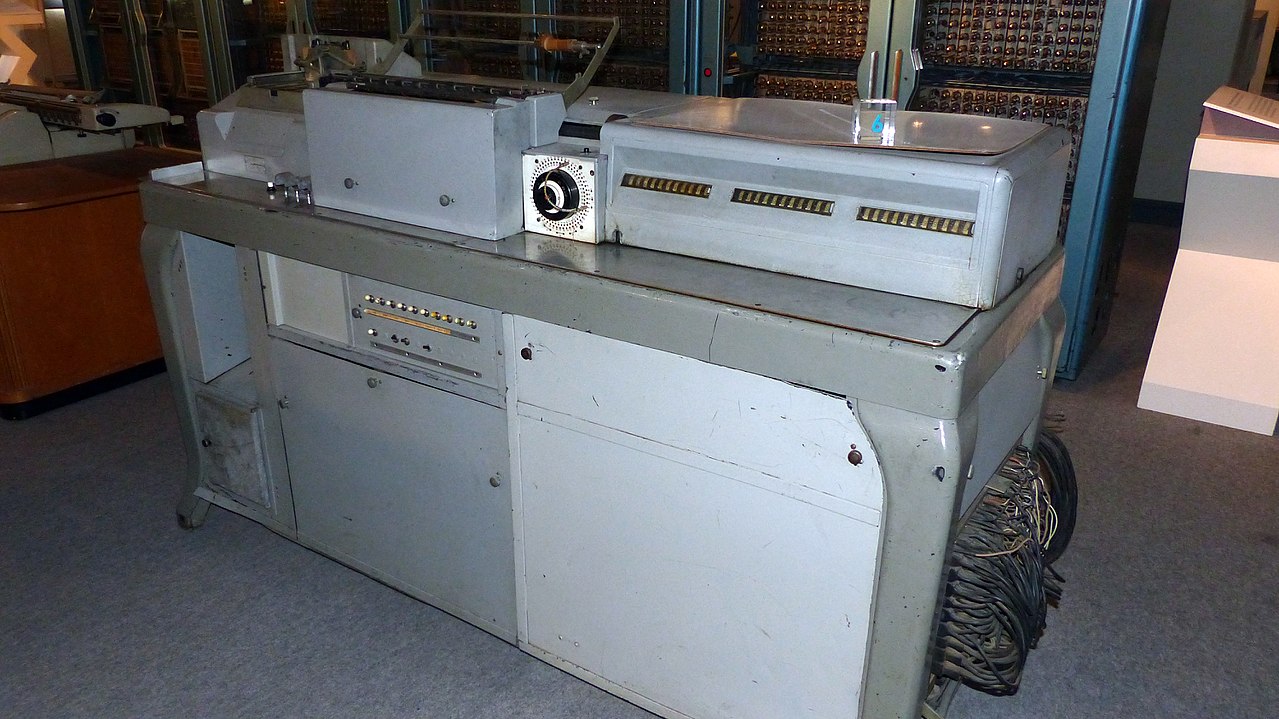
The punch cards themselves were marvels of encoded information. Columns of holes aligned by standardized templates allowed for the rapid cross-referencing of population groups—Aryans, Jews, Roma, political prisoners, and more. The technology enabled an efficient, scalable, and automated approach to Reich-wide classification. It was not just about data storage; with help from Dehomag engineers, Nazi administrators could draw up lists, compare attributes, and plan systematic deportations or forced labor assignments, all in a fraction of the time required by manual methods.
The Systematic Machinery of Genocide
Beneath the surface of Nazi genocidal operations lay the sinews of an information system powered by punch cards. Registration offices meticulously gathered data on ancestry, property, employment, nationality, and residence. The 1939 census, for example, demanded declarations of racial background, with information entered into coded fields. Soon after, these records served as the backbone for the identification and targeting of Jews, Poles, Roma, and other groups marked for persecution.
Within the camps themselves, the fidelity of punch card tracking became another layer of totalitarian order. Prisoners arriving at camps such as Auschwitz and Dachau were assigned numbers, characteristics, and symbols—all captured in physical punch cards fed into tabulating machines. Camp administrators could instantly access figures on prisoner labor assignments, mortality rates, and transfers. For the SS economic administrators, this system was central to the operation of forced labor networks and, heartbreakingly, to the logistics of extermination—measuring not just human outputs, but the very process of human destruction.
Technology Transforming the Political Dynamic
Punch card technology did not in itself dictate Nazi policy, but it offered a toolkit that subtly—and sometimes not so subtly—reshaped the conduct of state violence. Bureaucratic authority, once limited by the pace of human computation, became unmoored from such constraints. Decisions could be made and executed not on the basis of incomplete or anecdotal reports, but on something approximating real-time statistics, lists, and projections.
This changed the relationship between party, bureaucracy, and the machinery of the state. The ability to produce precisely tailored lists of individuals for arrest, deportation, or extermination gave Nazi administrators a new sense of power. It fostered a culture where abstracted data stood in for lived humanity—where the logistics of repression became problems to solve with greater technological finesse. In this sense, the Nazi implementation of IBM’s punch card system prefigured later uses of information technology in governance, a theme explored in digital bureaucracies.
Societal Consequences: Mass Surveillance and Dispossession
Technological transformation upended how ordinary people interacted with the state. For those in targeted groups, a new form of vulnerability emerged: personal identity became a matter of numbers, codes, and tabulations. The act of registration—once bureaucratic tedium—became fraught with existential peril. Lists compiled by punch card methods put an end to the anonymity that once protected the marginalized. In a system bent on surveillance, individuals now lived and died at the intersection of paper, perforation, and policy.
Beyond the violence inflicted on primary victims, the normalization of population categorization altered German society more broadly. Trust in privacy eroded. Compliance with state norms often meant participating in, or turning a blind eye to, the systematic exclusion and destruction of others. A dynamic emerged where the efficiency of administration justified ever-more rigid application of racist laws and property seizures—transforming not only victims’ fates, but the fabric of everyday German social and economic life. The structural consequences extended far beyond the war, influencing both concepts of bureaucracy and public debates over the ethics of technology in postwar Europe and beyond.
How Much Did the Machines Decide?
Part of the answer lies in how the technology was sold. Machines were leased rather than bought and the cards were consumables supplied under IBM licence, so every census return and camp roster generated a recurring order, and every installation came with engineers who advised on turning an administrative question into coded columns. Ministries and SS offices could thus enlarge their data operations without building technical capacity of their own.
But the machines supplied no motive. Historians differ over how much weight the technology can bear — much identifying work was still done with pen, parish register and denunciation — and the defensible reading is that punch cards furnished reach, speed and an appearance of objectivity, making a list look like a fact rather than a choice made by officials. That moral distance is what later arguments over state data systems keep returning to, from the controversies traced in Cold War domestic surveillance to the European disputes examined in contested computing sovereignty.
Conclusion: Legacy of Mechanized Control
The role of IBM’s punch card technology in Nazi bureaucracy is not merely a cautionary tale of complicity. It stands as a watershed in modern history—a moment when administrative ambition and technological innovation combined to enable, legitimize, and accelerate systematic atrocity. The profound societal and political shifts wrought by punch card tabulation—its transformation of the state’s reach, its power to render entire populations into rows of data, its chilling effect on civic trust—continue to echo in ongoing debates around surveillance technology and automated governance in the digital age.
Above all, the story reminds us that the architecture of control is often built not with overt weapons, but with the unseen gears of paperwork, codes, and machines. To comprehend fully the horrors of the Nazi system is to understand the technologies that made them possible, and to recognize the shadow such inventions cast across the possibilities—and dangers—of the bureaucratic state. The threads connecting these developments to current concerns over data-driven administration and social surveillance urge caution, vigilance, and an abiding awareness of the moral responsibilities entwined with technological power.
Chronology of punch card administration
| Date | Event |
|---|---|
| 1890 | Hollerith tabulators process the United States census |
| 1910 | Dehomag is founded to work the Hollerith patents in Germany |
| 1922 | IBM's predecessor takes a controlling interest in Dehomag |
| 1933 | Nazi census returns are tabulated on Dehomag equipment |
| 1935 | The Nuremberg Laws make ancestry a legal category |
| 1938 | A decree requires Jews to register their property |
| 1939 | The census adds a supplementary card recording respondents' ancestry |
| 1939–1945 | Registration records underpin identification, dispossession and deportation |
| 1940–1945 | Auschwitz and Dachau track prisoner numbers and labour by card |
| 1945 | Germany's defeat ends the system; the records survive |
Frequently asked questions
What was Dehomag, and how was it connected to IBM? Dehomag—Deutsche Hollerith Maschinen Gesellschaft—was IBM's German subsidiary and the channel through which punch card tabulation reached the German state. From the 1933 census onwards it worked with government ministries and later the SS, while executives in New York managed the leases and supplied the IBM-licensed cards.
How did punch cards actually contribute to Nazi persecution? They turned scattered registration data into something that could be sorted, cross-referenced and printed as a list. Ancestry, property, employment and residence were encoded into standardised columns and queried to produce names for arrest, deportation or forced labour.
Did the technology cause the Holocaust? No — the impulse was ideological and political, and much identifying work was done by conventional means. What the machines supplied was reach, speed and an appearance of objectivity, lowering the administrative cost of acting on genocidal intentions.
Why does this episode still matter for debates about data and government? Because the danger lies less in any single machine than in how easily a state can turn people into sortable records. The Nazi use of punch cards prefigured later questions about who holds population data and how far automated processing outruns legal accountability.
Bibliography
- Bundesarchiv. Bundesarchiv, Germany.
- Longerich, Peter. Holocaust: The Nazi Persecution and Murder of the Jews. Oxford University Press, 2010.
- United States Holocaust Memorial Museum. United States Holocaust Memorial Museum.
- Volkszaehlung vom 17. Mai 1939. Statistisches Reichsamt, 1939.
Recommended reading
IBM and the Holocaustthe investigation that placed IBM's relationship with the Nazi state at the centre of the debate.
The Nazi Census: Identification and Control in the Third Reichtraces German registration practice from Hollerith machines to Nazi population sorting.
View on Amazon →: The Nazi Census: Identification and Control in the Third Reich
Statistics and the German State, 1900-1945explains how German statistical capacity was built and used.
View on Amazon →: Statistics and the German State, 1900-1945
The Destruction of the European Jewsthe landmark study of destruction as a bureaucratic process.
The Business of Genocide: The SS, Slave Labor, and the Concentration Campsshows SS administrators running camp labour as an industry.
View on Amazon →: The Business of Genocide: The SS, Slave Labor, and the Concentration Camps
As an Amazon Associate I earn from qualifying purchases. Affiliate links in Recommended reading — and in Further reading on older articles — may earn Writesides of History a commission at no extra cost to you.
From the archive
Free for the curious, supported by you
Writesides of History publishes free, in-depth history articles every week. If you enjoy reading, you can support the work: become a member for exclusive deep-dive dossiers and early access, or browse the maps, classroom packs and dossiers in the shop.
Become a Member Donate Visit the Shop