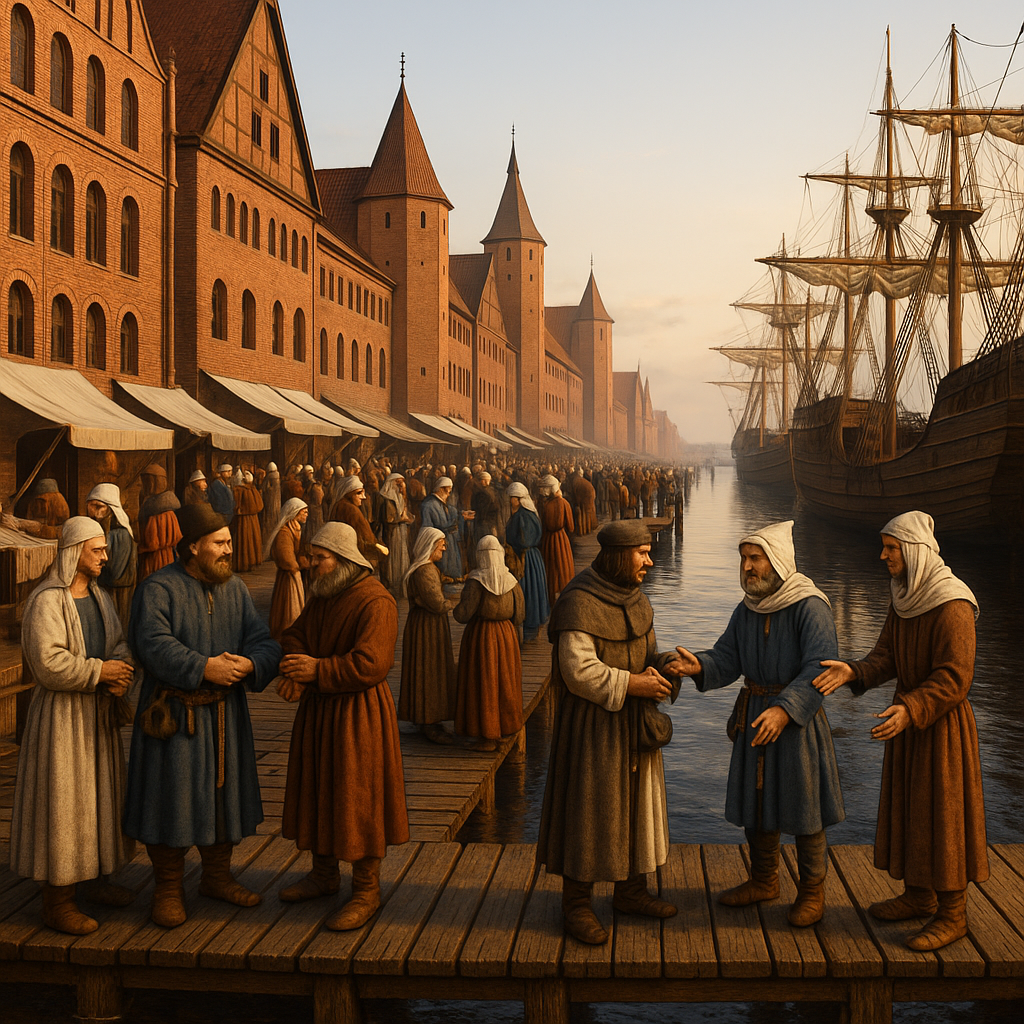
In the late Middle Ages, a formidable coalition of merchant cities along the coasts of the North Sea and the Baltic Sea emerged, shaping the very fabric of commerce in Northern Europe. Known as the Hanseatic League, this powerful network forged unprecedented trade links that connected diverse cultures and economies from the 13th to the 17th centuries. Its influence went far beyond mere exchange of goods — the League was a pioneering force in political cooperation, economic regulation, and urban development.
The Origins and Formation of the Hanseatic League
Emerging in the mid-12th century, the Hanseatic League was initially a defensive alliance formed by merchants of Lübeck and Hamburg to protect their commercial interests against piracy and rival powers. Lübeck, situated on the Baltic coast, quickly became the League’s de facto capital, known for its strategic position as a gateway between the Baltic and the rest of Europe. Over the subsequent centuries, the League expanded to include dozens of cities across present-day Germany, Poland, the Baltic states, Scandinavia, and even parts of the British Isles and Russia.
The League was not a state but a unique economic confederation centered on mutual benefit. Its members negotiated common policies, set standard trading practices, and formed collective security arrangements to safeguard their merchant fleets and goods. This unified voice strengthened Northern European trade in an era often fragmented by feudal and territorial conflicts.
Trade Networks and Economic Impact
The Hanseatic League dominated the trade routes of the North and Baltic Seas. Its merchants specialized in key commodities such as grain, timber, furs, wax, salt, and cloth — vital goods that fueled the growth of medieval Europe’s urban centers. The League’s control over these trade commodities allowed member cities to amass significant wealth and influence.
One of the League’s greatest achievements was the establishment of the Kontor system — permanent trading posts equipped with warehouses, offices, and even legal courts. Major kontors in places like Bruges, London, Bergen, and Novgorod acted as hubs for negotiations, goods exchange, and financial transactions. This institutional framework fostered reliable long-distance trade, reduced conflict risks, and helped standardize commercial law across borders.
Political Influence and Diplomatic Achievements
Beyond economic matters, the Hanseatic League wielded considerable political clout. It negotiated privileges and trade agreements with kings and princes, leveraging the collective bargaining power of its many cities. The League could muster fleets to protect trade convoys or even engage in armed conflict when necessary, such as its wars against Denmark during the 14th and 15th centuries.
The League’s ability to operate autonomously while maintaining cordial relations with various monarchies marked an early form of supranational cooperation. Its meetings, held at periodic assemblies known as Hansetags, shaped policies and resolved disputes, ensuring cohesion among diverse urban members.
Decline and Lasting Legacy
By the late 16th century, however, the League’s dominance began to wane. The rise of nation-states with centralized monarchies, changing trade routes driven by Atlantic exploration, and internal divisions weakened the coalition’s unity and commercial supremacy. Despite this, the Hanseatic League left an enduring cultural and architectural heritage. Many Hanseatic cities preserve Gothic brick buildings, merchant halls, and port infrastructures commissioned during the League’s heyday.
Moreover, the League set precedents for joint economic regulation, international law in trade, and urban governance that influenced later European commercial associations and modern economic unions. In many ways, the Hanseatic League was a medieval precursor to today’s global trade networks.
Conclusion: The Hanseatic League’s Enduring Historical Impact
The Hanseatic League was more than a medieval trade alliance; it was a remarkable example of cooperation that transcended language, culture, and political division to create a thriving economic and diplomatic entity. Its creation transformed Northern European trade, laying foundations for regional stability and prosperity. By fostering connectedness and mutual interests among diverse urban centers, the League helped shape the trajectory of European economic development well beyond the Middle Ages.
Its legacy can still be explored in the preserved cities and the traditions of commerce it inspired. Understanding the Hanseatic League offers valuable insights into how early economic integration can influence the political and cultural landscape of a region.
the shifting balance of power in Europe