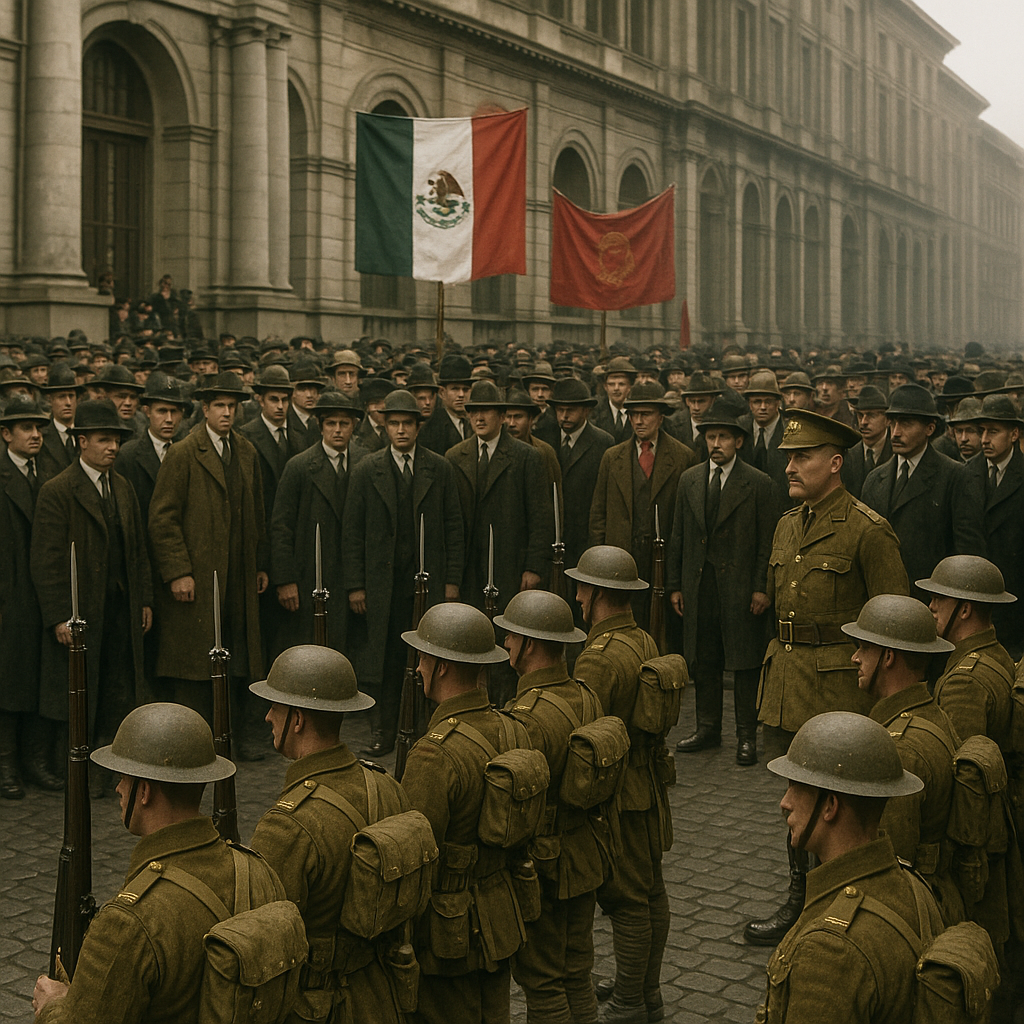
In the icy depths of January 1917, a secret message crossed the Atlantic cables—an encoded German proposal that would, in just a few months, alter the destiny of nations. The Zimmermann Telegram, clumsily disguised and fatally compromised, stands as one of the twentieth century’s great historical pivots—a cryptic offer of alliance that accidentally propelled the United States into the cataclysm of World War I.
The Setting: 1917 and the Morass of War
By early 1917, Europe was caught in the stalemate of trench warfare. Germany, increasingly desperate to break the deadlock, prepared to resume unrestricted submarine warfare around the British Isles. The policy risked angering the still-neutral United States, but Berlin gambled the blockade could starve Britain into submission before America could mobilize. Meanwhile, diplomatic overtures simmered. Within the German Foreign Office, Undersecretary Arthur Zimmermann devised a stunning, high-risk gamble—a bid to distract the United States by encouraging a war on its own soil.
The Telegram: A Secret Pact with Mexico
On January 16, 1917, Zimmermann dispatched a telegram to Germany’s ambassador in Mexico City, Heinrich von Eckardt. Crafted in code, the message was clear in intent: if the United States entered the war against Germany, Eckardt should propose a military alliance to Mexico. In return for joining an anti-American axis, Mexico would receive German financial support and, in the event of victory, the restoration of its former territories—Texas, New Mexico, and Arizona.
This plan exploited bitter memories of the Mexican-American War and recent U.S. intervention during the Mexican Revolution. German strategists, aware of the simmering resentments, hoped to tie down American troops on their southern border, complicating U.S. actions in Europe.
The Interception: British Spies and Broken Codes
Unbeknownst to Berlin, its supposedly secure diplomatic channels were not as private as believed. The British codebreakers of Room 40—an elite unit in the British Admiralty—had already made major breakthroughs in deciphering German ciphers. Britain’s intelligence services monitored transatlantic cables, which by necessity passed through British relay stations.
In late January 1917, British cryptanalysts intercepted and decrypted the Zimmermann Telegram. Admiral William Hall, head of Room 40, quickly grasped the extraordinary opportunity. But this placed Britain in a delicate position: to publicize the contents would reveal to Germany the extent of British codebreaking prowess and the compromise of their communication lines.
British intelligence devised a clever ruse, obtaining a separate copy of the telegram from the U.S. relay system in Mexico. This allowed them to provide the message’s text to the Americans without revealing the full capabilities of Room 40 and its cryptographers.
The American Reaction: Outrage and a Turning Tide
On February 24, 1917, the British handed over the decoded telegram to the U.S. ambassador in London. Less than a week later, the document was placed before U.S. President Woodrow Wilson. At first, incredulity reigned—was this a British fabrication, an attempt at manipulation? But when Germany’s Foreign Secretary Arthur Zimmermann boldly admitted, on March 3, the telegram’s authenticity, skepticism evaporated.
The telegram was released to the public on March 1, and American newspapers exploded with headlines of betrayal. Outrage spread swiftly across the country. Isolationist arguments crumbled under the weight of German provocation. Even as unrestricted submarine attacks on American shipping escalated, the plot to incite a Mexican-American war proved the final straw. Previously, a nation divided between intervention and neutrality was galvanized by this evidence of hostile intent so close to home.
Diplomatic Fallout: Mexico’s Response and the Larger War
While Germany’s proposal burned through American headlines, Mexico’s reaction was far more subdued. Mexican President Venustiano Carranza and his military advisers doubted German promises. Logistically and militarily, a war with the United States was unwinnable. Mexico’s army, ravaged by years of revolution, could not hope to hold Texas or the Southwest against American forces—even with the promise of German gold.
As such, Mexico declined the offer. But the damage was already done: American public opinion, once war-weary and hesitant, now rallied to Wilson’s call. On April 2, 1917, President Wilson addressed Congress, declaring that “the world must be made safe for democracy.” The United States entered World War I less than a week later, fundamentally shifting the balance of the conflict.
Legacy: Global Implications and Modern Espionage
The Zimmermann Telegram’s impact reverberated far beyond 1917. The entry of American troops and resources invigorated the exhausted Allied forces. Germany’s miscalculation hastened its defeat, with consequences playing out at the Treaty of Versailles and shaping the geopolitics of the twentieth century.
As a story of intercepted intelligence and diplomatic intrigue, the episode helped define the modern age of espionage, signals interception, and codebreaking—a theme repeated in later wars with the exploits at Bletchley Park. The tale of the Zimmermann Telegram, imperfectly plotted and fatefully decoded, serves as a reminder of how the subtle flow of information can tip the world into new and unexpected courses. For related insight into British cryptographic brilliance and its long legacy, see earlier breakthroughs in cryptanalysis. Had the telegram not been intercepted—or had it never been sent—the course of World War I, and perhaps the twentieth century itself, might have unfolded very differently.