The Roman Colosseum: Architectural Marvel and Symbol of Ancient Rome's Power
Explore the construction, design, and lasting impact of the Roman Colosseum, a monumental symbol of imperial Rome and its enduring historical legacy.

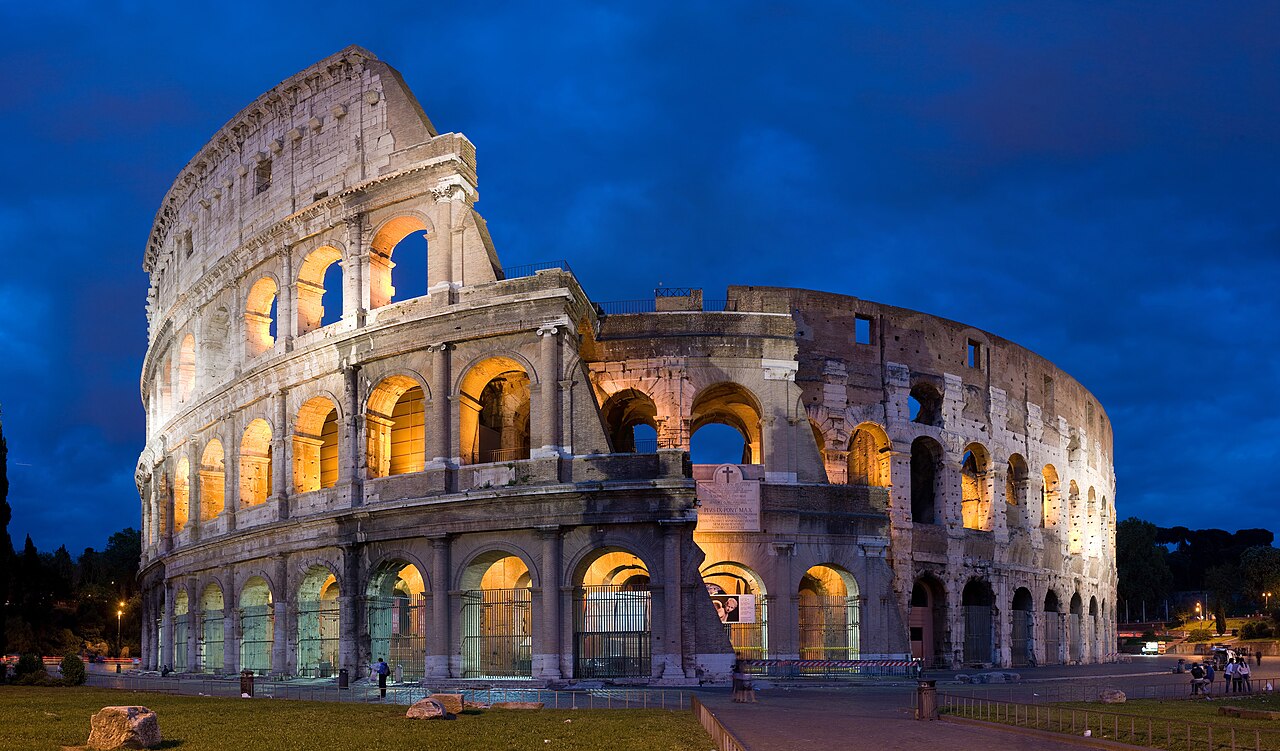
Rising from the heart of Ancient Rome, the Colosseum stands as one of history’s most iconic architectural achievements. Known officially as the Flavian Amphitheatre, this colossal structure was more than just an arena for gladiatorial combat; it was a testament to Roman engineering prowess, political power, and social spectacle. Its construction and cultural significance offer a unique lens through which to understand the grandeur and complexity of the Roman Empire.
Origins and Commissioning under the Flavian Dynasty
The Colosseum’s story began in AD 70 when Emperor Vespasian initiated construction, shortly after the destructive civil war that accompanied the fall of Nero and the end of the Julio-Claudian dynasty. The choice of location was deliberate: it was built on the site of Nero’s artificial lake, part of his extravagant Domus Aurea palace complex. This act was a powerful political statement by the Flavian family, signaling a new era focused on imperial generosity and public engagement.
Completed under Emperor Titus in AD 80, the amphitheatre embodied the Flavians’ intent to foster civic cohesion through grand entertainment. This completed structure was not just a place for games; it was a symbol designed to unite a sprawling empire through spectacle and demonstrate the engineering advancements that made Rome the powerhouse of the ancient world.
The money came from war. The Flavian claim to rule rested on Vespasian and Titus’s suppression of the Jewish revolt, and a reconstructed dedicatory inscription records that the amphitheatre was paid for ex manubiis — out of the spoils of that campaign, with prisoners taken in Judaea supplying much of the labour. Handing Nero’s lake back to the Roman people was therefore also a permanent advertisement of a victory won far from Italy, and part of a wider programme that reshaped the city’s public spaces after the disorder of AD 69.
Engineering Mastery: Design and Construction Techniques
The Colosseum’s architecture remains a marvel, showcasing innovative Roman engineering techniques. Built predominantly with travertine limestone, tufa, and brick-faced concrete, the structure could accommodate an estimated 50,000 to 80,000 spectators. Its oval shape measured approximately 189 by 156 meters, featuring four levels of seating arranged to maximize visibility and comfort, segmented by social class and status.
Its complex system of vaults, arches, and corridors allowed efficient crowd control and quick evacuation—a necessity given the crowds. Ingeniously, the arena floor included trapdoors and elevators operated by a network of pulleys and winches, enabling dramatic emergences of combatants and animals. This subterranean area, called the hypogeum, was a maze of tunnels and chambers wholly unique for the time.
Building on that scale was as much a problem of supply as of design. The travertine was quarried near Tibur, some thirty-five kilometres east of the city, and the blocks of the outer ring were locked together not with mortar but with iron clamps, which later scavengers dug out, leaving the pitted surface the ruin still shows. Circulation was solved with the same deliberation: eighty arches ringed the ground floor, and spectators carrying numbered tokens were funnelled through the matching entrance to a fixed block of seats, so that a vast audience could be seated and cleared without crushes. A retractable awning, the velarium, was rigged from masts on the outer wall and worked by detachments of sailors.
The amphitheatre also symbolized Rome’s mastery of water engineering, capable of being flooded for mock naval battles, a spectacle that highlighted Roman naval prowess and entertained the populace with dramatic recreations.
That capacity belonged to the building’s earliest years. Once Domitian completed the hypogeum in the 80s, the arena floor stood permanently over masonry corridors and machinery, and serious flooding became impossible. The mock battles mark an opening experimental phase rather than a standing feature: the building was repeatedly altered to suit the entertainments each emperor wished to mount.
Social and Political Role in Imperial Rome
Beyond its physical grandeur, the Colosseum served complex social and political functions. Gladiatorial games and public executions were staged to entertain but also to reinforce social order. By providing free spectacles, the emperors gained popular support, distracting the masses from political unrest or economic hardship.
The seating arrangements reinforced Roman social hierarchies, separating the senators, equestrians, and common citizens. This arrangement was a daily reminder of Rome’s rigid class structure, subtly embedding societal norms within the fabric of entertainment. The amphitheatre thus remained a space where power, politics, and public spectacle intersected dramatically.
That segregation was not left to custom. Augustus had already regulated seating at public shows by law, and the amphitheatre translated the same logic into stone: senators on marble benches at the arena’s edge, equestrians behind them, ordinary male citizens higher up, women and the poorest spectators on the topmost tier of wooden seats. The emperor watched from his own box, in full view of everyone. The audience was thus a working diagram of the Roman order, a pattern already visible in Caligula’s handling of the games a generation earlier; what the Colosseum added was permanence.
The games and events held here often commemorated military victories or imperial milestones, reinforcing Rome’s image as an invincible empire. This aspect of spectacle politics has also been explored in other contexts of Roman history, such as the Imperial cult and the Rome’s evolution as a religious center, discussed at length in the history of Roman religious practices.
Preservation, Decline, and Legacy
With the fall of the Western Roman Empire, the Colosseum suffered through natural disasters, neglect, and stone quarrying. Yet, despite centuries of damage, it survived as a potent symbol of Rome’s enduring legacy. In later periods, particularly during the Renaissance and modern eras, its ruins inspired artists, architects, and historians fascinated by Roman culture.
That decline was mostly human rather than natural. The last recorded animal hunts were staged in the sixth century, after which the shell served in turn as housing, workshops and a fortified stronghold for Roman noble families. The earthquake of 1349 brought down much of the southern outer wall, and the fallen travertine became a quarry for palaces and churches.
Today, the Colosseum serves not only as a popular tourist destination but also as a symbol of ancient engineering brilliance and the complexities of imperial Roman society. Modern archaeological studies continue revealing insights about its construction and role in ancient Rome, comparable in scholarly intrigue to the studies around the Roman Republic and Early Empire.
Chronology of the Colosseum, AD 64–1826
| Date | Event |
|---|---|
| AD 64 | The great fire clears ground in central Rome; Nero lays out the Domus Aurea, with an artificial lake on the site of the future amphitheatre |
| AD 68–69 | Nero’s death ends the Julio-Claudian dynasty; civil war brings Vespasian to power and founds the Flavian dynasty |
| AD 70 | Vespasian begins the Flavian Amphitheatre on the drained bed of Nero’s lake, funded from the spoils of the Jewish war |
| AD 79 | Vespasian dies with the building still unfinished |
| AD 80 | Titus dedicates the amphitheatre with a hundred days of games |
| AD 81–96 | Domitian adds the uppermost storey and builds the hypogeum beneath the arena floor |
| AD 217 | Fire after a lightning strike destroys the upper seating; repairs last decades |
| AD 523 | The last recorded animal hunts are staged in the arena |
| 1349 | An earthquake collapses much of the southern arc of the outer wall |
| 15th–16th centuries | Fallen travertine is quarried away for Roman palaces and churches |
| 1749 | Benedict XIV consecrates the arena to the memory of Christian martyrs, halting the quarrying |
| 1807–1826 | Brick and travertine buttresses are raised to stabilise the exposed ends of the outer ring |
Conclusion: The Colosseum’s Enduring Impact on History and Culture
The Roman Colosseum remains an unparalleled emblem of ancient Rome’s architectural daring and sociopolitical life. Its innovative design and massive scale reflect the empire’s ambition and technical skill, while its use as a venue for imperial spectacle reveals the nuanced strategies of control and entertainment in Roman society. As one of the best-preserved ancient monuments, it continues to captivate the imagination, standing as a bridge between the past’s grandeur and our understanding of human history today.
Frequently asked questions
Why did Vespasian build the amphitheatre on the site of Nero’s lake? The choice was political before it was practical. The lake belonged to the Domus Aurea, with which Nero had annexed a large stretch of central Rome for his private use, and draining it for a public building returned that ground to the Roman people in the most conspicuous way available. For a dynasty with no hereditary claim to power, that contrast was the point.
How many spectators could the Colosseum actually hold? Estimates run from about 50,000 to 80,000, and the spread reflects genuine uncertainty rather than careless arithmetic. They are reconstructed from the building’s dimensions and seating tiers, and vary with how much space per person is assumed and whether standing room in the top gallery is counted. Either way, the crowd was large enough to make circulation an engineering problem in its own right.
Were naval battles really fought inside the Colosseum? The amphitheatre could be flooded in its earliest years, and mock naval engagements were among the spectacles staged there. That phase was short: once Domitian built the hypogeum, the arena floor rested permanently on masonry corridors and lifting machinery, and large-scale flooding was no longer possible. Later naval displays were staged elsewhere in Rome.
Why is so much of the building missing today? Little of the loss was caused by the fall of the empire itself. The decisive damage came from the earthquake of 1349 and from centuries of quarrying afterwards, when the fallen travertine and the iron clamps binding the blocks were carried off for other buildings. The stripping ended only with papal protection in the eighteenth century, by which time much of the Colosseum had been rebuilt into the fabric of Renaissance Rome.
Bibliography
- Dedicatory inscription of the Flavian Amphitheatre. Rome.
- Dio, Cassius. Roman History.
- Martial. Liber de Spectaculis.
- Parco archeologico del Colosseo. Ministero della Cultura, Italy.
- Welch, Katherine E. The Roman Amphitheatre: From Its Origins to the Colosseum. Cambridge University Press, 2007.
Recommended reading
The Colosseumthe best short scholarly account of the building, its games and the afterlife of its ruin.
A Monument to Dynasty and Death: The Story of Rome's Colosseum and the Emperors Who Built Itreads the amphitheatre as a Flavian political statement, from Vespasian's foundation to Domitian's hypogeum.
Concrete Vaulted Construction in Imperial Rome: Innovations in Contextthe technical study behind the vaults and corridors that made a crowd of this size manageable.
View on Amazon →: Concrete Vaulted Construction in Imperial Rome: Innovations in Context
Blood in the Arena: The Spectacle of Roman Powerargues that the amphitheatre was an instrument of imperial control rather than mere entertainment.
View on Amazon →: Blood in the Arena: The Spectacle of Roman Power
Spectacles of Death in Ancient Romeexamines the killings staged in the arena and what they were meant to teach the watching crowd.
As an Amazon Associate I earn from qualifying purchases. Affiliate links in Recommended reading — and in Further reading on older articles — may earn Writesides of History a commission at no extra cost to you.
From the archive
Free for the curious, supported by you
Writesides of History publishes free, in-depth history articles every week. If you enjoy reading, you can support the work: become a member for exclusive deep-dive dossiers and early access, or browse the maps, classroom packs and dossiers in the shop.
Become a Member Donate Visit the Shop