Napoleon and Alexander I at Tilsit (1807): The Treaty That Redrew Europe
Why Napoleon and Tsar Alexander I met on a raft at Tilsit in 1807, what the treaties decided, and how they sealed Prussia's fate.

On a raft moored in the middle of the Niemen River in the summer of 1807, two of Europe’s most powerful rulers confronted each other across a silk-draped table. Napoleon Bonaparte—fresh from his crushing victories over Prussia and Russia—and Tsar Alexander I—embroiled in war and personally wounded by defeat—met at Tilsit for negotiations that would shape the continent’s future. The drama of this scene, unfolding over several days of tense conversation and secret bargaining, marked not only the collision of personal ambitions but the redrawing of European order at the zenith of Napoleonic might.
The Road to the Raft: Defeat and Respect
The spring of 1807 had seen the foundations of Eastern Europe shaken. Napoleon’s Grande Armée, after a grueling winter campaign, had delivered a punishing blow at the Battle of Friedland, forcing Tsar Alexander’s badly mauled forces to retreat. Prussia, once a formidable ally, now lay shattered—its capital, Berlin, occupied by French troops. Yet in victory, Napoleon recognized a unique opportunity for diplomacy. The Tsar—young, idealistic, and beset by internal and external pressures—considered the unthinkable: making peace with the man who styled himself master of the continent.
Alexander I and Napoleon met for the first time on 25 June 1807 in the neutral zone of the Niemen, far from their respective armies and their anxious ministers. Both leaders understood that their personal rapport would determine the fate of nations. The raft itself, a symbol of fragile stability, was decorated for grandeur and secrecy—its single long table, its fringed tented roof. The physical isolation matched the historic gravity of their encounter.
Negotiation and Rivalry: Personal Chemistry and Political Bargaining
What unfolded over the next week was an extraordinary blend of frank discussion, subtle flattery, and raw strategic calculation. Napoleon, well-versed in the art of seduction—political and otherwise—sought to enchant the Tsar. He spoke grandiloquently of peace, cooperation, and the possibility of a new, two-headed order in Europe: the French and Russian empires as benevolent arbiters—a “partition of the world,” as some in their entourages later whispered.
Alexander, for his part, was wary and captivated in equal measure. Eager to end the suffering of his troops and to gain relief for his weakened, war-torn nation, he listened as Napoleon offered high-flown praise—“only you are worthy to speak to me as an equal.” Yet, beneath the cultivated respect was unspoken rivalry: both men harbored visions of glory and empire, each eyeing the other’s sincerity. In the quiet of post-negotiation nights, aides recorded how Napoleon admitted he found Alexander “the only person whose intelligence rivals mine.” The conference room became a stage for subtle brinkmanship as much as statesmanship.
On the periphery stood the beaten king of Prussia, Frederick William III, forced to wait days before being admitted to the negotiations at all. The humiliation of Prussia, witnessed in the very protocol of Tilsit, was intentional. The future of that once-proud kingdom would be settled between the French conqueror and the Russian Tsar—Prussia itself a mere object, not a subject, in the reordering of Europe.
The Secret Clauses: Redrawing Continental Lines
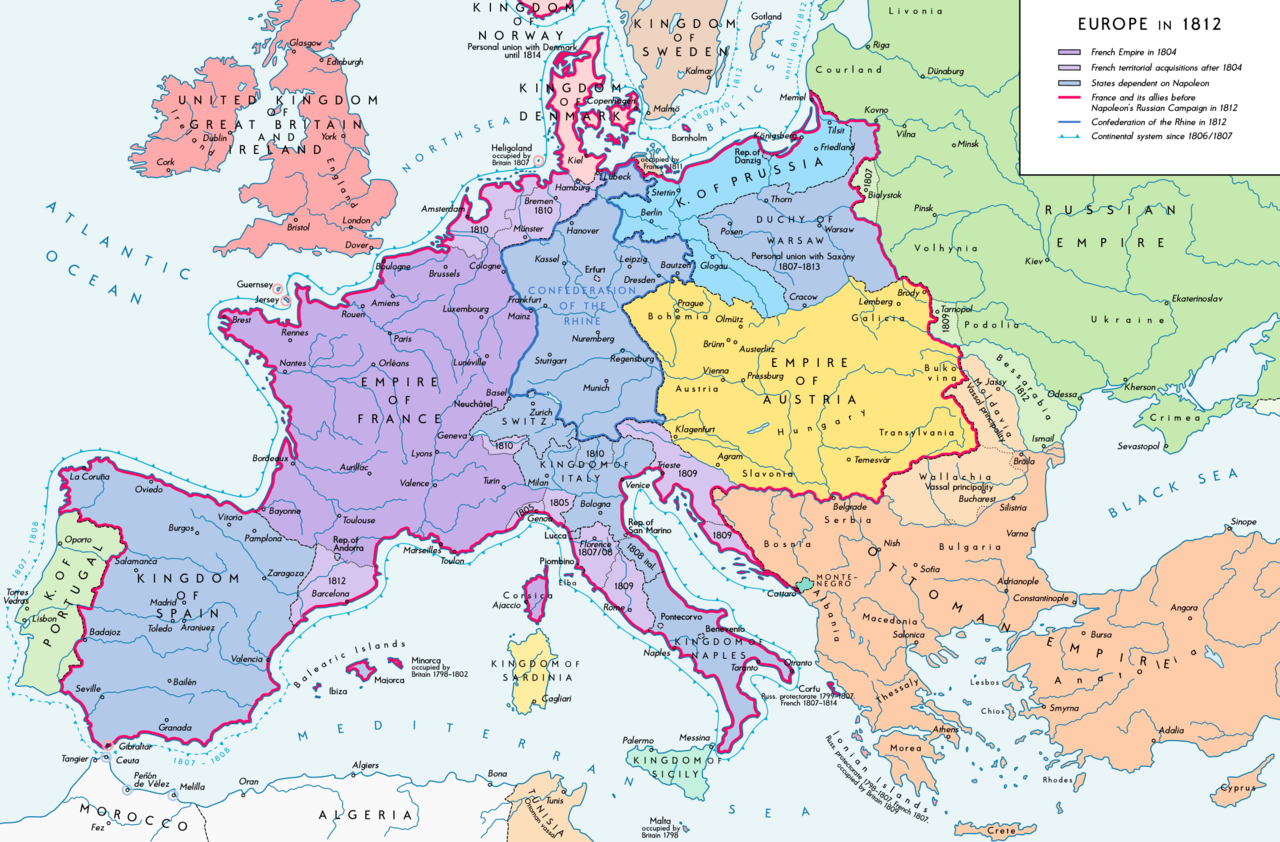
The formal Treaties of Tilsit, signed on 7 and 9 July 1807, were both public declarations and vessels for secret ambition. Officially, France and Russia pledged a new alliance, and Prussia—its territory halved, its pride broken—was forced to accept humiliating terms. Much of its land, including the formerly Polish territories, was carved away to create the new Duchy of Warsaw—a Napoleonic proxy state and flashpoint for future Russo-French tension.
Yet it was the secret protocols, known only to a privileged inner circle, that hinted at deeper designs. Napoleon prodded Alexander to join him in a campaign against Britain, the lone remaining holdout in his continental system. Russia agreed—if only in theory—to close its ports to British goods and, in turn, was tacitly granted a free hand over Finland (then under Swedish rule) and future designs on the pending dissolution of the Ottoman Empire. These understandings laid the basis for a temporary, fragile realignment that threatened to disrupt traditional alliances—especially in the east where the Russian advance toward Constantinople alarmed many.
Even as the ink dried, the participants maneuvered. French and Russian courtiers speculated about the secret conditions and their possible ramifications for the European balance—especially echoes of post-Napoleonic settlement and its roots in the events at Tilsit. The seeds of future discord were thus sown in the very act of forging a new order.
The Human Drama: Power, Humiliation, and Hope
Tilsit was more than statecraft; it was a theatre of human emotion. Contemporary accounts describe Napoleon and Alexander conversing deep into the night, sharing meals and strolls in apparent amity, the French Emperor dazzling the Russian with visions of shared greatness. Russian courtiers, initially suspicious, found themselves charmed—and slightly unnerved—by their host’s candor and charisma.
The encounter was equally marked by humiliation and loss. Frederick William III, summoned only after the major decisions were concluded, was reduced to pleading for the remainder of his reduced kingdom. Queen Louise of Prussia, celebrated for her beauty and influence, attempted to beguile Napoleon into lessening the severity of Prussia’s fate, but was rebuffed with cold courtesy. The personal abasement of the Prussian royal house—kept waiting for invitations, granted only secondary attention—became a symbol emblazoned in German memory, catalyzing decades of future nationalist sentiment and resistance.
Prussia's Answer: Reform Born of Humiliation
The terms signed on 9 July were meant to leave a kingdom too weak to matter. Prussia surrendered its lands west of the Elbe to the new Kingdom of Westphalia, kept four provinces and roughly half its former population, and owed an indemnity it could not pay while French garrisons remained. A convention concluded at Paris in September 1808 capped the Prussian army at 42,000 men, a remnant of the force Frederick the Great had built and Napoleon had shattered at Jena and Auerstedt.
The cap produced the opposite of the docility Napoleon intended. Baron vom Stein's October Edict of 1807 abolished hereditary serfdom and the barriers tying land and occupation to birth; Hardenberg carried the programme forward after French pressure drove Stein into exile. The Military Reorganisation Commission under Scharnhorst and Gneisenau opened the officer corps beyond the nobility and, through short-service intakes, trained far more men than the treaty envisaged without ever breaching its headcount on a given day.
The Continental System and the Price of Alliance
The promise Alexander made at Tilsit — to shut Russian harbours to British commerce — was cheap to give and ruinous to keep. Napoleon's Berlin Decree of November 1806 had already barred British goods from every port under French control, and Russian adherence extended that ban to the Baltic and the White Sea, where Britain bought the grain, flax, hemp, timber and naval stores on which whole Russian provinces depended. The loss did more than dent state revenue: it emptied the pockets of the service nobility whose goodwill kept Alexander on his throne, and drove the paper rouble steadily down against silver. Nor did the promised compensations arrive. When the emperors met again at Erfurt in the autumn of 1808, Napoleon would not concede Constantinople and the Straits, and Alexander would not send troops to Spain.
Legacy of Tilsit: A Shifting European Order
For a brief moment, Tilsit seemed to promise a genuine Franco-Russian partnership. The Grand Duchy of Warsaw was established as a buffer and experiment in Napoleonic statecraft on the ruins of Poland. Russia moved to annex Finland after a war with Sweden, as tacitly approved by Napoleon. Continental Europe, for a fleeting year, existed under the uneasy peace of two emperors’ handshake.
Despite vows of friendship, suspicion remained. Alexander resented the impositions of the Continental System, particularly the damage to vital Russian trade. Napoleon’s ambitions in Spain and his eventual invasion of Russia would undo the agreements forged at Tilsit, leading by 1812 to catastrophe on the Moscow road. Yet the significance of Tilsit endures: it revealed the limits of personal diplomacy, the impermanence of alliances built on coercion, and the ever-shifting puzzle of European power. The scene on the Niemen Raft, immortalized by both French and Russian chroniclers, remains a parable for ambition and the tragic brevity of strategic harmony.
Tilsit's impact would ripple through subsequent diplomatic summits, from the formation of the Duchy of Warsaw to the eventual recalibration at the Congress of Vienna. Even the humiliations suffered by Prussia at Tilsit would ignite the reforming zeal which, years later, underpinned resistance to Napoleonic domination in Germany and the eventual tides of 19th-century nationalist movements. The raft at Tilsit, afloat only a handful of days, left a lasting wake in history’s river.
Chronology
| Date | Event |
|---|---|
| 21 November 1806 | Napoleon's Berlin Decree proclaims the Continental System |
| 14 June 1807 | Napoleon defeats the Russian army at Friedland |
| 25 June 1807 | Napoleon and Alexander I meet on the raft in the Niemen at Tilsit |
| 7 July 1807 | The Franco-Russian treaty of Tilsit is signed |
| 9 July 1807 | The Franco-Prussian treaty is signed; Prussia loses about half its territory |
| 22 July 1807 | Napoleon grants the Duchy of Warsaw its constitution at Dresden |
| 9 October 1807 | Stein's October Edict opens the Prussian reform era |
| February 1808 | Russia invades Finland, beginning the war with Sweden |
| September–October 1808 | The Congress of Erfurt renews the alliance without settling the Ottoman question |
| 17 September 1809 | The Treaty of Fredrikshamn transfers Finland from Sweden to Russia |
| 31 December 1810 | A new Russian tariff taxes French goods and admits neutral shipping |
| 24 June 1812 | The Grande Armée crosses the Niemen; the Tilsit alliance ends |
Frequently asked questions
Why did Napoleon and Alexander I negotiate on a raft in the middle of the Niemen? The river marked the line between the two armies after Friedland, so a raft moored midstream gave each ruler neutral ground that neither had to concede to the other. It also kept ministers, courtiers and the defeated Prussians at a distance, allowing the two emperors to bargain in private. The staging was deliberate: a tented pavilion built for two men, isolated by water.
What did Prussia actually lose at Tilsit? Frederick William III was kept waiting while France and Russia settled his kingdom's fate, then signed terms on 9 July 1807 that stripped away roughly half his territory. The lands west of the Elbe passed to the new Kingdom of Westphalia, the Polish acquisitions became the Duchy of Warsaw, and an indemnity kept French garrisons on Prussian soil. Queen Louise's personal appeal to Napoleon for milder terms was refused.
What was in the secret clauses of the Treaties of Tilsit? Beyond the public alliance, Alexander undertook to close Russian ports to British trade and to join the war against Britain if London refused peace. In exchange Napoleon tacitly conceded Russia a free hand against Sweden in Finland and left open the eventual partition of Ottoman territory. These understandings, known only to a small inner circle, were the real substance of the bargain.
Why did the alliance made at Tilsit collapse? The Continental System cost Russia the British market for its grain, timber and naval stores, and no territorial gain replaced that income. The Duchy of Warsaw looked from St Petersburg like a French bridgehead and a standing encouragement to Polish nationalism, while the Erfurt meeting of 1808 failed to settle the Ottoman question. By the end of 1810 Russia was taxing French goods, and in June 1812 Napoleon invaded.
Bibliography
- Archives nationales. Archives nationales, France.
- Bonaparte, Napoleon. Correspondance.
- Grab, Alexander. Napoleon and the Transformation of Europe. Palgrave Macmillan, 2003.
- Treaties of Tilsit. 1807.
Recommended reading
The Transformation of European Politics 1763-1848sets Tilsit within a wider reinterpretation of European diplomacy, arguing that Napoleonic hegemony rested on coerced alliances rather than any balance of power.
View on Amazon →: The Transformation of European Politics 1763-1848
Napoleon's Wars: An International Historytraces how the Continental System reshaped every state that signed up to it, Russia included.
Russia Against Napoleon: The True Story of the Campaigns of War and Peacedraws on Russian archives to explain how Alexander's court moved from the alliance of 1807 to open war in 1812.
View on Amazon →: Russia Against Napoleon: The True Story of the Campaigns of War and Peace
Iron Kingdom: The Rise and Downfall of Prussia, 1600-1947gives the fullest account of how the amputations of 1807 drove the Prussian reform movement of Stein, Scharnhorst and Gneisenau.
View on Amazon →: Iron Kingdom: The Rise and Downfall of Prussia, 1600-1947
Alexander I: Tsar of War and Peaceremains the standard English-language biography of the tsar who faced Napoleon across the table on the Niemen.
As an Amazon Associate I earn from qualifying purchases. Affiliate links in Recommended reading — and in Further reading on older articles — may earn Writesides of History a commission at no extra cost to you.
From the archive
Free for the curious, supported by you
Writesides of History publishes free, in-depth history articles every week. If you enjoy reading, you can support the work: become a member for exclusive deep-dive dossiers and early access, or browse the maps, classroom packs and dossiers in the shop.
Become a Member Donate Visit the Shop