Gustavus Adolphus: How He Built Modern Sweden (1611–1632)
How Gustavus Adolphus transformed Sweden from a peripheral kingdom into an efficient early modern state, 1611–1632 — the reforms explained.

Introduction
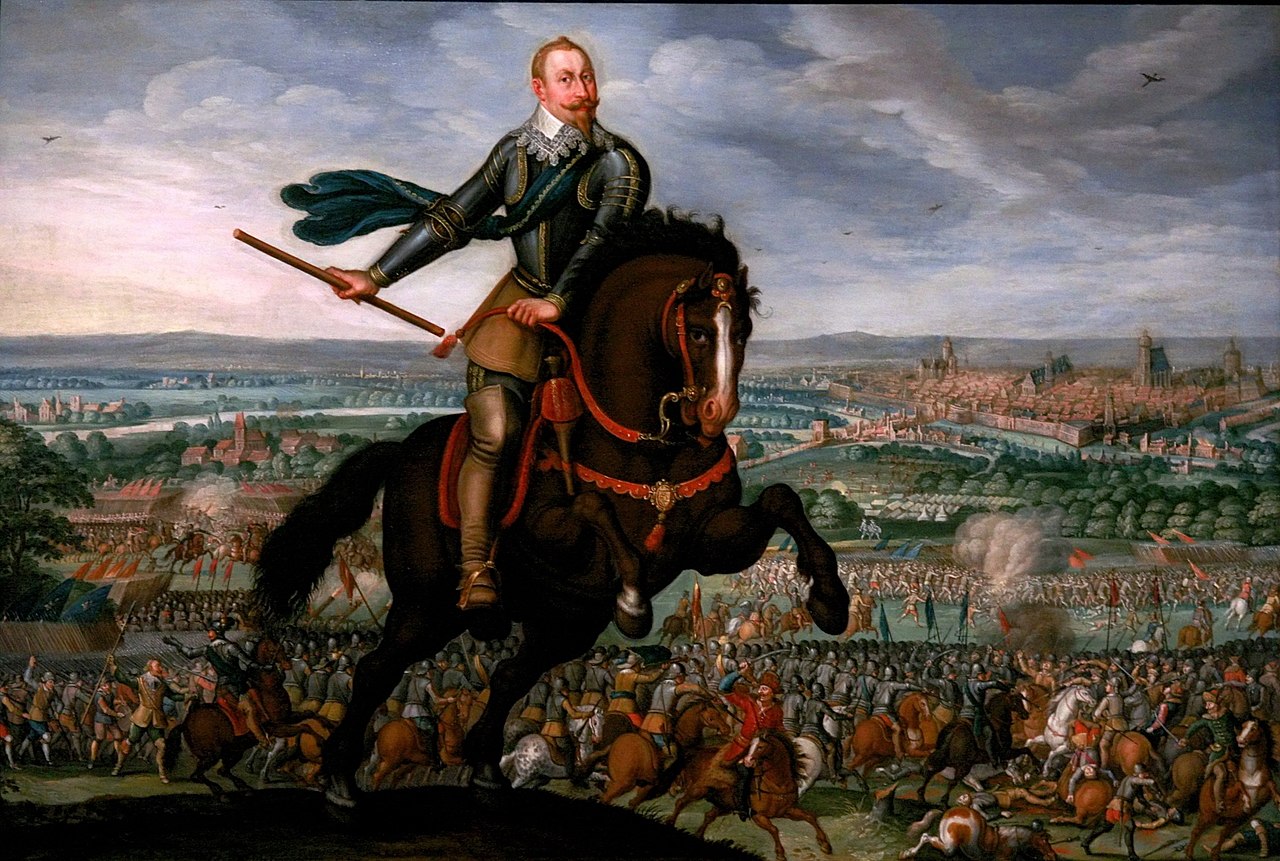
In the heart of the Nordic world, the early seventeenth century was a crucible for statecraft and innovation. Few monarchs embodied the vigor of structural transformation quite like Gustavus Adolphus of Sweden (r. 1611–1632). His reign occurred against a backdrop of war, shifting religious alliances, and the relentless push toward centralized authority that would come to define the emerging modern state. Yet what made Gustavus Adolphus historically distinctive was not simply his battlefield prowess, but his profound administrative reforms, which restructured the machinery of governance and altered the relationship between the sovereign and his subjects. Sweden, once a peripheral northern kingdom, would soon stand as a model of early modern state-building, its bureaucratic innovations influencing rulers and theorists across Europe.
To understand the Scandinavian transformation under Gustavus, it is necessary to look beyond the drama of war and dynastic intrigue. The king’s approach to administration—his relentless pursuit of order, efficiency, and institutional permanency—shaped not only Sweden’s ability to wage the Thirty Years’ War but also the very fabric of Scandinavian society. The reforms Gustavus Adolphus pioneered reached deep into the lives of nobles and commoners, soldiers and tax collectors, landowners and peasants, forging a state that was both more centralized and paradoxically, more participatory than its feudal predecessors. This article explores the structural changes, societal impacts, and political dynamics generated by Gustavus Adolphus’s reforms between 1611 and 1632—a period that saw the birth of Swedish bureaucratic modernity.
The Foundations of Swedish Administration: Inheriting Crisis and Opportunity
When Gustavus Adolphus ascended the throne in 1611 at the age of seventeen, Sweden was in a precarious position. The kingdom faced external threats from Denmark, Poland, and Russia, while internally it struggled with a fragmented nobility and an inefficient, decentralized administration. Revenue collection was inconsistent, the Crown’s authority over distant provinces tenuous, and the mechanisms for communication and command inadequate for a state aspiring to play a continental military role.
Yet with crisis came opportunity. Gustavus recognized that a state’s strength was determined as much by the precision of its administration as by the valor of its armies. He and his circle of advisers, most prominently Axel Oxenstierna, saw Sweden’s future in a modernized bureaucratic model—not unlike the cameralist developments that would later shape Central Europe, as discussed in cameralist administration. For Scandinavia, this meant restructuring the traditional roles of the nobility, clergy, and commoners, and building robust institutional frameworks capable of supporting sustained conflict, economic growth, and internal peace.
Centralization and the Council of the Realm: Reshaping Political Dynamics
One of the most critical changes under Gustavus Adolphus was the formalization and empowerment of the Council of the Realm (Riksrådet), which became the engine of Sweden’s administrative reforms. Previously a gathering of powerful magnates, the council under Gustavus’s reign was transformed into a specialized organ of governance. Its role shifted from an advisory, occasionally rebellious council, to a central instrument for drafting, executing, and supervising state policy. This adjustment altered the balance of power among the elite, anchoring legitimacy not simply in lineage or might, but in service and merit. The king’s careful management of noble privileges—rewarding cooperation with lands or titles, but tying these closely to administrative function—created a self-reinforcing administrative class loyal to the Crown.
This new political dynamic extended to the provinces, where the king’s reforms replaced many hereditary officials with Crown-appointed governors (landshövdingar). These governors were endowed with far-reaching powers: they supervised local administration, implemented royal directives, and ensured tax collection and military levies. While the nobility’s traditional independence was curtailed, the increased responsibilities and privileges available within the new bureaucratic order created alternative pathways to influence and personal advancement. This rebalancing process, akin to developments seen elsewhere in early modern Europe—such as in the transformation of guild leadership described in the rise of guild statecraft—would prove crucial to Sweden’s administrative resilience.
Military Reorganization and Societal Mobilization: Linking Administration to War
No dimension of Gustavus Adolphus’s reforms more clearly demonstrated the fusion of state and society than his military innovations. Instead of relying upon loosely organized regional levies and foreign mercenaries, Gustavus established a system of conscription underpinned by a highly structured administrative apparatus. The Indelningsverket, or “Allotment System,” assigned farms and estates the responsibility of provisioning and supporting soldiers. Civilian and military administration became intertwined; even the smallest parish was now integrated into the machinery of state power, bridging gaps between local and central authority.
This reform profoundly affected Scandinavian society. Farming communities found themselves enlisted into the state’s priorities, linking economic productivity and military service inextricably. The regular census-taking, taxation, and resource allocation required to sustain this system demanded an unprecedented collection of data and flow of information, laying the groundwork for the modern surveillance and information state. As with other administrative evolutions in Europe—such as the gathering of economic intelligence by the Dutch discussed in knowledge networks—Sweden’s military reforms created a culture of reporting, accountability, and data-driven governance. The mobilization of society in the service of the state both bound the population more closely to the monarchy and fostered an emerging sense of national identity.
The Administrative Revolution: Bureaucracy, Taxation, and Record-Keeping
At the heart of Gustavus Adolphus’s reforms was a deep commitment to information and order. During his reign, the nascent Swedish bureaucracy expanded rapidly. New central offices—the Kammarkollegium (Chamber College), Krigskollegium (War Office), Kommerskollegium (Board of Trade), and others—were established, each specializing in essential state functions. These bodies deployed educated officials, often drawn from a rising class of university-trained clerks whose social mobility depended on merit rather than birth. Structured hierarchies, clear lines of responsibility, and standardized procedures replaced informal and personalistic management.
Perhaps no reform reshaped the fabric of Sweden more than the rationalization of taxation. The state moved aggressively to catalog and value taxable lands, bringing consistency and predictability to royal revenue streams. Peasants, townsmen, and even the lower nobility found themselves increasingly subject to state oversight, but also gained a voice—albeit limited—in the Diet (Riksdag), which had the right to consent to new taxes and financial measures. The regularity and transparency of this new system reduced opportunities for corruption and arbitrary extortion, although it did not eliminate social tension. This transformation mirrored, in Nordic fashion, the broader evolution of state economic structures witnessed in Venice and Prussia during the period, as explored in the economic foundations of Venice and Prussian legal reforms.
Civic Engagement and the Shaping of Public Sphere
The administrative reforms of Gustavus Adolphus, while strengthening royal authority, paradoxically laid groundwork for broader social participation. The practice of calling regular meetings of the Riksdag not only anchored legislative consent but also fostered habits of political negotiation and dialogue among Sweden’s estates. Even as the monarchy centralized power, it did so by engaging landed nobility, clergy, burghers, and (to a limited degree) freeholding peasants in matters of taxation, defense, and local jurisdiction. This nascent civil society—rooted in administrative necessity—formed an embryonic public sphere capable of voicing, if not dictating, its interests.
The participatory dynamic that emerged would be tested in subsequent decades, but its roots can be traced to the very reforms Gustavus championed. The regular transmission of petitions, reports, and grievances from provincial officers up to the Council mirrored proto-bureaucratic systems elsewhere in Europe, yet Sweden’s blend of administrative coherence and communal involvement was unique for its time. In this way, Gustavus Adolphus’s reign embodied the paradox of early modern state-building: the creation of a strong central state that, out of pragmatism or design, depended upon and cultivated limited but structured civic engagement.
Conclusion: Legacy of Reform and the Scandinavian Model
Gustavus Adolphus’s administrative reforms were neither isolated nor ephemeral. By the time of his death on the battlefield at Lützen in 1632, the institutional scaffolding he and his advisers erected remained robust enough to sustain Sweden’s continued rise as both military power and bureaucratic state. The model of governance developed in his reign not only facilitated Sweden’s prominent role in the Thirty Years’ War and its claims in the Baltic, but endured as a template for northern European statecraft. Many of the offices, procedures, and legal traditions established under his watch lasted well beyond the demise of Sweden’s great power era.
Perhaps most significantly, the legacy of Gustavus Adolphus’s reforms was social as well as structural. His reign transformed the relationship between ruler and ruled by binding subject and state together in unprecedented ways. The fusion of central authority, regularized taxation, record-keeping, and military organization created a polity in which loyalty and identity were shaped not just by dynasty, but by shared participation in a durable administrative order. In the broader panorama of early modern history, Sweden under Gustavus Adolphus stands as a pivotal case of how the structures of government, forged in the crucible of war and necessity, could reshape society and chart the path from medieval fragmentation toward modern unity.
Chronology: Swedish administrative reform, 1611–1632
| Date | Event |
|---|---|
| 1611 | Gustavus Adolphus succeeds his father at the age of seventeen, inheriting war with Denmark and a fragmented, decentralized administration |
| 1612 | Axel Oxenstierna is appointed Chancellor, beginning two decades as the principal architect of Swedish administrative reform |
| 1613 | The Peace of Knäred ends the Kalmar War with Denmark, freeing the Crown to turn to internal reorganization |
| 1614 | The Svea Hovrätt, Sweden's high court of appeal, is established, giving the kingdom a permanent apex judicial institution |
| 1617 | The Riksdag Ordinance (Riksdagsordning) regulates procedure among the four estates, formalizing the Diet's role in consenting to taxation |
| 1617 | The Peace of Stolbova with Russia secures Sweden's eastern frontier and its position on the Gulf of Finland |
| 1618 | A new Chamber Ordinance reorganizes royal finances, placing revenue collection and audit on a standing bureaucratic footing |
| 1620s | Conscription (utskrivning) is regularized parish by parish, and allotment arrangements tie farms and estates to the upkeep of soldiers |
| 1626 | The House of Nobility Ordinance (Riddarhusordningen) organizes the nobility into ranked classes with defined places in the Diet |
| 1630 | Sweden enters the Thirty Years' War with a landing in Pomerania, testing the fiscal and administrative machinery built over two decades |
| 1631 | Victory at Breitenfeld establishes Sweden as a leading power in the German war |
| 6 November 1632 | Gustavus Adolphus is killed at Lützen; the administrative structures he and Oxenstierna built continue to function without him |
| 1634 | The Instrument of Government, drafted by Oxenstierna, codifies the college system and the provincial governorships in written constitutional form |
Frequently asked questions
What did Gustavus Adolphus actually change about how Sweden was governed? He replaced a personalistic, largely improvised administration with permanent institutions staffed by salaried, often university-trained officials. Specialized central offices took over defined functions — finance, war, trade — while Crown-appointed governors (landshövdingar) displaced hereditary officeholders in the provinces. The Council of the Realm was recast from an assembly of magnates into a working organ of government charged with drafting, executing and supervising policy.
Why did the Swedish nobility accept the loss of its traditional independence? Gustavus did not simply strip the nobility of privilege; he redirected it. Cooperation was rewarded with lands and titles, but those rewards were tied closely to administrative service, so influence flowed increasingly from office rather than lineage alone. The new bureaucratic order opened alternative routes to power and advancement, which made accommodation with the Crown more attractive than resistance to it.
How did the allotment system connect ordinary farms to the state? The Indelningsverket assigned farms and estates the standing responsibility of provisioning and supporting soldiers, replacing reliance on loose regional levies and foreign mercenaries. This drew even the smallest parish into the machinery of state power and fused civilian with military administration. Sustaining it required regular census-taking, taxation and resource allocation, generating a flow of information that made Sweden unusually data-rich for its size.
Did centralization make Sweden less participatory? Paradoxically, no. Because the Crown needed consent for new taxes and depended on local cooperation to raise men and revenue, it called the Riksdag regularly and engaged nobility, clergy, burghers and freeholding peasants in questions of taxation, defense and jurisdiction. The result was a strong central state that nonetheless cultivated habits of negotiation, petition and structured civic engagement — limited by later standards, but distinctive in seventeenth-century Europe.
Bibliography
- Lockhart, Paul Douglas. Sweden in the Seventeenth Century. Palgrave Macmillan, 2004.
- Regeringsform. 1634.
- Riksarkivet. Riksarkivet, Sweden.
Recommended reading
Gustavus Adolphusthe standard concise study by the historian who did most to define the modern interpretation of the reign.
The Swedish Imperial Experience 1560-1718places the reforms of 1611-1632 within the longer arc of Sweden's rise and fall as a great power.
War and the State in Early Modern Europe: Spain, the Dutch Republic and Sweden as Fiscal-Military Statesthe key comparative account of how war-making built permanent administrative capacity, with Sweden as a central case.
The Northern Wars: War, State and Society in Northeastern Europe, 1558-1721sets Swedish state-building against its Danish, Polish-Lithuanian and Russian rivals in the contest for the Baltic.
View on Amazon →: The Northern Wars: War, State and Society in Northeastern Europe, 1558-1721
The Thirty Years War: Europe's Tragedythe fullest single-volume history of the conflict that Sweden's reformed administration was built to sustain.
As an Amazon Associate I earn from qualifying purchases. Affiliate links in Recommended reading — and in Further reading on older articles — may earn Writesides of History a commission at no extra cost to you.
From the archive
Free for the curious, supported by you
Writesides of History publishes free, in-depth history articles every week. If you enjoy reading, you can support the work: become a member for exclusive deep-dive dossiers and early access, or browse the maps, classroom packs and dossiers in the shop.
Become a Member Donate Visit the Shop