Silver of the Barcids: How Iberian Mines Bankrolled Carthage's Road to the Second Punic War
How the Barcid dynasty turned Spain's silver mines into Carthage's war chest — funding indemnities, coinage, and Hannibal's march on Rome.
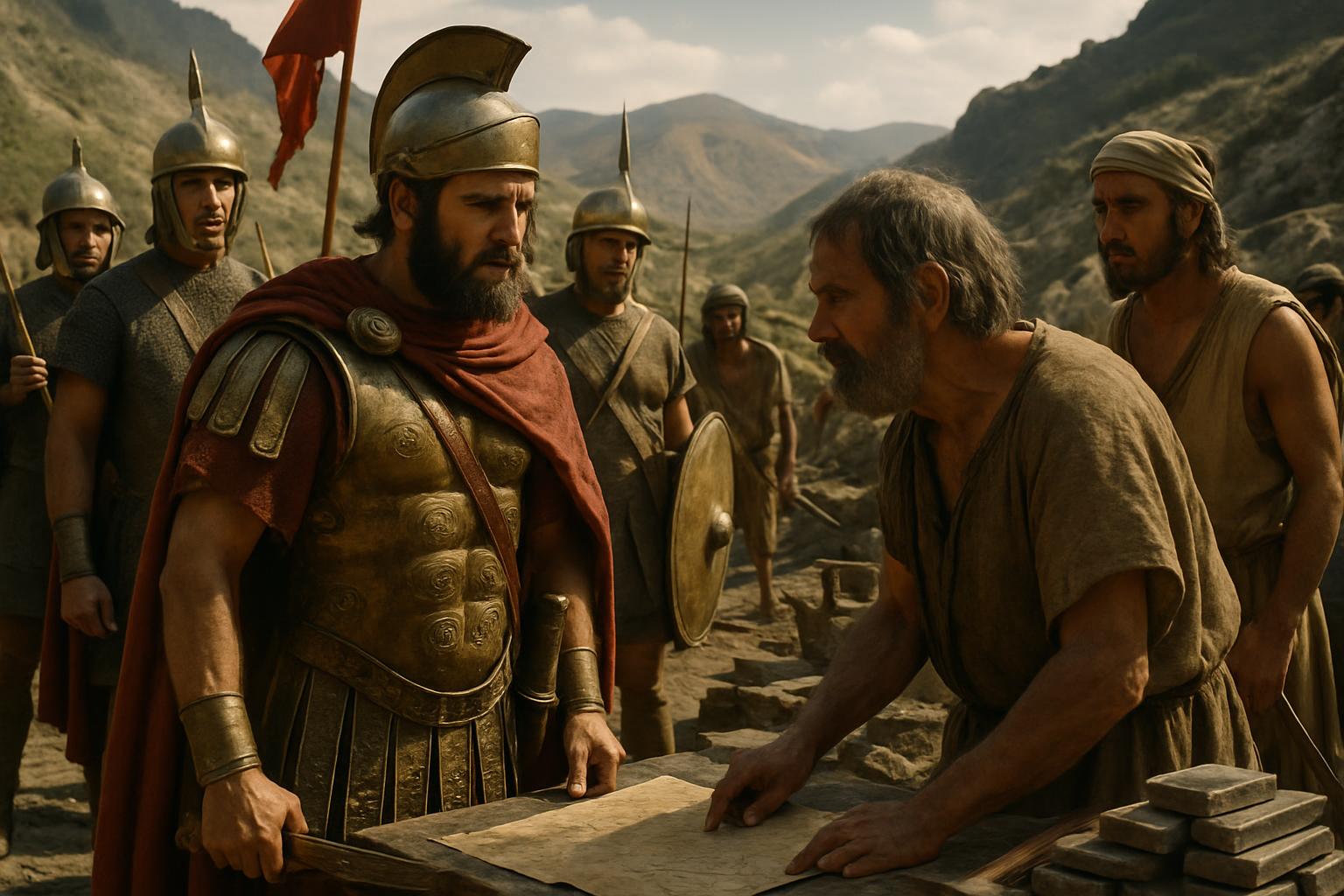
When Carthage surrendered to Rome in 241 BC, it was not merely defeated — it was financially ruined. The Treaty of Lutatius demanded an indemnity of 3,200 talents of silver, a staggering sum for a state whose navy lay at the bottom of the sea and whose unpaid mercenaries were about to turn on their employer. Yet within two decades, Carthage had rebuilt its fortunes so completely that it could pay Rome on schedule, field one of the finest armies in the Mediterranean, and strike silver coins of remarkable purity. The engine of this recovery lay not in Africa but across the sea, in the mineral-rich sierras of southern Iberia. There, three generations of the Barcid family — Hamilcar, Hasdrubal, and Hannibal — built a mining and minting complex that transformed Carthaginian power and set the stage for the greatest war of antiquity.
Bankruptcy and the Mercenary Crisis
The First Punic War (264–241 BC) drained Carthage in a way few ancient conflicts had drained any state. Twenty-three years of naval construction, mercenary wages, and lost fleets exhausted the treasury. The peace terms compounded the damage: 1,000 talents payable immediately and 2,200 more over ten years. When Carthage tried to negotiate down the back pay owed to its returning mercenary army, the result was the Mercenary War (241–237 BC), a savage conflict fought in Carthage's own hinterland that the historian Polybius called the "Truceless War." Rome exploited the chaos to seize Sardinia and extort an additional 1,200 talents — an act Polybius considered a principal cause of the hatred that later fueled Hannibal's war.
By 237 BC, Carthage faced a brutal arithmetic. Its Sicilian and Sardinian revenues were gone, its African tribute base had been ravaged by the mercenary revolt, and the Roman indemnity clock was ticking. The general who had crushed the mercenaries, Hamilcar Barca, proposed a solution as old as Phoenician seafaring itself: Iberia. The peninsula's southern coast had been tied to the Phoenician world for centuries through the old colony of Gadir (modern Cádiz), and behind that coast lay some of the richest silver deposits in the ancient world. Carthage's ancestors had come to Iberia for exactly this metal, a trade that stretched back to the city's legendary foundation and early rise as a Tyrian outpost.
Hamilcar's Conquest of the Silver Country
Hamilcar crossed to Gadir in 237 BC with his son-in-law Hasdrubal and, according to the famous story told by Polybius and Livy, his nine-year-old son Hannibal, who swore at his father's altar never to be a friend to Rome. Hamilcar's campaigns over the next eight years followed the geology as much as the politics of the peninsula. He subdued the Turdetani of the Baetis (Guadalquivir) valley and pushed toward the mining zones of the Sierra Morena, the mountain belt whose argentiferous lead ores had made the semi-legendary kingdom of Tartessos wealthy centuries earlier.
Ancient writers understood precisely what Hamilcar was doing. Diodorus Siculus records that he "advanced the interests of his country by the acquisition of silver mines," using the revenue both to pay his largely mercenary army and to send remittances home that quieted his political opponents. Silver did double duty: it serviced the Roman indemnity and it bought Hamilcar an independence of action that no Carthaginian general had enjoyed before. The Barcid position in Iberia became something between a provincial command and a family principality — loyal to Carthage, but funded and manned on its own account.
Hamilcar founded a stronghold at Akra Leuke (probably near modern Alicante) and was killed in battle around 229/228 BC, drowning in a river while covering the retreat of his sons, according to one tradition. Command passed, with the army's acclamation and Carthage's assent, to Hasdrubal.
Hasdrubal and the Founding of New Carthage
Hasdrubal, nicknamed "the Fair," consolidated by diplomacy what Hamilcar had won by the sword, marrying an Iberian princess and binding local chieftains to the Barcid cause. His most consequential act came around 228–227 BC, when he founded Qart Hadasht — "New City," the same name as Carthage itself, known to the Romans as Carthago Nova and to us as Cartagena. The site was chosen with a prospector's eye as much as an admiral's: a superb natural harbor sat directly beside the silver-lead lodes of the surrounding sierra, one of the densest mining districts in the Mediterranean world.
New Carthage became the administrative heart of Barcid Iberia: treasury, arsenal, mint, and shipyard in one. The scale of extraction it commanded is best glimpsed through a later source. The geographer Strabo, drawing on Polybius, reports that in the generation after the Romans took over these same workings, some 40,000 laborers toiled in the mines of New Carthage, yielding the Roman state 25,000 drachmae a day. Even allowing for the usual exaggerations of ancient statistics, the order of magnitude is telling — and the Romans had inherited, not invented, this operation.
Rome noticed the recovery. In 226 BC it extracted from Hasdrubal the Ebro Treaty, by which Carthaginian forces would not cross the river Ebro in arms. The agreement implicitly conceded most of the peninsula south of that line to Barcid control — a measure of how formidable the silver-funded province had become in barely a decade. Hasdrubal was assassinated by a Celtic slave in 221 BC, and the army raised on its shields the twenty-six-year-old Hannibal.
Mines, Miners, and Money
What did Barcid mining actually look like? The richest evidence comes from Pliny the Elder, who describes a mine he calls Baebelo — its exact location is debated, but it lay in the Spanish interior — that furnished Hannibal with 300 pounds of silver a day. By Pliny's time the workings had been driven some 1,500 paces into the mountain, with water-bearers laboring day and night by torchlight to bale out the floods, "making a river of the water." The passage captures both the productivity and the human cost of ancient deep mining: this was labor performed largely by slaves, prisoners of war, and subjected local populations, in shafts where flooding, collapse, and foul air were constant killers.
The ore itself was argentiferous galena — lead sulfide carrying silver. Miners followed the veins with iron tools and fire-setting, crushed and washed the ore, then smelted it and refined the silver by cupellation, a process that separated precious metal from lead at the cost of enormous quantities of fuel and toxic smoke. Slag heaps and Punic-era lamps found in the mining sierras around Cartagena and in the Sierra Morena testify to the intensity of the work.
The silver's most visible product was coinage. The Barcids struck a splendid series of high-purity silver shekels and multiples at Gadir and New Carthage, coins that served to pay soldiers and proclaim power at once. Many bear the head of Melqart, the Tyrian Herakles — some scholars have seen in these idealized features portraits of Hamilcar or Hannibal, though the identification remains contested — while reverses carry the war elephant that became the dynasty's signature. Coinage on this scale marked a transformation: Carthage had traditionally been a late and reluctant coiner, but Barcid Iberia ran on minted silver, a military economy in the most literal sense. Rome itself would learn the same lesson of silver as statecraft; centuries later, another empire's finances would hang on American silver from Potosí in strikingly similar fashion.
Chronology of Barcid Iberia
| Year (BC) | Event |
|---|---|
| 241 | Treaty of Lutatius ends First Punic War; indemnity of 3,200 talents |
| 241–237 | Mercenary ("Truceless") War; Rome seizes Sardinia, adds 1,200 talents |
| 237 | Hamilcar Barca lands at Gadir; conquest of southern Iberia begins |
| c. 229/228 | Hamilcar killed; Hasdrubal the Fair takes command |
| c. 228–227 | Foundation of Qart Hadasht (New Carthage) |
| 226 | Ebro Treaty between Hasdrubal and Rome |
| 221 | Hasdrubal assassinated; Hannibal acclaimed general |
| 219 | Hannibal besieges and takes Saguntum |
| 218 | Second Punic War begins; Hannibal marches on Italy |
| 209 | Scipio storms New Carthage; mines pass to Rome |
Paying for Hannibal's War
When Hannibal besieged Saguntum in 219 BC and marched for the Alps the following year, he moved at the head of an army that Iberian silver had recruited, equipped, and paid. The war chest he carried, the mercenaries he hired from Iberian and Celtic tribes, the fleet and garrisons left behind under his brother Hasdrubal — all rested on the output of the mines. Livy's account of Hannibal's preparations at New Carthage makes plain that the city functioned as the war's financial headquarters.
That is precisely why the war in Spain mattered as much as the war in Italy. While Hannibal won his dazzling victories at Trebia, Trasimene, and Cannae, Roman armies under the elder Scipio brothers fought doggedly to cut the peninsula — and its silver — off from the Italian front. The decisive stroke came in 209 BC, when the young Publius Cornelius Scipio, the future Africanus, stormed New Carthage in a single day's assault. Along with the city he captured its treasury, its mint, its hostages from the Iberian tribes, and its mines. Modern science has added a striking footnote: geochemical analysis of Roman coins shows that after 209 BC their silver increasingly carries the isotopic signature of Iberian ore. Rome was now literally minting its war effort from Hannibal's silver, an influx of wealth that would soon reshape Roman society itself and provoke anxieties about luxury that echo through the Republic's later sumptuary laws.
Deprived of its financial base, the Carthaginian position in Iberia collapsed within three years. Hannibal, unbeaten in the field, was starved of reinforcement and recalled to Africa, where Zama ended the war in 202 BC.
Conclusion: The Empire That Silver Built and Lost
The Barcid venture in Iberia is one of antiquity's clearest demonstrations that great-power war is waged with treasuries as much as with armies. In twenty-eight years, a bankrupt city rebuilt itself into Rome's most dangerous rival on the strength of mines worked in darkness by tens of thousands of the unfree. The same silver that made Hannibal's march possible made Iberia the war's true prize, and its loss decided the conflict as surely as any battle. Rome absorbed the lesson completely: the mines of Spain became a pillar of Republican finance for two centuries, and the road from New Carthage's silver to Roman world power ran straight and unbroken. Few families in history have so thoroughly forged — and armed — their city's destiny from ore in the ground as the Barcids did between 237 and 209 BC.
Frequently asked questions
Why did Carthage expand into Spain after the First Punic War? Carthage had lost Sicily and Sardinia and owed Rome a crushing indemnity of 3,200 talents. Iberia's silver mines, fertile land, and manpower offered a way to rebuild wealth and military strength outside Rome's reach.
How much silver did the Iberian mines produce? Ancient authors describe enormous yields — Pliny later reported that Roman-era workings around New Carthage employed tens of thousands of miners. Under the Barcids the mines funded indemnity payments, a professional army, and a new silver coinage within a single generation.
Who were the Barcids? The family of Hamilcar Barca: his sons-in-law and sons, including Hasdrubal the Fair, who founded New Carthage, and Hannibal, who led the Second Punic War against Rome. They governed Punic Iberia almost as a family dominion from 237 to 209 BC.
Did Iberian silver pay for Hannibal's war against Rome? Largely, yes. Silver paid his mercenary army and allies — which is why Scipio's capture of New Carthage and the mines in 209 BC crippled the Carthaginian war effort more than any battlefield defeat.
Bibliography
- Lazenby, J. F. Hannibal's War: A Military History of the Second Punic War. 1978.
- Livy. History of Rome.
- Museo Arqueologico Municipal de Cartagena. Ayuntamiento de Cartagena.
- Polybius. The Histories.
- Strabo. Geography.
Recommended reading
Hannibal's Dynasty: Power and Politics in the Western Mediterranean, 247-183 BCthe standard study of how Hamilcar, Hasdrubal, and Hannibal built and governed their Iberian command as a family enterprise.
View on Amazon →: Hannibal's Dynasty: Power and Politics in the Western Mediterranean, 247-183 BC
The Fall of Carthage: The Punic Wars 265-146 BCsets the Barcid silver economy within the full military and financial arc of Rome's three wars against Carthage.
View on Amazon →: The Fall of Carthage: The Punic Wars 265-146 BC
Carthage Must Be Destroyed: The Rise and Fall of an Ancient Civilizationtraces Carthage's recovery after the 241 BC indemnity and the Iberian expansion that financed it, drawing on archaeology alongside Polybius and Livy.
View on Amazon →: Carthage Must Be Destroyed: The Rise and Fall of an Ancient Civilization
Hannibala biography following Hannibal from the childhood oath at Gadir through his command at New Carthage to the war his family's silver made possible.
As an Amazon Associate I earn from qualifying purchases. Affiliate links in Recommended reading — and in Further reading on older articles — may earn Writesides of History a commission at no extra cost to you.
From the archive


Free for the curious, supported by you
Writesides of History publishes free, in-depth history articles every week. If you enjoy reading, you can support the work: become a member for exclusive deep-dive dossiers and early access, or browse the maps, classroom packs and dossiers in the shop.
Become a Member Donate Visit the Shop