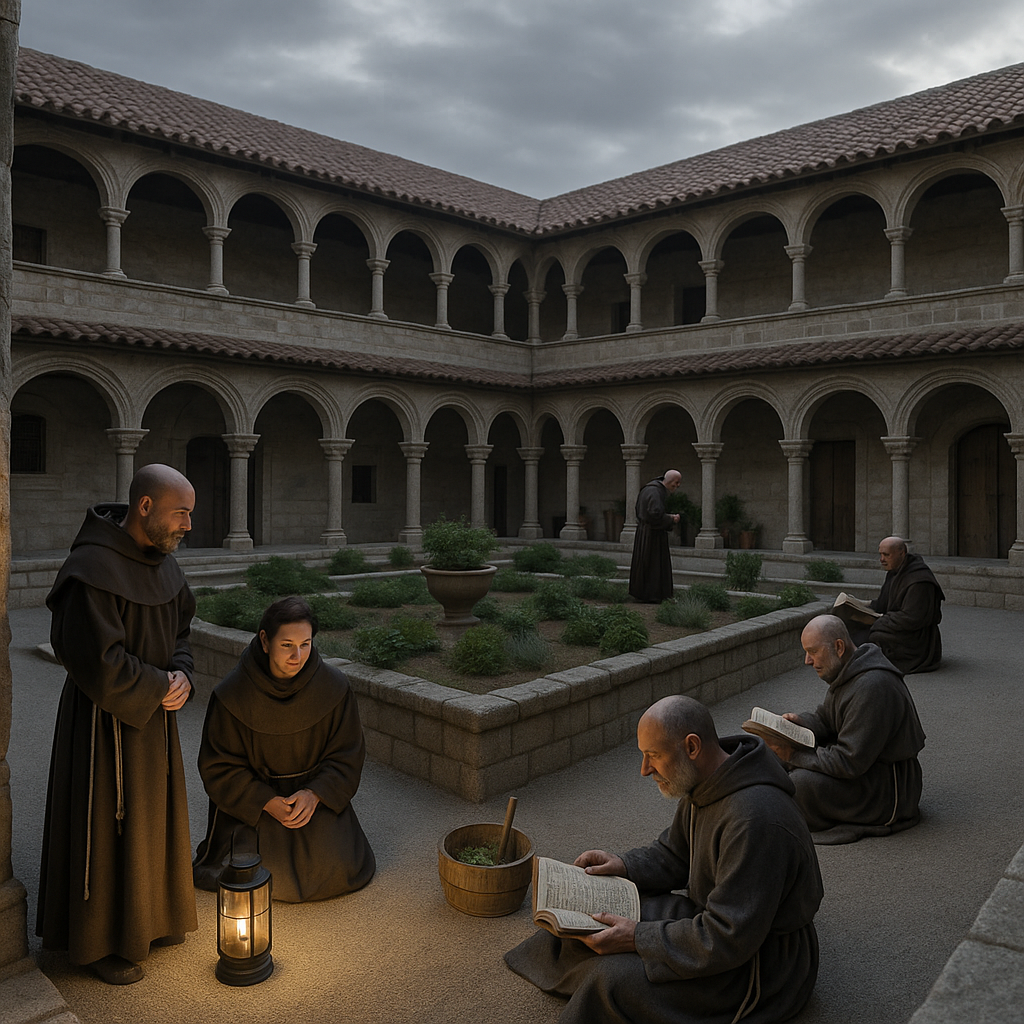
In the heart of medieval Europe, monasteries were more than just spiritual havens; they were pivotal institutions that shaped the cultural, intellectual, and economic landscape of the era. These religious communities managed to weave themselves into the fabric of medieval life, acting as centers of faith, learning, and power that influenced kingdoms and common folk alike.
The Spiritual Foundation of Monastic Life
Monasteries were initially established as retreats for those seeking to devote their lives fully to religious contemplation and discipline. Rooted deeply in Christian ascetic traditions, these communities followed rigorous rules such as the Rule of Saint Benedict, which prescribed a balanced daily routine of prayer, study, and manual labor. Monks and nuns viewed their monastic existence as a path to sanctity, providing religious services, spiritual guidance, and a stabilizing moral presence in often turbulent times.
These monasteries served not only their immediate religious functions but also acted as beacons of hope and centers of charity. They offered hospitality to pilgrims, aid to the poor, and care for the sick, thus embedding themselves firmly within the social welfare systems of medieval Europe.
Monasteries as Hubs of Learning and Preservation
The darkened halls of monasteries often concealed vibrant centers of intellectual life. During the Middle Ages, when literacy was rare, monks played a critical role in preserving classical knowledge and advancing medieval scholarship. Monastic scriptoria were the workshops where ancient texts, including philosophical and scientific treatises, were painstakingly copied by hand, preserving them for future generations.
Moreover, monasteries developed impressive libraries filled with religious manuscripts, as well as works of history, medicine, and natural science. This dedication to learning helped to bridge the ancient world and the emerging intellectual movements that would later bloom during the Renaissance. Monks became early scholars, translators, and even educators, training clergy and sometimes local nobility, effectively acting as the educational institutions of their day.
The Economic Power of Monastic Communities
While monasteries began as religious sanctuaries, many evolved into powerful economic entities. Endowed with land by nobles seeking spiritual favor or political alliance, monasteries became major landowners across Europe. This land was cultivated directly by the monastic community or leased to peasants, creating intricate economic networks.
Monasteries introduced agricultural innovations, such as improved plowing techniques and crop rotations, boosting productivity in medieval Europe. They also engaged in various trades, including brewing, winemaking, and book production, which contributed to local economies and occasionally regional trade.
This economic influence often translated into political clout, as abbots could exercise considerable authority in local governance and even advise kings and princes. In some cases, monasteries functioned almost as semi-independent fiefdoms, managing their estates, administering justice, and collecting taxes.
Monasteries and Medieval Art and Architecture
Another indelible mark left by medieval monasteries was their contribution to art and architecture. The building of grand monasteries and cathedrals fueled the development of Romanesque and later Gothic styles that defined the medieval skyline. These structures were not only places of worship but also symbols of the Church’s power and the community’s devotion.
Inside, monasteries flourished as centers of artistic creation. From illuminated manuscripts with intricate calligraphy and vibrant colors to exquisite metalwork, sculpture, and frescoes, monasteries preserved and innovated artistic traditions. Many of these treasures remain today as testaments to the monks’ skill and the spiritual messages they aimed to convey.
The Decline and Legacy of Medieval Monasteries
Despite their centuries-long dominance, the influence of monasteries waned with the onset of the late Middle Ages and the Reformation. Corruption, declining religious fervor, and political upheavals led to the dissolution of many monastic houses, especially in regions swept by Protestant reformers. However, their legacy endured through the preservation of knowledge, agricultural advancements, and cultural heritage.
Monasteries fundamentally shaped the medieval world, creating a legacy that underpins much of Western Europe’s religious, social, and intellectual history. Their roles as spiritual bastions, learning centers, economic powerhouses, and artistic patrons reveal the multifaceted nature of these remarkable institutions.
For a broader understanding of medieval society, one might explore the historical dynamics of other influential institutions and events.
the shifting balance of power in Europe