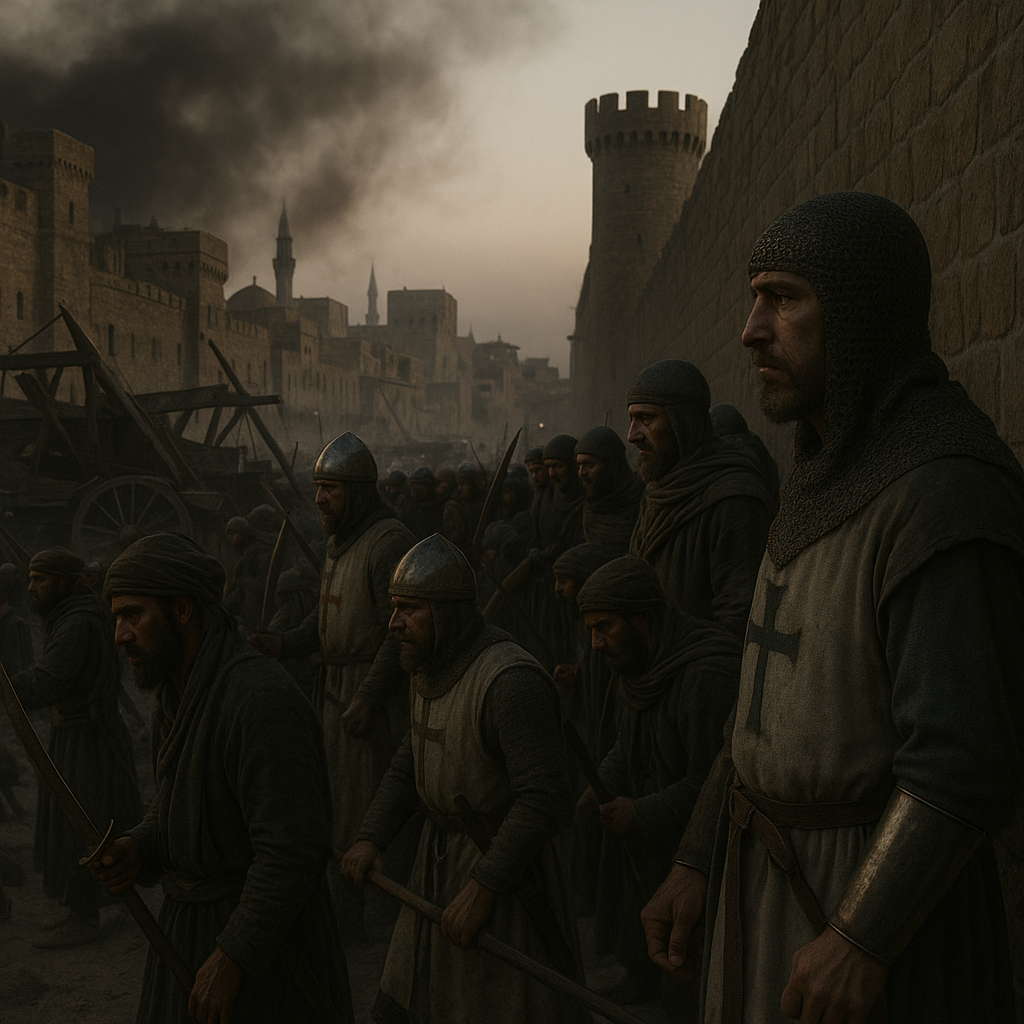
The Siege of Acre in 1291 stands as one of the most pivotal moments in medieval history, representing the final collapse of Crusader presence in the Holy Land. This dramatic siege unfolded over the course of weeks and culminated in the loss of the last major Christian stronghold on the eastern Mediterranean coast. Beyond the military catastrophe, Acre’s fall signaled a profound shift in medieval geopolitics and cultural encounters between Christians and Muslims. This article delves into the historic siege, its context, key moments, and enduring legacy.
Background: Acre’s Strategic and Symbolic Importance
Acre had long served as a vital port city and commercial hub in the Kingdom of Jerusalem, becoming the Crusader states’ principal bastion after their loss of Jerusalem in 1187. It was a melting pot — a vibrant nexus where European knights, merchants from Italian city-states, local Christians, Muslims, and Jews coexisted amidst tense religious and military rivalries. For nearly a century, the city embodied the enduring, although increasingly precarious, Christian foothold in a predominantly Muslim region.
By the late 13th century, however, Muslim forces under the Mamluk Sultanate, founded by former slave soldiers in Egypt, aimed to expel the Crusaders entirely. Sultan Al-Ashraf Khalil, successor of the formidable Sultan Qalawun, viewed Acre not only as a military target but as a symbol of foreign occupation that had to be erased to unify Muslim control over the Levant.
The Siege Begins: Preparation and Initial Assaults
The siege commenced in April 1291 with a massive Mamluk army encircling Acre’s formidable walls. Despite the Crusaders’ concerted efforts to defend the city, they were severely outnumbered and lacking reinforcements—the European powers, fragmented and distracted by internal conflicts, failed to send significant aid. Acre’s defenders included a mix of knights from military orders such as the Knights Hospitaller, Templars, and local Christian militia, as well as merchants and refugees who had fled the surrounding territories.
The Mamluks employed sophisticated siege tactics, using siege engines and sappers to breach the walls. Their coordinated assaults relentlessly wore down the defenders. The city’s diverse population endured starvation, disease, and continuous bombardment, exerting immense psychological and physical pressure.
Key Moments: Collapse and Catastrophe
One pivotal moment came when the Mamluks finally broke through the outer walls after weeks of battering. The Crusaders retreated into the city’s inner defenses, fighting desperately to hold key gates and towers. Accounts tell of fierce close-quarter combat and grim determination but ultimately overwhelming Mamluk superiority.
The fall of Acre was marked not only by military defeat but by tragic loss of life and the destruction of a city that had been a bastion of medieval cross-cultural interaction. Many defenders and non-combatants perished or were taken captive. The loss sent shockwaves through Christendom.
Aftermath and Historical Impact
The fall of Acre effectively ended the Crusader states and marked the conclusion of the era of the Holy Land Crusades. The European powers’ chronic failure to provide coordinated support revealed fractures in the Crusading ideal. Across Europe, the loss triggered a mix of despair and reevaluation of strategies in the East.
Politically, the Mamluks consolidated their control over Syria and Palestine, ensuring Muslim dominance over these lands for centuries to come. This victory also shifted trade and diplomatic connections away from the Levant, influencing economic patterns that European powers would seek to circumvent in later centuries.
The significance of the Siege of Acre can also be seen in comparison with other key moments in medieval history, such as the earlier struggles documented in The Fall of Jerusalem in 1187 and later medieval knightly pursuits in the Holy Land, themes explored in detail in The Knights Hospitaller: The Medieval Military Order. These interconnected events reveal the protracted and complex nature of Crusader-Muslim conflicts over the Levantine coast.
Conclusion: The Legacy of Acre’s Fall
The Siege of Acre remains a powerful symbol of the Crusades’ twilight—a moment when medieval chivalry, faith, and military might met the realities of shifting power in the Eastern Mediterranean. The city’s loss closed the chapter on nearly two centuries of Crusader presence, influencing subsequent relations between Europe and the Islamic world. Its memory endured in chronicles, art, and collective histories, reminding later generations of the fragility and fleeting nature of medieval conquest and coexistence.
Acre’s fall also shaped the narrative of redemption and loss that permeated European thought and inspired subsequent expeditions and cultural movements. Ultimately, the siege stands as a testament to the complex interweaving of war, faith, and commerce in medieval history.